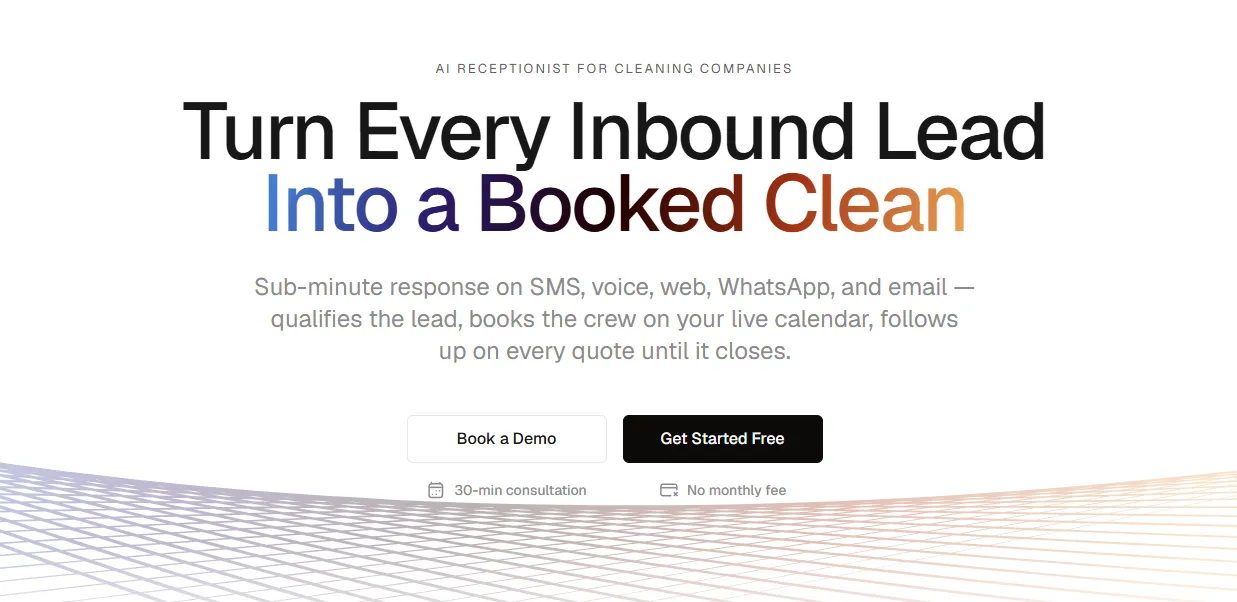

The cleaning industry has always been highly competitive, service-driven, and dependent on fast, reliable communication. Whether it’s a residential cleaning company, a commercial janitorial service, or a specialized sanitation provider, the ability to respond quickly to customer inquiries often determines who wins and who loses business.
In recent years, artificial intelligence has started to reshape this landscape in a significant way. One of the most impactful innovations is the rise of AI-powered reception systems. These tools are changing how cleaning companies handle calls, schedule appointments, manage leads, and support customers around the clock.
Among the most discussed solutions in this space is the concept of an ai receptionist for cleaning companies, which acts as a virtual front desk assistant capable of handling communication tasks traditionally managed by human staff.
This article explores how AI receptionists work, why they are becoming essential for cleaning businesses, and how they can dramatically improve efficiency, customer satisfaction, and revenue growth.
The Communication Challenge in Cleaning Businesses
Before understanding the value of AI receptionists, it’s important to recognize the communication challenges cleaning companies face daily.
Most cleaning businesses deal with:
- High volumes of inbound calls during peak hours
- Missed calls when staff are cleaning on-site
- Difficulty managing after-hours inquiries
- Repetitive customer questions
- Manual scheduling errors
- Slow response times leading to lost leads
In many cases, cleaning technicians are also responsible for answering calls or managing bookings while working in the field. This creates inefficiencies and often leads to missed opportunities.
Studies across service industries show that businesses lose a significant percentage of potential clients simply because they fail to respond quickly enough. In cleaning services, where customers often compare multiple providers, response time is a critical competitive factor.
What Is an AI Receptionist?
An AI receptionist is a software-based virtual assistant designed to handle communication tasks typically performed by a human receptionist. It uses artificial intelligence, natural language processing (NLP), and automation workflows to interact with customers in real time.
Unlike traditional answering services, AI receptionists can:
- Understand natural speech and text
- Respond instantly to inquiries
- Schedule and reschedule appointments
- Provide pricing or service information
- Qualify leads automatically
- Operate 24/7 without breaks
For cleaning companies, this means never missing a call or inquiry again, even outside business hours.
How AI Receptionists Work in Cleaning Companies
AI receptionists integrate with communication channels such as phone systems, websites, SMS, and messaging apps. When a customer contacts a cleaning business, the AI responds immediately and begins a structured conversation.
A typical workflow looks like this:
- Customer Inquiry
A potential client calls or messages the cleaning company asking for a quote or availability. - AI Response
The AI receptionist greets the customer and asks relevant questions such as location, type of cleaning required, and preferred time. - Data Collection
The system collects structured information about the job. - Scheduling or Lead Routing
The AI either schedules an appointment directly or forwards the lead to a human team member. - Confirmation
The customer receives instant confirmation via SMS or email.
This process eliminates delays and ensures every inquiry is handled professionally.
Key Benefits of AI Receptionists for Cleaning Companies
1. 24/7 Availability
Cleaning needs don’t follow a 9-to-5 schedule. Customers may search for services late at night, early in the morning, or during weekends.
An AI receptionist ensures that your business is always available. This constant accessibility significantly increases lead capture rates.
2. Faster Response Times
Speed matters in the cleaning industry. When customers request a quote, they often contact multiple companies at once.
AI systems respond instantly, giving your business a competitive edge and increasing the likelihood of conversion.
3. Reduced Administrative Work
Manual scheduling, answering repetitive questions, and managing inquiries can consume a large portion of staff time.
By automating these tasks, employees can focus on actual cleaning operations and customer service quality.
4. Improved Lead Conversion
Many cleaning companies lose leads simply because they respond too slowly. AI receptionists help ensure that no inquiry goes unanswered, improving conversion rates significantly.
5. Cost Efficiency
Hiring a full-time receptionist can be expensive, especially for small and medium-sized cleaning businesses. AI solutions offer a scalable alternative at a fraction of the cost.
The Role of AI in Customer Experience
Customer experience is one of the strongest differentiators in the cleaning industry. People expect fast, clear, and professional communication.
An ai receptionist for cleaning companies enhances customer experience in several ways:
- Immediate responses without waiting on hold
- Consistent communication tone
- Accurate scheduling without human error
- Personalized interaction based on customer needs
- Multichannel support (phone, SMS, web chat)
These improvements lead to higher customer satisfaction and stronger long-term relationships.
Real-World Use Cases in Cleaning Businesses
Residential Cleaning Services
Homeowners often want quick quotes and flexible scheduling. AI receptionists can instantly provide estimates, check availability, and book appointments.
Commercial Cleaning Companies
Businesses require recurring cleaning schedules and contract-based communication. AI systems help manage inquiries, coordinate walkthroughs, and organize service plans.
Specialized Cleaning Services
Services such as post-construction cleaning, carpet cleaning, or disinfection require detailed intake processes. AI receptionists can collect structured job information efficiently.
How AI Receptionists Improve Scheduling Efficiency
Scheduling is one of the most complex tasks in cleaning operations. Human error can lead to double bookings, missed appointments, or inefficient route planning.
AI receptionists solve this by:
- Integrating with calendars in real time
- Automatically checking staff availability
- Preventing scheduling conflicts
- Sending reminders to customers
- Allowing easy rescheduling
This level of automation reduces operational friction and improves workforce efficiency.
AI vs Traditional Receptionists
While human receptionists provide a personal touch, they also have limitations such as working hours, workload capacity, and human error.
AI receptionists complement or replace traditional systems by offering:
- Instant scalability
- No fatigue or downtime
- Lower operational costs
- Consistent performance
- Data-driven decision-making
However, many cleaning companies adopt a hybrid approach where AI handles initial communication and humans manage complex cases.
Integration With Business Tools
Modern AI receptionist systems can integrate with:
- CRM platforms
- Scheduling software
- Payment systems
- Email and SMS tools
- Job management platforms
This ensures seamless workflow automation across the entire cleaning business ecosystem.
For example, once a job is booked, the system can automatically:
- Assign it to a cleaning team
- Send customer confirmation
- Update the CRM
- Trigger reminders before the appointment
Challenges and Considerations
Despite the benefits, implementing AI receptionists comes with considerations:
1. Initial Setup Complexity
Businesses must configure workflows, service types, and pricing logic correctly.
2. Customer Adaptation
Some customers may initially prefer speaking to a human representative.
3. System Limitations
Highly complex or emotional customer issues may still require human intervention.
4. Data Accuracy
AI systems rely on accurate input data to function effectively.
The Future of AI in Cleaning Services
The cleaning industry is rapidly moving toward automation. In the future, AI receptionists will become even more advanced, incorporating:
- Predictive scheduling based on customer habits
- Voice-based booking assistants
- Smart pricing recommendations
- Fully automated customer journeys
- Integration with IoT cleaning equipment
As competition increases, businesses that adopt AI early will have a significant advantage in efficiency and customer acquisition.
Why Cleaning Companies Should Act Now
Adopting AI is no longer just a technological upgrade—it is a business necessity. Customers expect instant responses, seamless booking, and professional communication at all times.
Companies that fail to modernize risk losing market share to more agile competitors.
By implementing an ai receptionist for cleaning companies, businesses can:
- Increase revenue through better lead conversion
- Reduce operational costs
- Improve customer satisfaction
- Scale without increasing staff load
- Stay competitive in a digital-first market
Conclusion
The cleaning industry is evolving rapidly, and communication automation is at the center of this transformation. AI receptionists are not just tools for convenience—they are strategic assets that directly impact growth, efficiency, and customer satisfaction.
Whether managing residential clients or large commercial contracts, cleaning businesses benefit significantly from faster response times, automated scheduling, and 24/7 availability.
As technology continues to advance, AI reception systems will become a standard part of modern cleaning operations, redefining how companies interact with their customers and manage their workflows.
Businesses that embrace this change early will be better positioned to scale, compete, and succeed in an increasingly demanding market.



























Sign in to leave a comment.