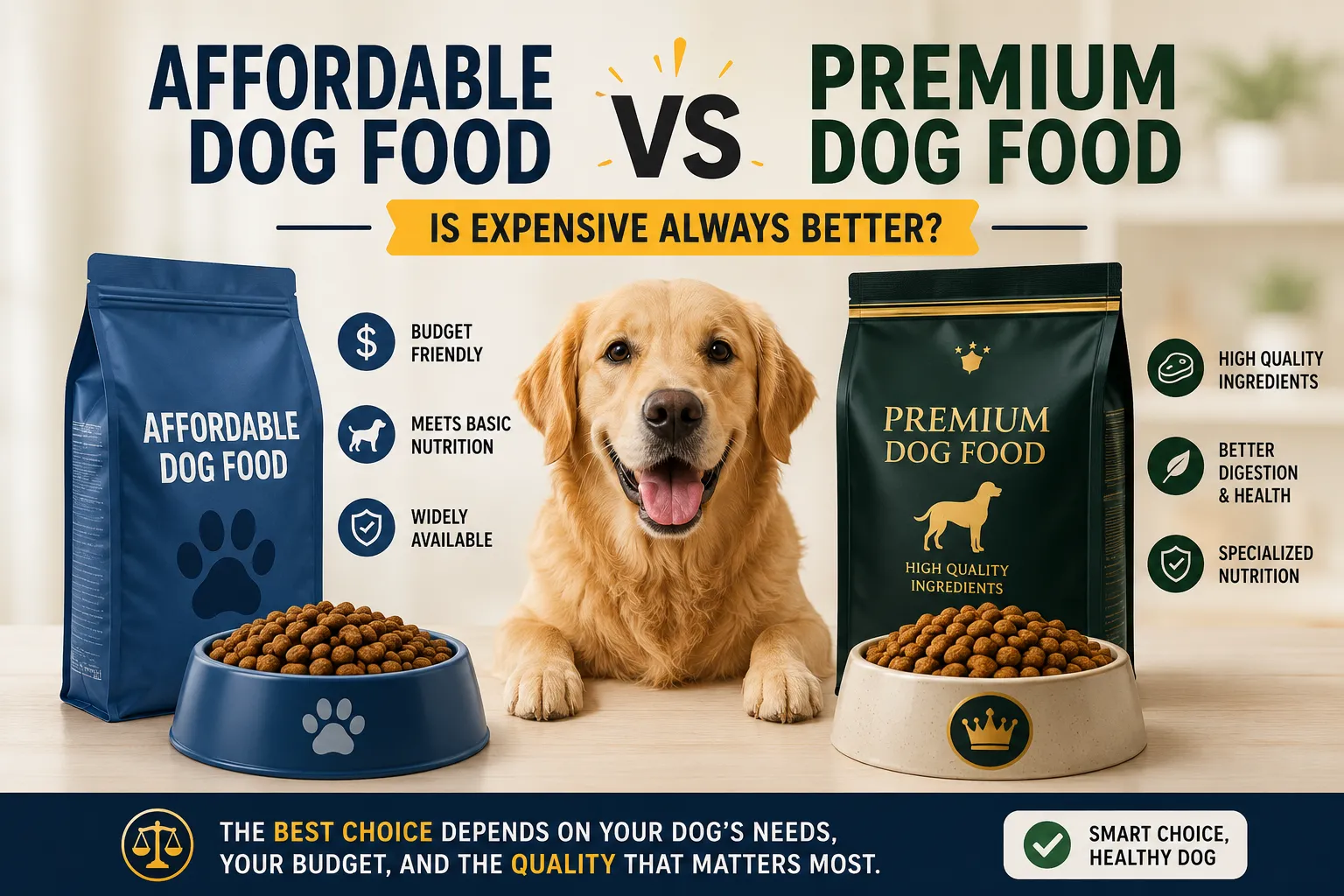

Walking into a pet store today can feel surprisingly overwhelming. One shelf offers affordable dog food at budget-friendly prices, while another displays premium and ultra-premium brands that cost several times more. Add words like “holistic,” “grain-free,” “human-grade,” and “vet recommended,” and suddenly choosing dog food becomes far more complicated than most pet owners expect.
Naturally, many dog parents start wondering:
Does expensive dog food actually make a difference?
Or are some premium brands simply charging more because of marketing?
The answer is not entirely black and white.
While premium dog food often contains better-quality ingredients and specialized nutrition, a higher price tag does not automatically guarantee that a food is perfect for every dog. In many cases, affordable dog food can still provide balanced nutrition and keep dogs healthy when chosen carefully.
Understanding the real difference between affordable and premium dog food can help pet owners make smarter decisions without overspending unnecessarily.
What Makes Dog Food “Premium”?
Premium dog food brands usually position themselves as nutritionally advanced products made with higher-quality ingredients.
These foods often include:
- Higher-quality protein sources
- Better digestibility
- Fewer artificial additives
- Specialized formulas
- Added supplements like probiotics or Omega fatty acids
Premium dog foods may also focus on:
- Breed-specific nutrition
- Grain-free recipes
- Sensitive stomach formulas
- Weight management
- Joint support
- Skin and coat health
In many cases, premium brands invest heavily in research, ingredient sourcing, and nutritional formulation.
However, part of the price increase also comes from:
- Packaging
- Branding
- Advertising
- Imported ingredients
- Distribution costs
So while some premium foods genuinely offer better nutrition, others are simply marketed more aggressively.
What Defines Affordable Dog Food?
Affordable dog food is designed to meet basic nutritional requirements at a lower price point.
These foods are generally:
- More accessible
- Widely available
- Easier on monthly budgets
- Simpler in formulation
Budget-friendly dog foods often use more economical ingredients to keep costs lower. Some may contain:
- More grains or fillers
- Lower-cost protein sources
- Fewer specialized supplements
That doesn’t automatically make them “bad.”
Many healthy dogs live active and happy lives on reasonably priced dog food, especially when:
- Portion sizes are appropriate
- Fresh foods are occasionally added
- Dogs have no major allergies or medical conditions
The important thing is choosing affordable food that still offers balanced nutrition instead of selecting products based purely on price.
The Biggest Difference: Ingredient Quality
One of the clearest differences between affordable and premium dog food is ingredient quality.
Premium brands often use:
- Real meat as the primary ingredient
- Named protein sources like chicken or salmon
- Better fat sources
- Natural preservatives
- Digestible carbohydrates
Meanwhile, lower-cost foods may rely more heavily on:
- Meat by-products
- Generic protein meals
- Corn-heavy formulas
- Artificial flavors or colors
This difference can impact:
- Digestion
- Nutrient absorption
- Coat quality
- Energy levels
- Stool consistency
However, not every affordable dog food uses poor ingredients. Some mid-range brands now offer surprisingly balanced formulas at reasonable prices.
That’s why reading ingredient labels matters more than simply trusting price tags.
Does Premium Dog Food Improve Health?
For some dogs, yes.
Premium dog food can make a noticeable difference in dogs that have:
- Sensitive stomachs
- Food allergies
- Skin conditions
- Joint issues
- Weight problems
- Specific breed-related concerns
Dogs eating high-quality diets may experience:
- Shinier coats
- Better digestion
- Improved energy
- Less shedding
- Smaller stools
- Healthier skin
Premium foods often contain additional nutrients such as:
- Omega-3 fatty acids
- Glucosamine
- Probiotics
- Antioxidants
These ingredients may support long-term health and reduce certain health problems.
But here’s the important part many pet owners overlook:
A healthy dog with no sensitivities may do perfectly fine on a well-balanced affordable dog food.
Not every dog requires expensive specialized nutrition.
Marketing vs Actual Nutrition
One reason pet owners become confused is because the pet food industry relies heavily on emotional marketing.
Terms like:
- “Natural”
- “Holistic”
- “Farm fresh”
- “Human-grade”
- “Super premium”
can sound impressive but don’t always guarantee superior nutrition.
Some expensive brands focus more on branding than actual ingredient improvement.
Similarly, some affordable brands quietly provide decent nutrition without flashy packaging or influencer promotions.
That’s why pet owners should focus on:
- Ingredient transparency
- Nutritional balance
- Digestibility
- Veterinary guidance
- Their dog’s physical condition
instead of assuming that expensive automatically means healthier.
Signs Your Dog Is Doing Well on Their Food
Regardless of price, your dog’s body often tells you whether the food is suitable.
Good signs include:
- Healthy appetite
- Consistent energy
- Firm stools
- Healthy weight
- Shiny coat
- Minimal itching
- Good muscle condition
If your dog consistently shows these signs, the food is likely working well.
On the other hand, signs that a food may not be suitable include:
- Frequent diarrhea
- Excessive scratching
- Dull coat
- Vomiting
- Low energy
- Excessive gas
- Weight instability
In such cases, switching formulas or improving ingredient quality may help.
When Affordable Dog Food Makes Sense
Affordable dog food can be a practical choice for:
- Multi-dog households
- Large breed owners
- Healthy adult dogs
- Budget-conscious families
Many pet owners successfully improve affordable diets by adding fresh foods such as:
- Boiled chicken
- Eggs
- Pumpkin
- Rice
- Curd
- Vegetables
This helps improve nutrient variety without dramatically increasing feeding costs.
Consistency, portion control, hydration, and exercise also play major roles in a dog’s overall health.
When Premium Dog Food May Be Worth It
Premium dog food may be worth the investment if your dog has:
- Chronic digestive issues
- Allergies
- Sensitive skin
- Joint problems
- Medical conditions
- Breed-specific nutritional needs
Puppies and senior dogs may also benefit from more specialized formulations because their nutritional requirements are different.
In these cases, better digestibility and targeted nutrition can sometimes reduce long-term veterinary expenses.
So, Is Expensive Dog Food Always Better?
No — not always.
Expensive dog food can offer advantages in ingredient quality, digestibility, and specialized nutrition, but price alone does not determine whether a food is right for your dog.
The best dog food is the one that:
- Meets your dog’s nutritional needs
- Supports their health
- Fits your budget
- Works well for their digestion and activity level
A balanced affordable dog food may work perfectly for one dog, while another may genuinely benefit from premium nutrition.
Every dog is different.
Final Thoughts
Pet owners often feel guilty if they cannot afford the most expensive dog food on the market. But caring for your dog is not about buying the costliest product — it’s about making informed and consistent choices.
A healthy lifestyle for dogs includes:
- Balanced nutrition
- Clean water
- Exercise
- Veterinary care
- Mental stimulation
- Love and attention
Dog food is important, but it is only one part of overall health.
Instead of getting influenced by marketing alone, focus on understanding ingredients, observing your dog’s health, and choosing food that provides the best balance between quality and affordability.
Because in the end, the goal isn’t to buy the most expensive food.
The goal is to keep your dog healthy, active, and happy for years to come.

























Sign in to leave a comment.