

When people talk about age and fertility, the conversation almost always focuses on women. Egg quality, ovarian reserve, the biological clock. These are real and important topics. But the male side of the story gets far less attention, and for many couples that are struggling to conceive, this gap in the conversation becomes a real problem.
Men do not have a biological clock in the same obvious way that women do. Sperm production continues throughout life. Men can and do father children into their fifties, sixties, and beyond. This is all true. But it does not mean that male fertility is completely unaffected by age. It changes. Gradually, quietly, without any obvious symptoms. And those changes matter more than most men realise.
This article explains what actually happens to male fertility as men age, what the risks look like in real terms, and what can be done to support the best possible sperm health at any age.
Does Male Fertility Actually Decline With Age?
Yes. The evidence for this is consistent and well documented. It simply does not decline in the same dramatic and time-limited way that female fertility does.
Women are born with all the eggs they will ever have. Once they are gone, they are gone. Men, on the other hand, continuously produce new sperm throughout their lives. This is why the age-related decline in male fertility is slower and more gradual. But gradual does not mean absent.
Research consistently shows that sperm quality, not just quantity, declines with age. Older men tend to produce sperm with lower motility meaning the sperm do not swim as well, more abnormal shapes, and higher rates of DNA damage. These changes do not switch on suddenly at a particular birthday. They accumulate slowly over the decades.
The impact of these changes becomes most relevant when a couple is trying to conceive, particularly when the woman is also older, or when fertility treatment such as IVF is involved.
What Happens to Sperm as Men Age
Understanding what specifically changes helps make sense of why age matters for male fertility.
Sperm count tends to decline gradually with age. A man in his fifties typically produces fewer sperm per ejaculation than he did in his twenties. The decline is not usually dramatic enough to cause azoospermia, meaning no sperm at all, in healthy men. But even modest reductions in count can reduce the chances of natural conception, particularly in combination with changes in other aspects of sperm quality.
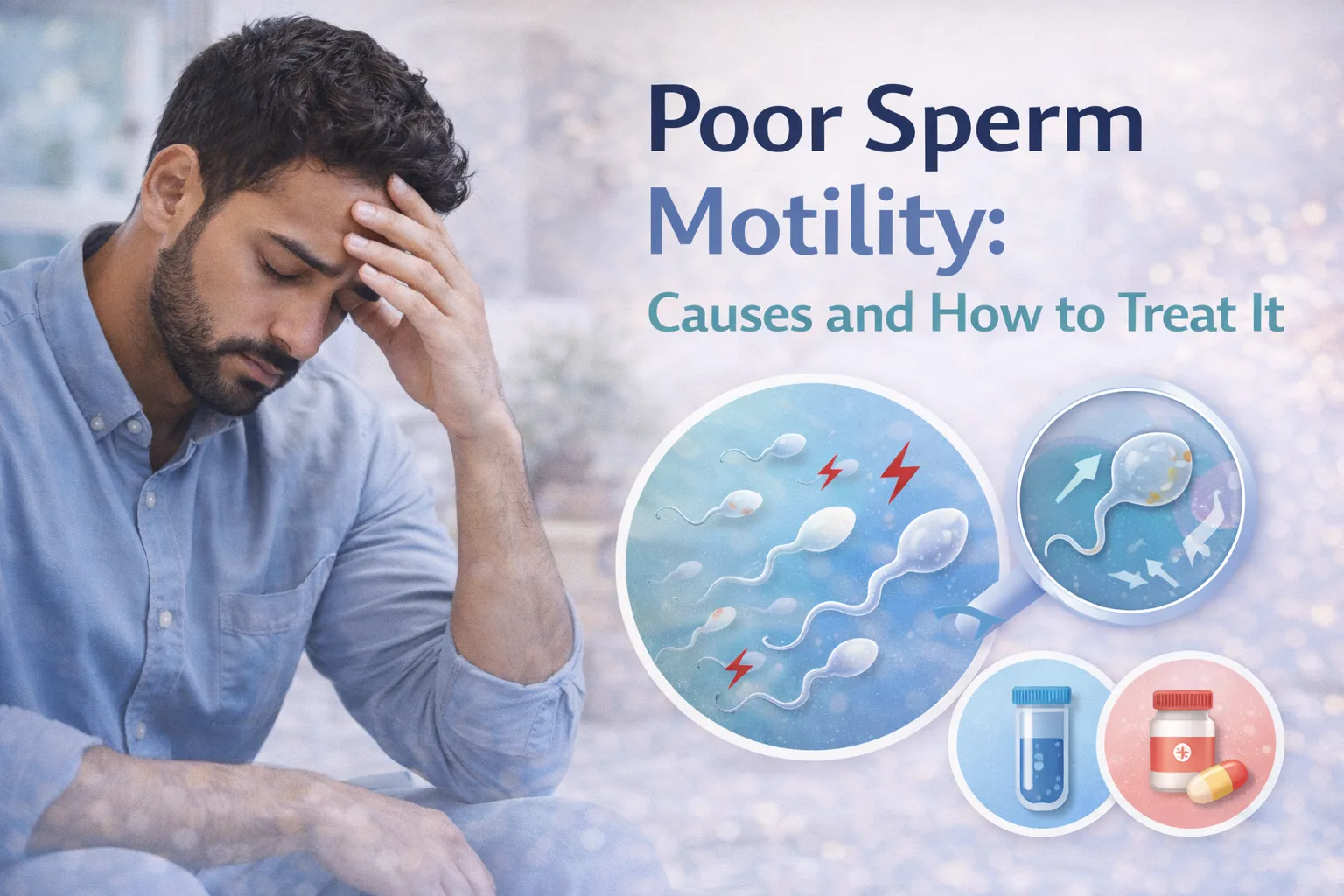
Sperm motility is the ability of sperm to swim in the directed, purposeful way needed to reach and fertilise an egg. Motility tends to decrease with age. Sperm that does not swim well is less likely to reach the egg regardless of how many sperm are present.
Sperm morphology refers to the shape and structure of sperm. Abnormally shaped sperm cannot fertilise an egg as effectively as normally shaped ones. The proportion of abnormally shaped sperm tends to increase with age.
Sperm DNA fragmentation is perhaps the most significant age-related change and the one that is least talked about. DNA fragmentation refers to breaks and damage in the genetic material inside the sperm. A sperm can look completely normal under a microscope and still carry significant DNA damage. As men age, DNA fragmentation levels tend to increase. This matters because high DNA fragmentation affects fertilisation rates, embryo development quality, and the risk of miscarriage. It is also associated with a small but documented increase in the risk of certain neurodevelopmental conditions in children born to older fathers.
Testosterone levels decline gradually from around the age of 30 to 35, at approximately one to two percent per year. This reduction is usually too gradual to produce obvious symptoms in most men until they are well into their forties or fifties. But lower testosterone affects libido, energy, and to some extent sperm production over time.
Semen volume also tends to decrease with age, which is relevant because semen provides nutrients and protective compounds for sperm during their journey toward the egg.
At What Age Does It Start to Matter
This is the question most men want a direct answer to. The honest answer is that the changes begin in the thirties and become more meaningful in the forties and beyond.
Studies tracking sperm quality across age groups show noticeable differences between men in their twenties and men in their late thirties. By the mid-forties, the cumulative effect of declining sperm quality becomes clinically significant. Men over 45 take longer to achieve pregnancy with a partner, have higher rates of miscarriage even when partnered with younger women, and produce sperm with meaningfully higher DNA fragmentation compared to younger men.
Some researchers describe 40 to 45 as the point at which age-related changes in male fertility become most clinically relevant. This does not mean men over 40 cannot father healthy children. Many do every day. It means that after this age, the changes are significant enough to be factored into fertility assessments and treatment decisions.
The Risk to the Child
This is the part of the conversation about male age and fertility that is most often absent and most important.
High sperm DNA fragmentation associated with advancing paternal age is linked in research to:
- Higher miscarriage rates even when the female partner is young with good egg quality
- Slightly increased risk of certain childhood cancers
- A small but statistically documented increase in the risk of autism spectrum disorder and schizophrenia in children born to older fathers
- Increased risk of certain genetic conditions caused by new mutations in sperm
These risks need to be understood in proportion. The absolute risks are still relatively small and the majority of children born to older fathers are healthy. But the association is real and it is information that couples deserve to have when making decisions about family building.
Lifestyle Factors That Accelerate the Decline
Age-related decline in male fertility is not the only thing affecting sperm quality. Several lifestyle factors accelerate the process and many of them are within a man's control.
Smoking significantly increases DNA fragmentation in sperm and is one of the most impactful and modifiable risk factors for poor sperm quality at any age. Its effect compounds with age.
Alcohol consumed regularly affects sperm production, testosterone levels, and sperm DNA integrity. Even moderate regular drinking has measurable effects over time.
Obesity affects male fertility through multiple pathways. Excess fat tissue converts testosterone into oestrogen, disrupting the hormonal balance needed for sperm production. Obese men have lower sperm counts, poorer motility, and higher DNA fragmentation on average.
Heat exposure from sources including saunas, hot baths, laptops on the lap, and tight underwear raises scrotal temperature and damages sperm production. This effect is independent of age but compounds with age-related decline.
Stress chronically elevates cortisol which suppresses testosterone production and negatively affects sperm quality over time.
Sedentary behaviour is associated with lower sperm quality. Regular physical activity improves hormonal balance and sperm parameters.
Varicocele is a condition where enlarged veins in the scrotum raise local temperature and damage sperm quality. It is the most common correctable cause of male infertility and its effects on sperm quality worsen over time if left untreated.
What Can Be Done
The encouraging reality is that sperm regenerates. The body produces a completely new batch of sperm approximately every 72 days. This means that changes made to lifestyle and health habits will show up in a semen analysis roughly three months later. This is a genuine and meaningful window of opportunity.
For lifestyle improvements:
- Stop smoking entirely. This is the single highest impact change for sperm DNA quality.
- Reduce alcohol to minimal levels, particularly when actively trying to conceive.
- Maintain a healthy weight through diet and regular exercise.
- Avoid prolonged heat exposure to the scrotal area.
- Manage stress through exercise, sleep, and meaningful rest.
- Eat a diet rich in antioxidants including zinc, selenium, vitamin C, and coenzyme Q10, all of which support sperm health.
For medical assessment:
A full male fertility workup should include not just a basic semen analysis but also a DNA fragmentation test, particularly for men over 40 or those where previous IVF cycles have had unexpectedly poor results. Hormonal blood tests checking testosterone, FSH, and LH give a clear picture of the hormonal environment driving sperm production. If varicocele is present, discussion with a urologist about whether treatment is appropriate makes sense.
For couples using IVF:
When male age and high DNA fragmentation are relevant factors, techniques are available to select sperm with better DNA integrity for use in ICSI. Surgical sperm retrieval directly from the testicle sometimes produces sperm with less DNA damage than ejaculated sperm in men with very high fragmentation. These are conversations worth having with a fertility specialist before a cycle begins rather than after it fails.
A Final Word
Male fertility does change with age. Slowly, quietly, and without the obvious markers that women face. But the changes are real, they accumulate over time, and they matter both for the ease of conception and for the health of children born to older fathers.
The good news is that men have more control over their fertility health than most realise. The lifestyle choices made in the thirties and forties shape sperm quality in ways that are measurable and meaningful. And for men who are actively trying to conceive, a proper assessment including DNA fragmentation testing gives information that a basic semen analysis alone simply cannot.
Talk to a specialist. Get the full picture. And take your half of this equation as seriously as it deserves to be taken.
This article is for general information only. Please speak with a fertility specialist or urologist about your personal situation and the right assessment for you.





























Sign in to leave a comment.