

A useful way to understand AI agents is to picture a work queue at 9:03 on a Monday morning. A customer email has arrived, a support ticket needs triage, an invoice is missing a field, a sales lead has gone cold, and a manager wants a summary before the 10 a.m. meeting. A standard chatbot can answer one question at a time. An AI agent can take a goal, inspect the context, choose tools, complete several steps, and report back with evidence. That is the practical shift behind the phrase autonomous workflow. It is not magic. It is software that can plan, act, check results, and hand off exceptions.
The reason this matters in 2026 is simple: companies are no longer testing AI only at the edges. They are trying to place it inside operations. Reuters, Forbes, and enterprise vendors have all tracked a broader move from AI as a writing assistant to AI as an execution layer. A recent Forbes report on SAP’s push toward an “autonomous enterprise” argues that major software providers now want agents to run parts of finance, procurement, and service work rather than merely suggest actions. You can read that reporting here: Forbes on SAP and the autonomous enterprise.
If you have read AI Agents and Autonomous Workflows Explained: Insights for 2026 or AI Agents and Autonomous Workflows, Clearly Explained, the next step is to get more precise. What exactly makes an agent different from a bot? Which workflows can safely run with limited supervision? Where do projects fail? And what changed recently that made the category move from demos to deployment? Those are the questions that matter if you are choosing tools, redesigning a team process, or simply trying to separate vendor language from real capability.
An AI agent is best understood not as a smarter chat window, but as a system that can pursue a goal across multiple steps using memory, rules, models, and tools.
1. What an AI agent actually is, and what it is not
The cleanest definition is this: an AI agent is software that can receive an objective, decide on a sequence of actions, use tools or data sources, evaluate progress, and either finish the task or escalate it. The key word is agency, but not in the human sense. It means the system has bounded authority to do things, not just say things.
That distinction matters because the market spent years blurring chatbots, copilots, automations, and agents into one bucket. A chatbot usually responds to prompts within a conversation. A copilot assists a human inside an application, often waiting for approval. A workflow automation follows fixed rules: if X happens, do Y. An agent sits between those categories. It can use language models, but it also combines them with retrieval, APIs, business logic, permissions, and feedback loops.
A helpful comparison appears in TechStory’s explanation of AI agents versus chatbots. The article points out that chatbots are generally reactive, while agents can be proactive and task-oriented. That sounds obvious, yet it explains why so many early deployments disappointed. Businesses bought “AI” expecting autonomous execution and instead got a polished interface for question answering.
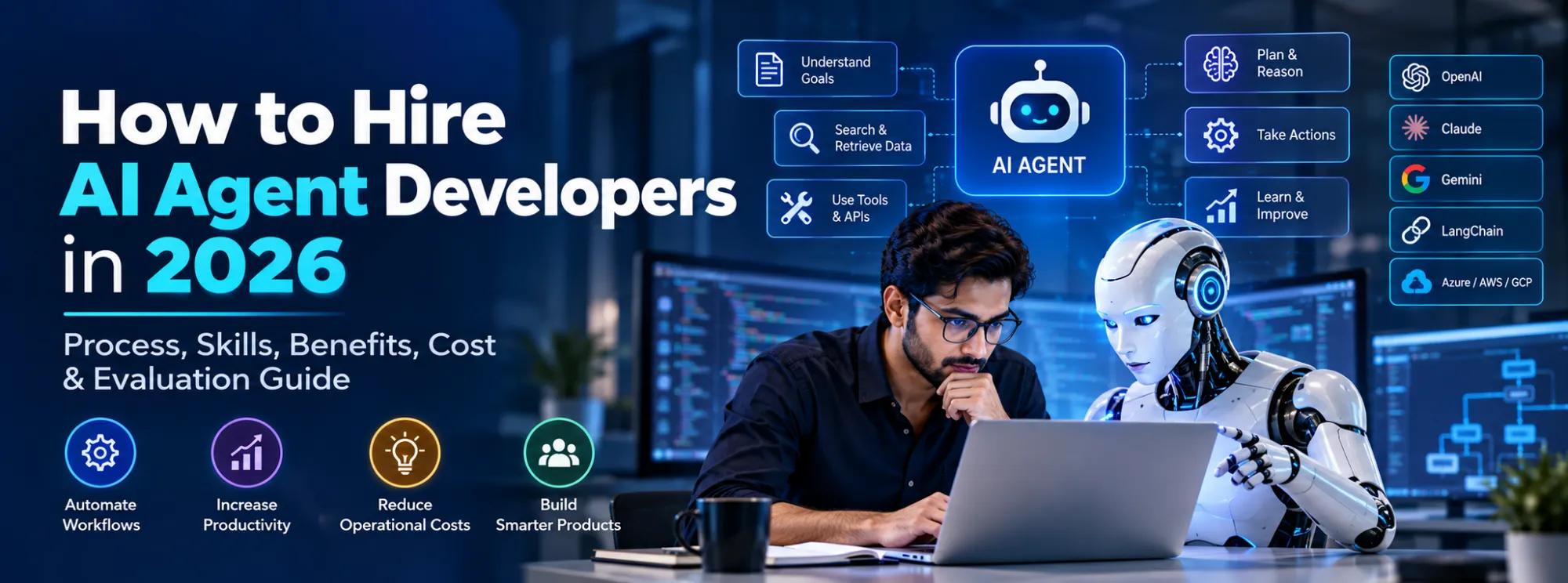
In practice, most production agents include five parts:
- Goal intake: a user request, trigger, or policy objective.
- Context retrieval: pulling documents, CRM records, ERP data, prior tickets, or policy rules.
- Planning: deciding which steps to attempt and in what order.
- Action: calling tools such as email systems, calendars, databases, or workflow platforms.
- Verification: checking outputs against constraints, confidence thresholds, or approval gates.
That last step is the one people underestimate. Without verification, you do not have a trustworthy autonomous workflow. You have a fast way to spread errors. Strong systems keep logs, attach evidence, and route uncertain cases to humans. Weak systems skip those controls and create the sort of brittle automation that teams abandon after a month.
The Hans India recently summarized agentic AI as an ecosystem rather than a single model or chatbot, reflecting comments from IIIT Hyderabad’s TechForward roundtable. That framing is accurate because success depends less on one model’s IQ than on the surrounding architecture: permissions, memory, observability, fallback paths, and domain-specific rules. Here is the source: The Hans India on agentic AI as an ecosystem.
2. How autonomous workflows work under the hood
Autonomous workflows sound abstract until you break them into steps. Most are built around events and decisions. An event happens: a form is submitted, a payment fails, a contract arrives, a customer asks for a refund. The system then decides whether to classify, enrich, act, ask, or escalate. What makes the workflow “autonomous” is not that every step is unsupervised. It is that the system can move the work forward without waiting for a human at each stage.
Take a support operation. A modern agent can read the incoming message, identify the product and issue type, check account history, search the knowledge base, draft a response, decide whether the customer is eligible for compensation, and create a follow-up task if a hardware swap is needed. A human might still approve credits above a threshold, but the routine path is handled end to end.
There are usually three layers in a serious deployment:
- Reasoning layer: the model interprets the goal and proposes actions.
- Tool layer: connectors to CRMs, ERPs, ticketing systems, email, messaging, spreadsheets, and databases.
- Control layer: policies, confidence rules, audit logs, approval gates, and rollback options.
The control layer is where many 2024-era prototypes fell short. They could produce impressive demos but struggled in live environments because enterprise work is full of exceptions. Addresses do not match. Duplicate records appear. Contracts use odd language. Pricing rules differ by region. If an agent cannot detect those edge cases, it becomes an expensive source of rework.
This is why orchestration platforms have become more important in 2026. Companies want agents that can coordinate across applications rather than remain trapped in one interface. The MSN piece on autonomous agents and voice AI describes how productivity tools are shifting toward systems that initiate tasks and complete them across channels, not just answer prompts in a single app. The article is here: MSN on autonomous agents and voice AI.
A practical rule I use when assessing vendors is this: ask for the exception map. If a company cannot show how the agent handles low-confidence cases, conflicting data, missing permissions, and failed tool calls, the workflow is not mature enough for critical use. The glossy front end is the easy part. Reliability lives in the error handling.
The real benchmark for an autonomous workflow is not whether it succeeds on the happy path, but whether it fails safely when the data is messy, incomplete, or contradictory.
3. Why the market accelerated so quickly from 2024 to 2026
The current rush did not appear from nowhere. Three changes pushed AI agents from lab curiosity into boardroom priority. First, language models became better at structured tool use. Second, companies built more connectors to operational systems. Third, executives stopped asking only, “Can AI draft this?” and started asking, “Can AI close the loop?” That shift from content generation to process execution is the real story.
Enterprise software vendors have moved aggressively. Microsoft, Salesforce, ServiceNow, SAP, Oracle, and a long tail of specialist startups now pitch agent layers for service, finance, HR, and sales operations. The strategic logic is obvious. If your platform already stores the records and permissions, you are well placed to add an agent that can act on that data. Forbes’ reporting on SAP captures this neatly: the prize is not just smarter analytics but a system that can carry out procurement or finance tasks with less manual intervention.
Sector-specific players are moving too. In automotive retail, for example, Auto Remarketing reported that DriveCentric launched autonomous AI agents to handle “critical workflows,” a sign that the concept is spreading beyond big horizontal software firms into operational niches. The report is here: Auto Remarketing on DriveCentric’s autonomous AI agents. That matters because vertical adoption is often where technology proves itself. Generic assistants are easy to market. Domain agents that survive real compliance, inventory, and customer-service conditions are harder to build and more useful.
There is also a labour economics angle. Many teams are carrying the same pressures they had in the early 2020s: hiring is selective, budgets are tight, and managers still need faster turnaround. Agents promise leverage in the spaces where work is repetitive but not fully deterministic. Think invoice review, knowledge retrieval, scheduling, claims intake, lead qualification, and basic policy checks. Those tasks were awkward for old automation because they required judgment. They were expensive for humans because the volume was high. AI agents land in that gap.
If you want the broader strategic view, The Future of AI Agents and Autonomous Workflows Explained and Agentic AI in FinTech: How Autonomous Agents Are Replacing Manual Compliance & Back-Office Workflows both show how quickly the category has expanded from experimentation into process redesign.
4. Where AI agents are delivering value right now
The most credible use cases in 2026 share a pattern: they involve clear goals, digital records, measurable outcomes, and tolerable error boundaries. That is why customer operations, internal knowledge work, back-office processing, and sales support are leading categories. By contrast, fully autonomous strategy, legal judgment without review, and high-stakes medical decisions remain much more constrained.
Here are the areas where agents are proving useful:
- Customer support: ticket triage, response drafting, refund routing, account checks, and follow-up scheduling.
- Sales operations: lead scoring, CRM updates, outbound sequencing, meeting prep, and pipeline summaries.
- Finance and procurement: invoice matching, exception flagging, vendor communication, and approval preparation.
- HR and internal service desks: policy Q&A, onboarding task coordination, access requests, and status updates.
- Compliance and risk ops: document collection, first-pass checks, escalation packets, and audit trail assembly.
Notice that none of those examples require the agent to “think like a human” in a broad sense. They require it to complete bounded work reliably. That is a healthier frame than the hype-heavy language around digital employees. In most organisations, the best early result is not replacing a department. It is cutting cycle time, reducing queue backlog, and freeing skilled staff from low-value admin.
FinTech offers a sharp example because the workflows are document-heavy and rule-bound. KYC reviews, transaction monitoring support, onboarding checks, and evidence gathering all involve repetitive steps with frequent handoffs. That is why agentic systems are gaining attention there, as explored in this WriteUpCafe analysis of agentic AI in FinTech. The point is not that compliance can be left to a model. It is that agents can prepare, classify, and package work so human specialists spend their time on judgment rather than administration.
One more pattern is worth stressing: successful deployments usually begin with semi-autonomy. Teams start with recommendation mode, then add approval-based action, then permit full autonomy on low-risk cases. This staged rollout is boring compared with the bold claims on conference stages, but it is how durable systems get built.
5. The hard parts: risk, governance, and why many pilots still fail
For all the momentum, plenty of agent projects still stall. The causes are less mysterious than vendors suggest. First, data quality is often poor. An agent cannot reconcile customer records that the business itself has never cleaned. Second, permissions are messy. The system may know what to do but lack access to the right tool or field. Third, companies underestimate process ambiguity. What looked like one workflow turns out to be twelve variations with different exceptions.
Hallucination remains a concern, but it is no longer the only one. In operational settings, four other risks are just as important:
- Silent failure: the agent does nothing after a tool error, and no one notices quickly.
- Overreach: the system takes an action outside its intended authority.
- Traceability gaps: staff cannot reconstruct why a decision was made.
- Automation bias: humans approve poor outputs because the system sounds confident.
This is why governance has become a design question, not merely a legal one. Good teams define clear scopes: which actions are allowed, which require approval, what evidence must be attached, and what confidence score triggers escalation. They also monitor business metrics, not just model metrics. Accuracy on a benchmark matters less than whether refund errors fall, case resolution speeds improve, and rework declines.
Regulation is part of the story too. The EU AI Act continues to shape procurement and documentation expectations for some organisations, while sector regulators in finance and health remain focused on accountability and auditability. Even where an AI agent is not formally classed as high risk, buyers increasingly want proof that the vendor can explain data flows, model updates, and human override mechanisms.
A simple implementation checklist helps:
- Start with a workflow that already has a written process.
- Measure baseline time, error rate, and handoff count before deployment.
- Keep a human approval gate for financial, legal, or customer-sensitive actions.
- Log every tool call and every source used in the final output.
- Review failure cases weekly for the first 90 days.
That may sound procedural, but I have seen enough software rollouts to know the pattern. Teams that treat agents as operational systems get steadier results. Teams that treat them as clever assistants often end up with hidden risk and disappointed managers.
6. What changed in 2026, specifically
The tone of the market in 2026 is different from even a year ago. The big change is that buyers are demanding end-to-end proof. Demos are no longer enough. They want to know whether the agent can authenticate into systems securely, retrieve the correct records, complete actions across tools, and produce an auditable trail. That has shifted attention away from raw model novelty and toward orchestration, governance, and integration depth.
Another change is voice. Voice agents are now being packaged not only for call centres but also for internal productivity and service coordination. According to the MSN report mentioned earlier, voice AI is increasingly paired with autonomous agents to create systems that can take spoken instructions, update records, trigger workflows, and follow through. The appeal is obvious for field teams, retail operations, and executives who prefer conversational control over dashboards.
Enterprise ambition has widened as well. SAP’s framing of an “autonomous enterprise” is not an isolated marketing phrase. It reflects a broader push to shift from application-centric work to goal-centric work. Instead of a staff member manually moving between ERP screens, CRM notes, and spreadsheets, the agent becomes the operator across those systems. Whether that vision fully lands is still open to debate, but the direction of travel is clear.
At the same time, the market is becoming more realistic. Buyers now ask tougher questions about unit economics. If an agent saves five minutes but adds review overhead, the value may be marginal. If it resolves 40% of low-complexity tickets without escalation, that is a different story. The strongest vendors are responding with narrower, more measurable claims.
This is also the year when internal AI literacy started to matter as much as model choice. Teams that understand prompting, exception design, process mapping, and data hygiene are outperforming teams that simply purchase a platform and hope for transformation. The technology is improving, yes. But the organisations getting results are the ones doing the unglamorous setup work.
2026 is the year AI agents stopped being judged mainly by how impressive they sound and started being judged by whether they can complete real work with controls, logs, and measurable savings.
7. How to evaluate an AI agent before you trust it with work
If you are a buyer, operator, or team lead, the evaluation process should be stricter than a typical software demo. I would use five tests.
1. Task fit. Can the agent handle a workflow with stable inputs, clear outputs, and known edge cases? If the process itself is chaotic, AI will not fix that first.
2. Tool competence. Ask the vendor to show live tool use, not a slide. Can the agent read from the CRM, write to the ticketing system, and recover from a failed API call?
3. Evidence quality. Does each recommendation or action include sources, logs, and a reason trail? If not, review becomes guesswork.
4. Escalation logic. What happens when confidence is low, data conflicts, or a policy threshold is crossed? Mature systems know when to stop.
5. Business outcome. Which number should improve: time to resolution, cost per case, conversion rate, first-contact resolution, or error rate? If the answer is vague, the project is not ready.
I would also ask for a 30-day pilot with a narrow scope and a documented baseline. Compare before and after on concrete measures. Keep the first workflow boring. Boring is good. It means the process is common, measurable, and easy to audit. That is where agents earn trust.
For individuals, the same logic applies on a smaller scale. If you are experimenting with personal productivity, begin with repeatable tasks: meeting summaries, inbox triage, research collection, or project status updates. Keep a checklist. Review the outputs. The habit is familiar to anyone who has taken a free online course or built a side project: you learn faster when the system is constrained and the feedback is immediate.
8. What to watch next
The next phase will likely be shaped by three tensions. The first is breadth versus reliability. Vendors want agents that can do everything. Customers want agents that do a few things well. The winners may be the platforms that combine a broad framework with tightly engineered domain modules.
The second tension is autonomy versus accountability. Businesses like automation until a mistake reaches a customer, regulator, or ledger. Expect more emphasis on permissions, simulation environments, approval routing, and post-action review. Full autonomy will grow, but unevenly and mostly in low-risk lanes first.
The third is central platform versus team-built agent. Large software suites want to be the command centre. Meanwhile, capable internal teams are building custom agents around their own data and workflows. That split will continue because no off-the-shelf product perfectly matches every process.
My own view is fairly plain. AI agents are real, useful, and already changing how digital work gets done. They are also easy to oversell. The strongest implementations are not the loudest ones. They are the systems that reduce queue times, document their reasoning, and know when to ask for help. If you remember that, the category becomes much easier to assess.
For readers tracking this space, the practical takeaway is simple:
- Define one workflow with a measurable bottleneck.
- Map the exceptions before you automate the happy path.
- Choose tools with strong integrations and audit trails.
- Keep humans in the loop where money, rights, or trust are at stake.
- Scale only after the pilot improves a number that matters.
That is the sober version of the story, and it is the useful one. AI agents are not a replacement for process design, management judgment, or clean data. They are a new execution layer for digital work. Used well, they can absorb repetitive coordination and move routine tasks from queue to completion. Used carelessly, they can automate confusion. The difference is not hype. It is design.























Sign in to leave a comment.