Introduction: AI’s Unexpected Canvas in Art Education
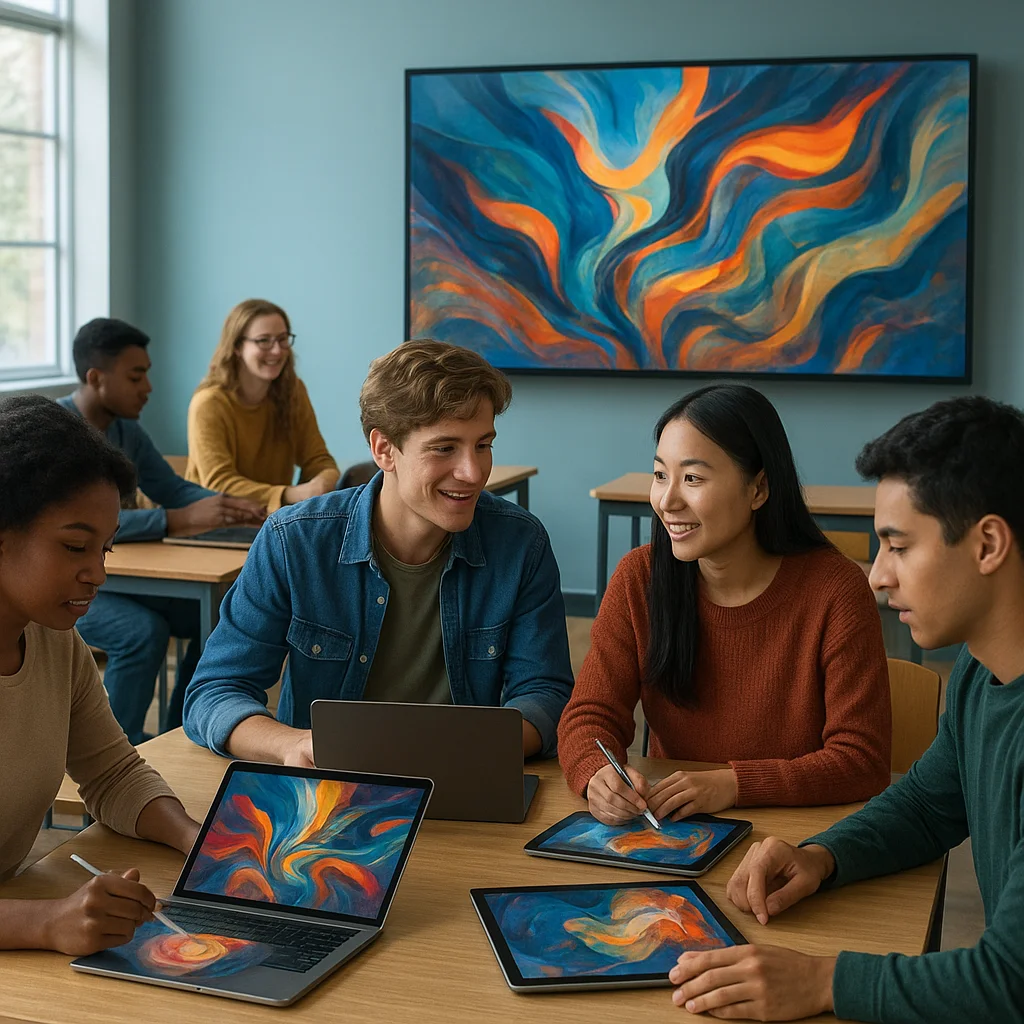
In a quiet studio at a renowned Melbourne art school, a group of students gathers around a computer screen. Instead of traditional paintbrushes or charcoal sticks, they wield a new tool: artificial intelligence. It’s not just a gimmick or a fleeting trend; AI has become a fundamental element within art education, reshaping how creative ideas are conceived and realised. This shift is both exciting and controversial, raising questions about artistry, originality, and the future of creative professions.
The integration of AI in art curriculums is no longer a distant possibility but an active reality. According to recent reports from educational bodies and industry experts, over 60% of leading art institutions worldwide have incorporated AI modules into their programs by early 2026. This guide explores how AI has woven itself into the fabric of art education, from foundational courses to advanced creative projects, and what this means for students, educators, and the wider creative economy.
Tracing the Evolution: How AI Found Its Place in Art Schools
The relationship between art and technology is longstanding, stretching back to the Renaissance with innovations like perspective drawing and the camera obscura. However, AI’s entry into art education is distinct in scale and impact. Initially, AI was introduced as a tool for digital art and graphic design, primarily to automate repetitive tasks or enhance visual effects.
The early 2020s marked a turning point. The rise of generative AI models, such as DALL·E, Midjourney, and Stable Diffusion, demonstrated AI’s ability to create complex artworks from simple prompts. This technology captivated both artists and educators alike, prompting institutions to reconsider traditional curricula. Instead of viewing AI as a threat, art schools began experimenting with it as a collaborative medium.
By 2023, many universities started formal programs incorporating AI ethics, computational creativity, and AI-assisted design. Australian institutions mirrored this trend, with the Victorian College of the Arts launching an AI and Creative Technologies pathway that blends coding, machine learning, and fine arts. This evolution reflects a broader cultural acceptance of AI as a legitimate artistic partner rather than just a tool.
“AI challenges us to rethink authorship and creativity. It’s not about replacing artists but expanding what’s possible.” – Dr. Helen Marks, Melbourne Art Tech Institute
Core Analysis: AI’s Role and Impact in Art Education
The integration of AI in art education is multifaceted, impacting curriculum design, teaching methods, and student outcomes. To understand this impact, it’s helpful to break down AI’s roles in art schools:
- Creative Collaboration: AI acts as a co-creator, generating ideas, textures, or compositions that students refine or reimagine.
- Technical Skill Building: Students learn to code AI tools or adapt open-source models, merging technical literacy with artistic practice.
- Critical Engagement: AI prompts discussions on ethics, originality, and the social implications of machine-generated art.
- Production and Experimentation: Workshops enable hands-on use of AI for multimedia projects, installations, and interactive art.
Quantitative data from surveys conducted in 2025 across 20 art schools show that 75% of students feel AI enhances their creative potential, while 15% remain skeptical about its role in artistic integrity. Furthermore, a 2026 report by the Australian Council for the Arts indicates a 30% increase in student projects featuring AI elements compared to 2022.
AI also influences assessment criteria. Educators now evaluate not only the final artwork but also the conceptual use of AI, the complexity of prompts, and the ethical considerations demonstrated by students. This broadens the definition of artistic skill beyond manual dexterity to include computational thinking and interdisciplinary fluency.
“The new art student is part coder, part traditional artist. Success demands fluency in both creative intuition and algorithmic logic.” – Professor Liam O’Connor, Sydney School of Art
Current Developments in 2026: What’s New in AI and Art Education?
As of 2026, AI’s presence in art schools is more sophisticated and widespread than ever. Key developments include:
- AI-Powered Studios: Universities have established dedicated AI art labs equipped with the latest generative models and hardware accelerators.
- Cross-Disciplinary Degrees: Programs combine arts, computer science, and data ethics, reflecting the increasing need for hybrid expertise.
- AI Ethics Frameworks: Institutions adopt formal guidelines addressing bias, copyright, and the environmental impact of AI training.
- Industry Partnerships: Collaborations with tech companies provide students access to cutting-edge AI tools and internships.
- Expanded Online Learning: Massive open online courses (MOOCs) offer AI art modules accessible worldwide, democratizing education.
One example is the University of Melbourne’s recent partnership with a leading AI developer to integrate real-time AI feedback in painting and sculpture studios, allowing students to experiment with AI-generated suggestions during the creative process. This real-time interaction changes the pace and nature of artistic development.
Additionally, international art festivals now feature AI art exhibitions curated by students, highlighting AI’s acceptance as a credible artistic medium. This visibility encourages more students to explore AI creatively and critically.
For those interested in the broader implications, the WriteUpCafe article "AI in Art School Curriculums: A 2026 Perspective" offers a detailed examination of these trends and institutional responses.
Expert Perspectives: Navigating Opportunities and Challenges
Opinions among educators and artists vary, but a consensus is emerging around AI’s dual role as a tool and a subject of study. Experts emphasise the importance of balanced integration, ensuring students develop both traditional skills and digital fluency.
Dr. Maya Reynolds, a digital art theorist, warns that overreliance on AI risks diminishing foundational artistic skills. “We must remember that AI is a means, not an end,” she argues. “Art schools need to preserve craftsmanship while encouraging innovation.”
Conversely, some educators highlight AI’s potential to democratize creativity. By lowering technical barriers, AI allows students from diverse backgrounds to express complex ideas visually without extensive prior training.
Industry professionals also note the career advantages. Employers increasingly seek graduates capable of blending AI with artistic insight to produce novel content for advertising, gaming, film, and virtual reality. This hybrid skill set is becoming a distinct competitive edge.
- Embrace AI as an augmentative tool, not a replacement.
- Prioritize ethical literacy alongside technical training.
- Encourage experimentation with AI to expand creative boundaries.
- Maintain rigorous instruction in traditional artistic techniques.
These principles guide curriculum development and help students navigate the evolving creative landscape.
Future Outlook: What Art Students Should Watch and Prepare For
Looking ahead, AI’s role in art education will likely deepen and diversify. Key trends to monitor include:
- Personalized Learning: AI-driven platforms could tailor instruction to individual student strengths and weaknesses, enhancing learning outcomes.
- Expanded Creative Modalities: Integration with virtual and augmented reality will create immersive, interactive art forms.
- New Artistic Professions: Roles like AI art curator, prompt engineer, and algorithmic storyteller will emerge as distinct career paths.
- Intellectual Property Evolution: Legal frameworks will adapt to address AI-generated works and collaborative authorship.
- Global Collaboration: AI enables remote, cross-cultural artistic projects, broadening creative communities.
To prepare, students should:
- Develop foundational coding and data literacy skills.
- Engage critically with AI’s ethical and societal implications.
- Experiment with AI tools to enhance personal creative voice.
- Seek mentorships and internships that bridge art and technology.
This proactive approach equips emerging artists to harness AI effectively, ensuring relevance and resilience in their careers.
For practical strategies on leveraging technology and workflow automation in creative fields, you might enjoy exploring the WriteUpCafe piece, "The Future of AI Agents and Autonomous Workflows Explained."
Case Studies: AI in Action at Leading Art Schools
Several institutions exemplify successful AI integration:
- Royal College of Art, London: Their AI Studio offers courses combining machine learning with sculpture. Students have created AI-assisted kinetic installations showcased at international galleries.
- California Institute of the Arts (CalArts): Incorporates AI-generated music and visuals in performance art, blending disciplines and advancing experiential storytelling.
- Victorian College of the Arts: Melbourne-based, this school’s AI curriculum includes collaborations with local tech startups, enabling students to develop commercial applications alongside fine art projects.
- Beijing Central Academy of Fine Arts: Uses AI to preserve and reinterpret traditional Chinese art forms, blending heritage with innovation.
These examples illustrate AI’s versatility and the diverse pedagogical models emerging globally. They demonstrate how AI tools serve both creative exploration and cultural dialogue.
To understand AI’s wider implications in technology-driven fields, consider the WriteUpCafe article on "Expert Tips for Choosing Between Hydrogen Fuel Cell and Battery Electric Vehicles," which shares insights on technological adoption and adaptation that resonate across disciplines.


























Sign in to leave a comment.