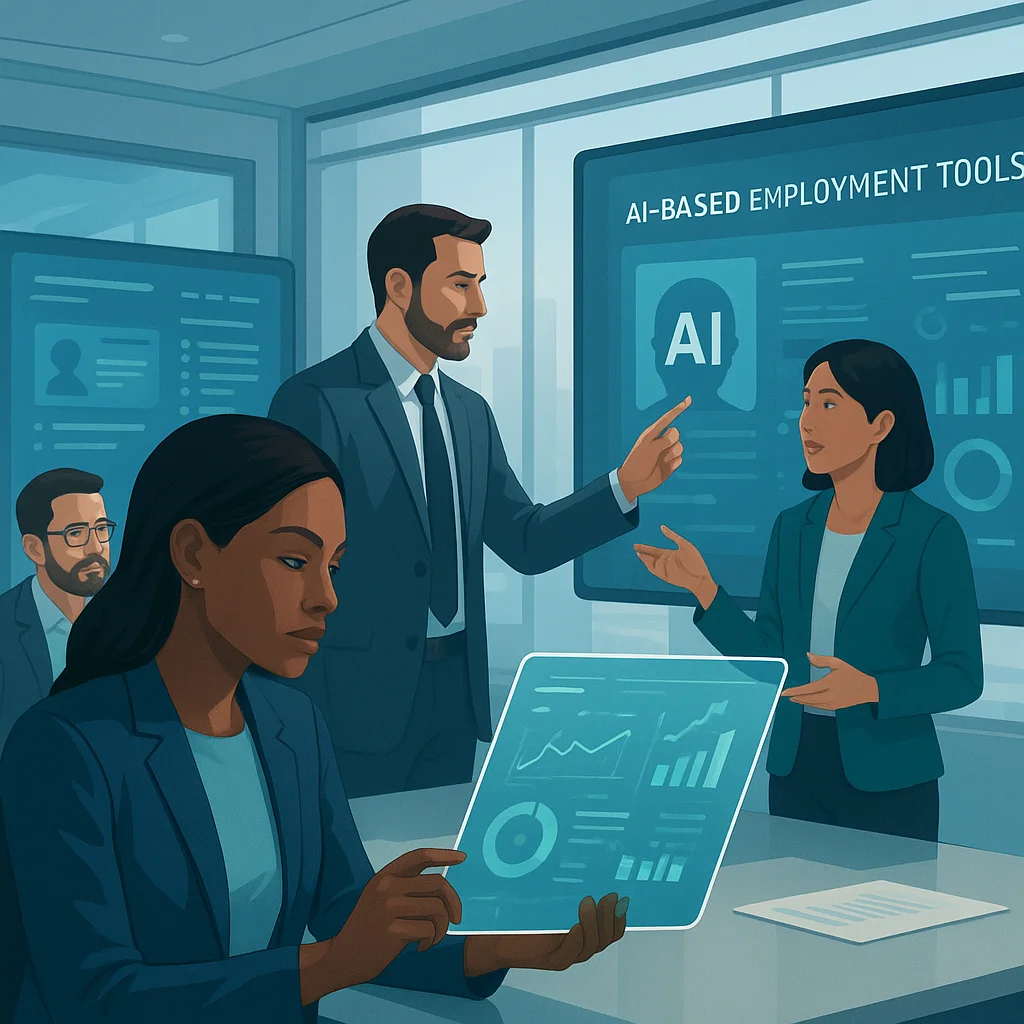

Introduction: The Stakes in Choosing AI Employment Tools
Artificial intelligence has reshaped hiring processes across industries, promising speed, consistency, and predictive power. Yet, for chief human resources officers (CHROs) and industrial-organizational psychologists, the rush to adopt AI-based employment tools raises critical questions. How do you know if a vendor’s AI solution is trustworthy, fair, and effective? The ramifications of a misstep are significant: from legal challenges and reputational damage to undermining diversity and inclusion efforts.
Consider this: a 2025 survey by Gartner found that 63% of HR leaders expressed concerns about AI bias in recruitment tools, while only 29% felt confident in their current evaluation methods. The CHRO Association and the Society for Industrial and Organizational Psychology (SIOP) Foundation have jointly issued guidelines emphasizing rigorous evaluation frameworks designed to balance innovation with responsibility.
“Evaluating AI tools isn’t just about features or price—it’s a comprehensive process that includes bias audits, validation studies, and transparent vendor practices,” notes Dr. Karen Liu, Senior Researcher at SIOP Foundation.
This article unpacks expert strategies for assessing AI employment tools from vendors, reflecting the latest insights from 2026. It offers practical, step-by-step advice grounded in authoritative research and real-world examples, helping HR leaders make informed, ethical decisions.
Background: The Evolution of AI in Hiring and Why Evaluation Matters
AI in employment stretches back over a decade but has accelerated dramatically since 2020, fueled by advances in natural language processing, machine learning, and data availability. Initially focused on resume screening and keyword matching, AI tools have grown to encompass candidate chatbots, video interview analysis, cognitive assessments, and predictive analytics estimating future job performance.
However, early hype often overlooked significant pitfalls. High-profile cases emerged where AI systems replicated or amplified human biases, disproportionately disadvantaging underrepresented groups. Regulatory scrutiny escalated globally, with bodies such as the U.S. Equal Employment Opportunity Commission (EEOC) and the EU’s AI Act proposing stringent compliance requirements.
The CHRO Association’s 2024 whitepaper emphasizes the need for a multidimensional evaluation approach, merging technical validation, ethical review, and user experience assessments. Meanwhile, the SIOP Foundation has developed standards for AI tool validation grounded in psychometric principles, ensuring tools deliver reliable, valid results aligned with organizational goals.
These frameworks mark a turning point: no longer is AI adoption an exploratory experiment—it is a strategic, accountable decision demanding thorough due diligence.
Core Analysis: How to Evaluate AI Employment Tools Step-by-Step
Drawing on guidance from CHRO Association and SIOP Foundation, here are essential steps for evaluating AI-based employment tools before procurement:
- Define Clear Objectives and Outcomes
Begin by specifying what the AI tool must achieve. Are you seeking to improve candidate screening efficiency, reduce turnover, or enhance diversity hiring? Clear goals guide the evaluation criteria.
- Request Vendor Transparency
Demand detailed documentation on the AI model’s training data, algorithms, and decision-making logic. Vendors should provide access to independent audits or certifications.
- Assess Bias and Fairness
Insist on bias testing results, especially regarding protected characteristics such as race, gender, age, and disability. Independent third-party audits are preferable to vendor self-reports.
- Validate Predictive Validity
Examine empirical evidence demonstrating that the AI tool predicts relevant employment outcomes (e.g., job performance, retention). Look for peer-reviewed studies or in-house validation projects.
- Check Compliance with Legal and Ethical Standards
Ensure the tool aligns with applicable laws including EEOC guidelines and GDPR. Ethical considerations should include candidate privacy and data security.
- Evaluate Integration and User Experience
Test how the tool integrates with existing HR systems and assess the interface usability for both recruiters and candidates.
- Plan for Continuous Monitoring
AI tools require ongoing oversight to detect drift or emergent biases. Establish metrics for periodic re-evaluation post-implementation.
“Vendors who can’t or won’t share their model’s inner workings should raise immediate red flags,” advises Michael Reynolds, CHRO Association board member.
Following these steps ensures a balanced review that goes beyond marketing claims to uncover real-world effectiveness and risks.
Current Developments in 2026: Trends Shaping AI Employment Tool Evaluation
The AI employment tool market has matured markedly in 2026. Several trends influence how CHROs and I-O psychologists approach evaluation:
- Emergence of Verifiable AI Ethics Certifications: Entities like the Global AI Ethics Consortium (GAIEC) now offer standardized certifications. Vendors with these certifications are gaining preference.
- Rise of Explainable AI (XAI): Tools are incorporating explainability features that provide human-interpretable reasons behind recommendations, improving transparency.
- Integration of Real-Time Bias Mitigation: Advanced AI platforms embed continuous bias detection during candidate scoring, adjusting dynamically.
- Greater Regulatory Clarity: Recent updates to the EU AI Act and U.S. Algorithmic Accountability Act provide more detailed compliance frameworks, making legal adherence a non-negotiable evaluation criterion.
- Focus on Candidate Experience Analytics: Vendors increasingly report metrics around fairness perceptions and candidate feedback, reflecting a more holistic evaluation approach.
These developments underscore the need for CHROs to stay current with evolving standards and to demand sophisticated vendor capabilities.
For deeper insights into evaluation methods aligned with 2026 benchmarks, explore the CHRO Association & SIOP Foundation guidance on WriteUpCafe.
Expert Perspectives: Industry Voices on Best Practices and Pitfalls
Interviews and panel discussions with industry experts reveal nuanced approaches and common challenges:
- Dr. Sandra Kim, I-O Psychologist: "Validation doesn’t stop at purchase. Organizations must invest in ongoing data collection to confirm the AI tool’s relevance to their unique workforce."
- Jamal Hassan, CHRO at a multinational tech firm: "We learned the hard way that vendor demos can be polished but don’t always reflect real use cases. Pilot testing in your environment is critical."
- Lucy Fernandez, AI Ethics Consultant: "Beware of black-box models. Transparency is not just ethical; it’s practical for troubleshooting and building trust."
"The biggest pitfall is treating AI tools as plug-and-play products rather than complex systems requiring expert oversight," warns Lucia Gonzalez, Director at the SIOP Foundation.
These insights echo across forums and conferences, reinforcing the message that AI employment tool evaluation is both a science and an art.
What to Watch: Future Outlook and Key Takeaways for HR Leaders
The trajectory of AI in hiring points to several future shifts that leaders should anticipate:
- Increased Collaboration Between Vendors and Academic Institutions
Joint research will validate AI models more rigorously and transparently.
- Expansion of AI Tools to Holistic Workforce Analytics
Beyond hiring, AI will assess engagement, development, and retention, requiring integrated evaluation frameworks.
- Enhanced Candidate Control Over Data
New privacy tech will empower candidates to manage how AI uses their information.
- Growing Role of AI Literacy for HR Teams
Training programs will become standard to equip HR professionals with the skills to interpret and manage AI systems effectively.
Ultimately, CHROs and I-O psychologists must embrace a proactive, informed stance. This includes building interdisciplinary teams, engaging external experts, and leveraging resources such as the WriteUpCafe Artificial Intelligence topic page for ongoing learning.
"AI is a tool, not a panacea. The human judgment layered on top of AI outputs is what determines success or failure in employment decisions," summarizes Dr. Karen Liu.
By following expert evaluation steps, staying abreast of regulatory and technological shifts, and fostering ethical stewardship, HR leaders can harness AI’s benefits while safeguarding fairness and compliance.
For a broader understanding of AI’s role in education and workforce development, you might enjoy the Complete Guide to AI Integration in Art School Curriculums on WriteUpCafe, which highlights foundational AI literacy that parallels workforce needs.






























Sign in to leave a comment.