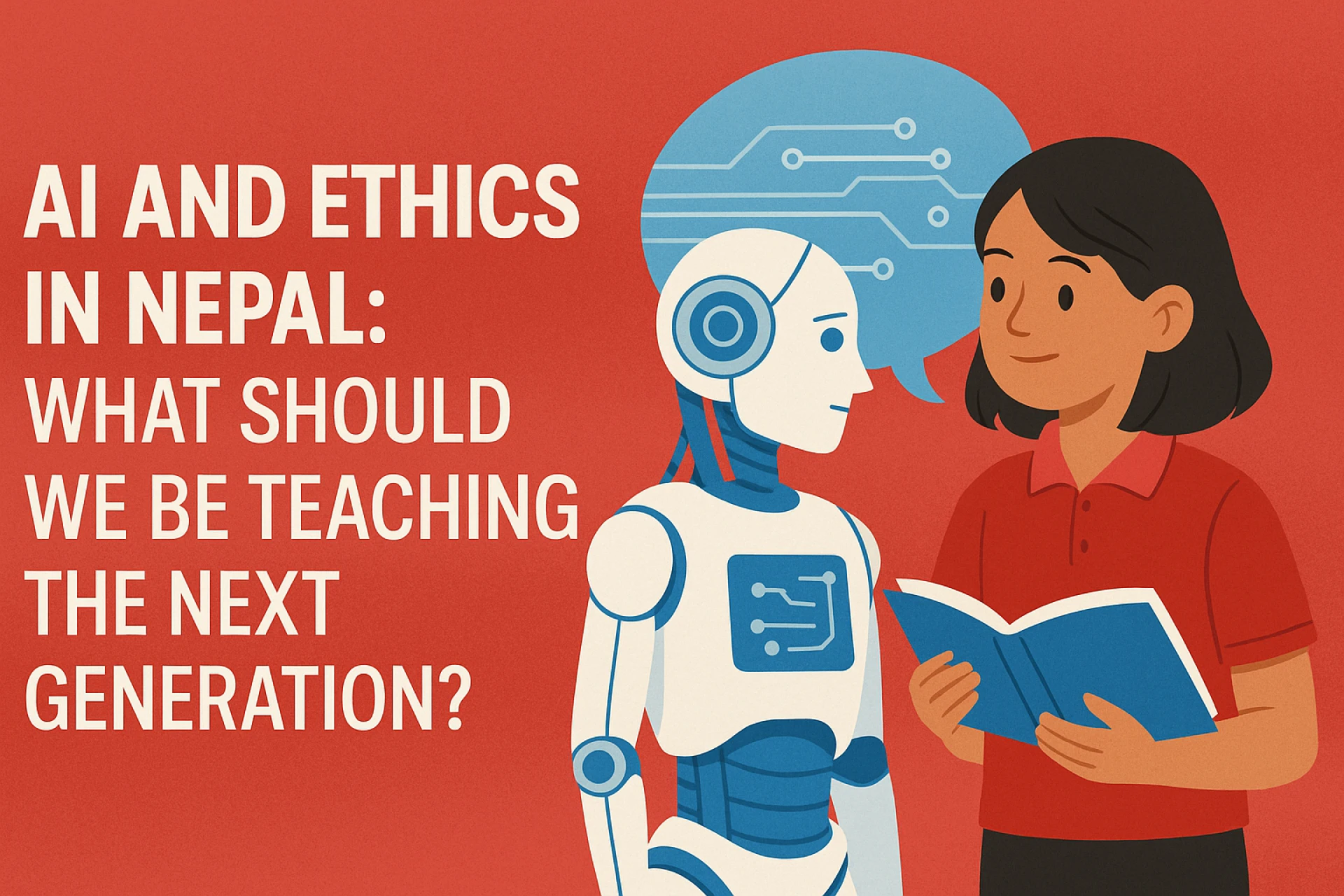

Technology is changing how people live, work, and learn in Nepal. These days, artificial intelligence or AI, is being used in all kinds of ways, like online shopping, voice assistants, traffic control, and health tools. But while we teach students how AI works, one important thing is often left out: ethics.
We don’t just need smart people who can build AI. We need people who know how to use it wisely and fairly.
Why Ethics Matters in AI Learning
Let’s say an AI system is made to help banks approve small loans. If the system is only trained on data from cities, it might unfairly reject people from villages. This actually happened in Nepal, according to a study shared by the South Asia AI Monitoring Forum. It wasn’t done on purpose, but it caused real harm.
That’s the thing about AI. It doesn’t know right from wrong. It just does what it's told. That’s why students learning AI must also learn about fairness, bias, and privacy from day one.
So when someone signs up for an AI course in Nepal, they shouldn’t just learn how to code. They should learn how their choices can impact people’s lives.
What Nepal Is Doing Right
Some groups in Nepal are already working to fix this. Few institutions are offering training that doesn’t just focus on technical skills. They also guide learners to think about how AI affects real people.
For example, one of the training institution includes project-based learning where students explore the risks of AI tools being used in schools or public places. This helps them understand both the good and the not-so-good sides of AI.
Other organizations are stepping in, too. Smart Tech Solutions runs short AI ethics sessions for teachers. That way, even school kids can start thinking about these issues early. DataKarma Nepal provides free resources to help trainers teach responsible AI use in simple ways.
What Questions Should Students Be Asking?
Ethics isn’t just a subject in a book. It’s about asking everyday questions when building new tools. Questions like:
- Is this AI tool treating everyone fairly?
- Will someone get left out?
- Am I using someone’s private data without them knowing?
Imagine building a chatbot that helps people apply for jobs. What if the bot only speaks in Nepali and doesn’t support other languages? That’s a problem in a country with over 120 languages. These kinds of choices really matter.
The Right Way to Teach AI
We need more programs that mix ethics with hands-on projects. Students should work on real situations, not just theory. That’s why many are now choosing to visit an AI course in Nepal that focuses on building smart tools and being thoughtful while doing it.
Institutions are already leading this kind of work. They help students ask hard questions and build solutions that are fair for everyone.
Wrapping Up: Smarter Tech, Kinder Minds
AI will be a big part of Nepal’s future. But how we use it will depend on the people building it. If we want AI to help everyone, we must teach students to care, not just about code, but about people.
Ethics isn’t extra. It’s essential.
Let’s keep it going.






























Sign in to leave a comment.