Choosing the right AI course is not just about interest — it’s about eligibility alignment. Many students face rejection because their academic profile does not match university requirements. This guide explains how an AI Course Eligibility Checker works, why it matters, and how to use it effectively for study abroad planning in 2026.
What Is an AI Course Eligibility Checker?
An AI Course Eligibility Checker is an intelligent evaluation system that matches your academic profile with university admission criteria for Artificial Intelligence and related programs such as Data Science, Machine Learning, Robotics, and AI Engineering.
It typically analyses:
- Academic percentage / CGPA
- Previous field of study
- English proficiency (IELTS, PTE, TOEFL)
- Backlogs (if any)
- Work experience (if required)
- Preferred country and intake
Based on this data, it generates a personalized list of eligible AI programs.
Why Eligibility Checking Matters in 2026
AI-related programs are becoming increasingly competitive. Universities now apply stricter filters due to high demand. Common rejection reasons include:
- Non-technical background applying for advanced AI programs
- Insufficient math or programming foundation
- Low GPA compared to the minimum requirement
- Missing prerequisite subjects
An eligibility checker minimises these risks by pre-validating your profile before you apply.
How an AI Course Eligibility Checker Works
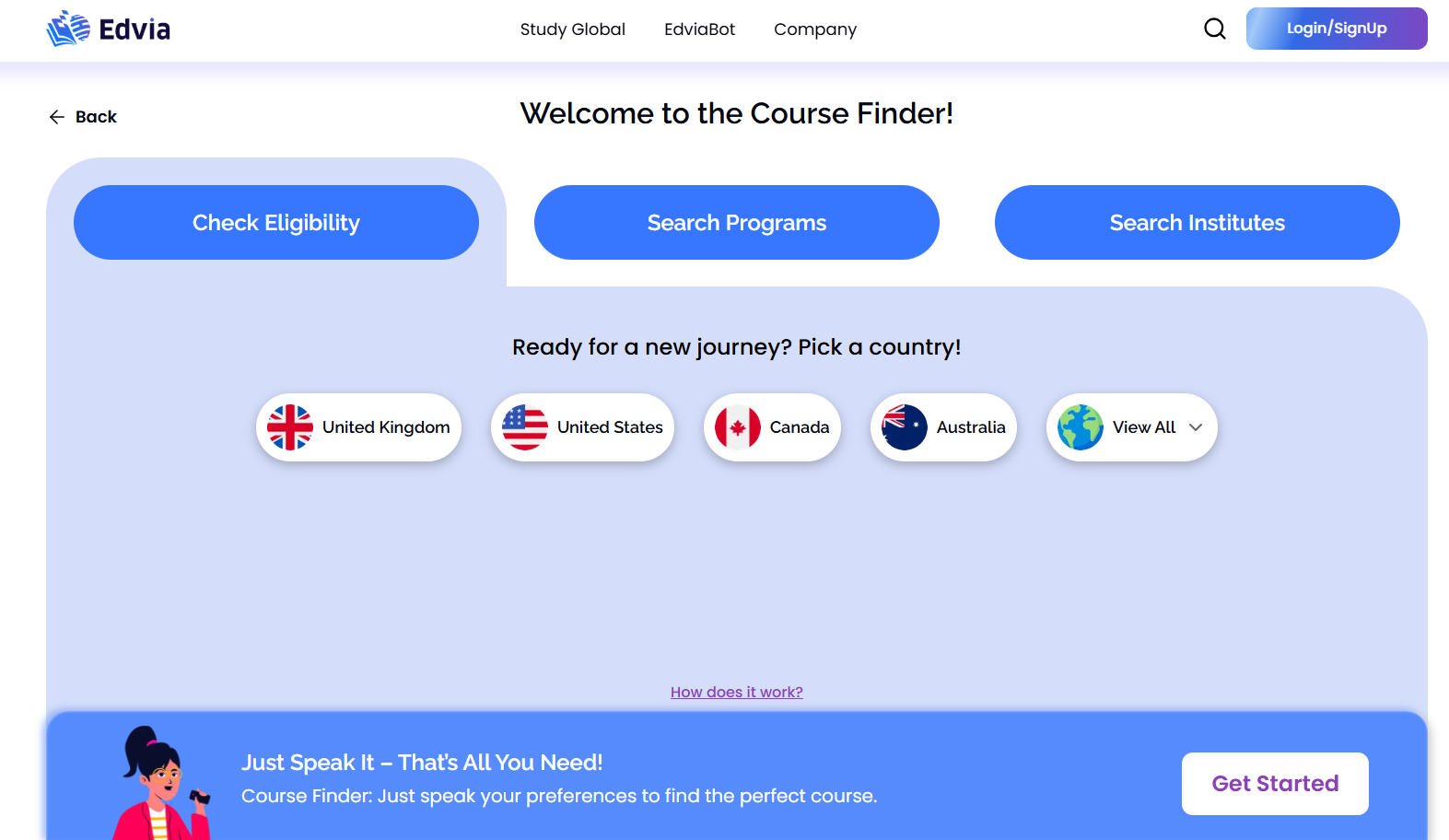
Most modern eligibility tools operate using structured rule-based systems combined with AI-driven recommendation engines.
Step 1: Profile Input
You enter:
- Degree (B.Tech, BSc, BBA, etc.)
- GPA/Percentage
- Relevant subjects studied
- Test scores
- Target country
Step 2: Criteria Matching
The system compares your inputs with:
- Official university eligibility rules
- Course-level prerequisites
- English language requirements
- Academic cut-offs
Step 3: Intelligent Recommendations
You receive:
- Eligible AI courses
- Universities matching your profile
- Estimated tuition range
- Application deadlines (if integrated)
Who Should Use an AI Course Eligibility Checker?
This tool is ideal for:
- Students planning a Master's in Artificial Intelligence
- Engineers shifting to Data Science or ML
- Non-CS students exploring AI with bridge programs
- Study abroad applicants wanting rejection-free applications
- Education consultants looking to streamline profile evaluation
Benefits of Using an AI Course Eligibility Checker
1. Reduces Visa & Admission Rejection Risk
Pre-screening prevents mismatched applications.
2. Saves Time and Application Fees
You avoid applying to universities where you don’t qualify.
3. Personalized Course Suggestions
Instead of generic listings, you see programs aligned to your academic background.
4. Clear Academic Gap Identification
The tool can highlight missing prerequisites, such as:
- Mathematics
- Programming knowledge
- Statistics background
Key Features to Look for in 2026
When choosing an AI Course Eligibility Checker, ensure it includes:
- Updated 2026 admission criteria
- Country-specific filters (UK, Canada, Australia, USA, Europe)
- Transparent data sources
- No mandatory paid registration for basic results
- Regular database updates
Common Eligibility Criteria for AI Courses (2026 Trends)
While requirements vary, most universities expect:
- Bachelor’s degree in Computer Science, IT, Engineering, Mathematics, or related field
- Minimum 60–70% or equivalent GPA
- Proof of English proficiency
- Basic programming skills (Python preferred)
- Some programs require calculus, linear algebra, or statistics
Top-tier institutions may also require:
- Statement of Purpose
- Letters of Recommendation
- GRE (in some regions)
Example Profile Evaluation (Case Study)
Profile:
- B.Tech in Mechanical Engineering
- 72% overall
- IELTS 6.5
- Basic Python knowledge
Result:
- Eligible for applied AI or Data Science programs
- May not qualify for highly theoretical AI research programs
- Recommended to choose practical-oriented MSc AI courses
This illustrates how eligibility alignment improves acceptance chances.
AI Course Eligibility Checker vs Manual Research
| Feature | Manual Research | AI Eligibility Checker |
|---|---|---|
| Time Required | High | Very Low |
| Risk of Error | High | Low |
| Personalization | Limited | High |
| Data Updates | Manual | Automated |
| Efficiency | Slow | Instant |
Frequently Asked Questions
Is an AI Course Eligibility Checker 100% accurate?
It is highly accurate when updated regularly, but final confirmation should always come from official university admission teams.
Can non-technical students apply for AI courses?
Yes, but eligibility depends on math and programming background. Some universities offer conversion or foundation pathways.
Does eligibility checking affect visa approval?
Indirectly yes. Correct course selection aligned with your background improves visa approval probability.
Final Thoughts
An AI Course Eligibility Checker is no longer optional in 2026 — it is essential. With rising competition and strict academic filters, pre-evaluating your profile ensures smarter applications, fewer rejections, and better ROI on your study abroad investment.
Before applying for any AI program, validate your eligibility, understand prerequisites, and choose a course that aligns with your academic foundation and career goals.
If you would like, I can now:
- Optimise this blog with structured schema markup (FAQ + Article)
- Create SEO meta title and description
- Add internal linking structure
- Rewrite it specifically for your website tone (EdTech brand style)
- Make it optimised specifically for Google AI Overviews
Let me know your preference.
























Sign in to leave a comment.