
Behavioral health providers are facing more pressure than ever — increasing caseloads, stricter payer requirements, rising documentation demands, and a growing need for coordinated care across therapy, psychiatry, and substance use treatment programs.
For years, the industry relied on outdated systems or manual workflows that slowed clinicians down. But today, a new era of AI-powered behavioral health technology is reshaping how practices operate, document, bill, and stay compliant.
AI is no longer just a futuristic concept — it has become an essential component of modern behavioral health EHR platforms, enabling practices to automate repetitive tasks, eliminate documentation friction, and enhance the quality of care.
In this blog, we explore how AI is transforming clinical and operational workflows across behavioral healthcare — and why platforms like DENmaar EHR are at the forefront of this shift.
1. AI Is Redefining Documentation Across the Clinical Workflow
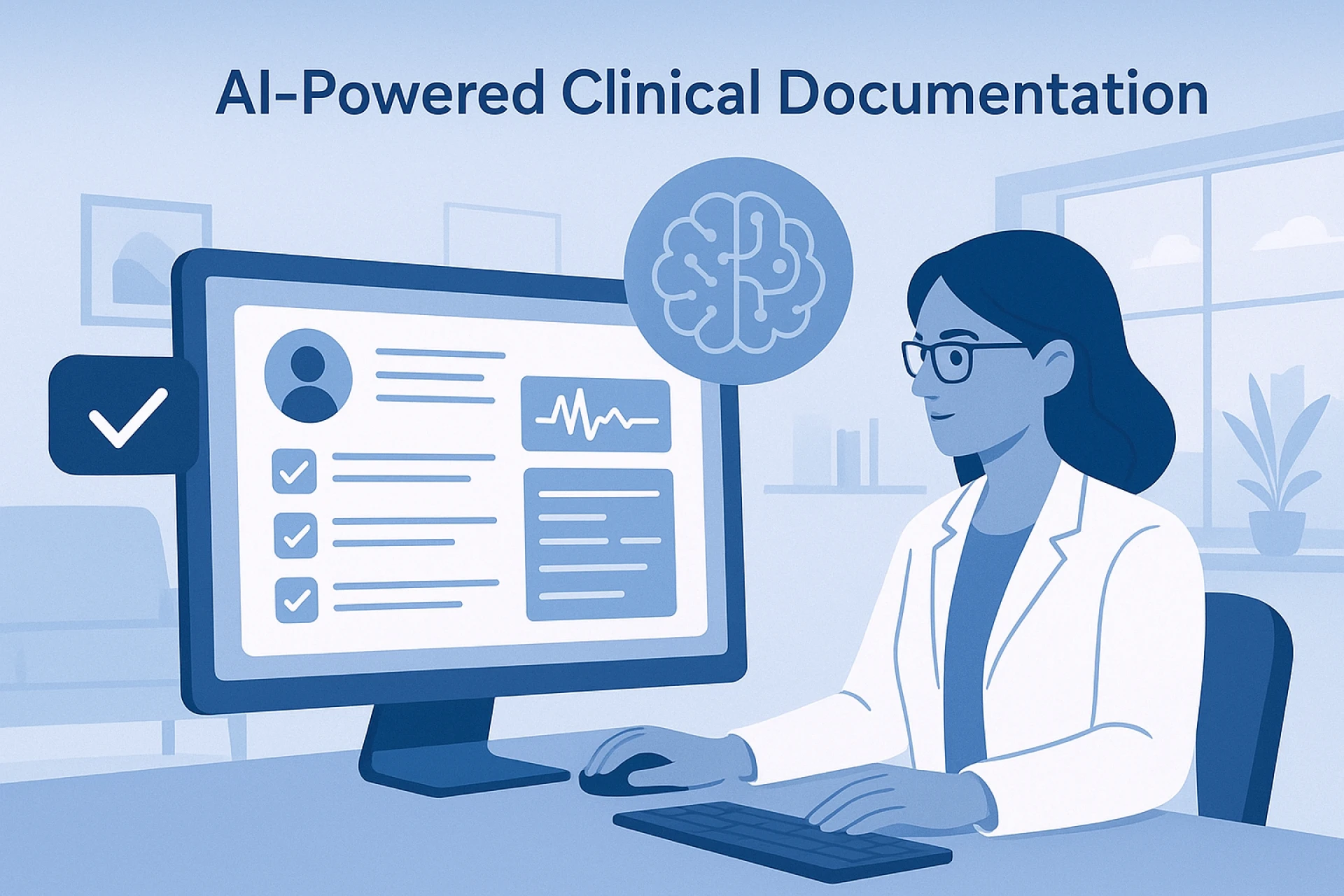
Documentation is one of the most time-consuming burdens for therapists and clinicians. From biopsychosocial assessments to treatment plans and progress notes, the admin load is overwhelming.
AI now changes the game with:
✔ AI Progress Notes for Therapists
AI-generated draft notes help clinicians save hours every week by instantly producing structured, compliant note formats rooted in:
- Treatment goals
- Clinical interventions
- Measurable objectives
- Patient progress
- Risk assessments
This significantly improves speed and accuracy.
✔ AI Documentation for Behavioral Health
AI engines understand clinical language, payer requirements, and compliance standards, allowing documentation to remain consistent, defensible, and audit-ready.
This is especially important when integrating with:
- Psychiatry EHR workflows
- Substance use treatment EHR systems
- Group therapy documentation
AI doesn't replace clinicians — it replaces redundancy.
2. AI + EHR Integration Enhances Quality and Continuity of Care
The modern mental health EHR software ecosystem is evolving from static documentation tools into intelligent clinical assistants.
AI now supports clinicians by:
✔ Pre-populating biopsychosocial assessments
✔ Generating SMART treatment plan goals
✔ Linking progress notes back to treatment objectives
✔ Ensuring MBC-aligned measurable outcomes
✔ Flagging missing compliance-required elements
This creates a consistent continuum of care from intake → planning → documentation, improving both clinical efficiency and patient outcomes.
For more advanced workflows, DENmaar also provides insights on modern AI-linked treatment planning here:
👉https://denmaar.com/ai-treatment-planning-behavioral-health/
3. AI Streamlines Behavioral Health Billing & RCM
While AI helps clinicians, it also strengthens the financial backbone of practices. Behavioral health billing is complex — multiple payers, unique CPT rules, and strict documentation logic.
AI improves billing accuracy by:
- Identifying documentation gaps before claims are submitted
- Predicting claim errors
- Flagging incorrect coding or missing modifiers
- Supporting MBC-driven justification for medical necessity
- Preventing payer recoupments
This results in faster reimbursement and higher clean-claim rates.
Many practices pair AI workflows with DENmaar’s full behavioral and mental health billing services for complete RCM optimization.
4. Provider Credentialing Meets AI Automation
Credentialing is often one of the biggest bottlenecks for growing practices. Manual credentialing means delays, denials, and lost revenue.
AI-enabled provider credentialing helps by:
- Tracking payer requirements
- Automating expiring documents
- Reducing manual verification times
- Preventing credentialing-related claim rejections
You can explore DENmaar’s automated solution here:
👉https://denmaar.com/insurance-credentialing-services/
5. Practice Management Systems Become More Intelligent
From scheduling to billing to documentation, AI upgrades the entire practice management system for therapists:
✔ Behavioral health scheduling software
AI predicts no-shows, recommends rescheduling automations, and reduces administrative workload.
✔ Therapy practice management software
Clinicians get unified dashboards for documentation, billing, scheduling, and outcomes.
✔ Integrated workflows
Psychiatry, therapy, and SUD teams all stay aligned across a single platform.
This creates a smoother, more connected experience for both providers and clients.
6. Why AI Matters for the Future of Behavioral Healthcare
AI is already reshaping:
- Clinical documentation
- Outcome tracking
- Treatment planning
- Compliance auditing
- Billing automation
- Provider credentialing
- Scheduling efficiency
- Revenue cycle performance
The future of behavioral healthcare belongs to practices that embrace intelligent automation, improved compliance, and AI-driven workflows.
Platforms like DENmaar EHR are building the next generation of mental health technology — where documentation is faster, billing is more accurate, and clinicians can focus on care rather than admin.
Frequently Asked Questions
1. Is AI documentation safe and HIPAA-compliant?
Yes. Modern AI systems used in healthcare operate within strict HIPAA-compliant environments to protect patient data and maintain audit-ready documentation.
2. Can AI progress notes replace clinicians?
No. AI assists clinicians by generating drafts, but every note requires clinician review and final approval.
3. What types of practices benefit from AI-powered EHRs?
Individual therapists, group practices, psychiatry clinics, SUD programs, and multi-location behavioral health organizations all see major improvements.
4. Does AI help with behavioral health billing?
Absolutely. AI detects claim errors, documentation gaps, and coding issues before submission, improving clean-claim rates.
5. Can AI improve scheduling and client engagement?
Yes. AI-supported scheduling tools reduce no-shows, automate reminders, and enhance overall practice efficiency.

























Sign in to leave a comment.