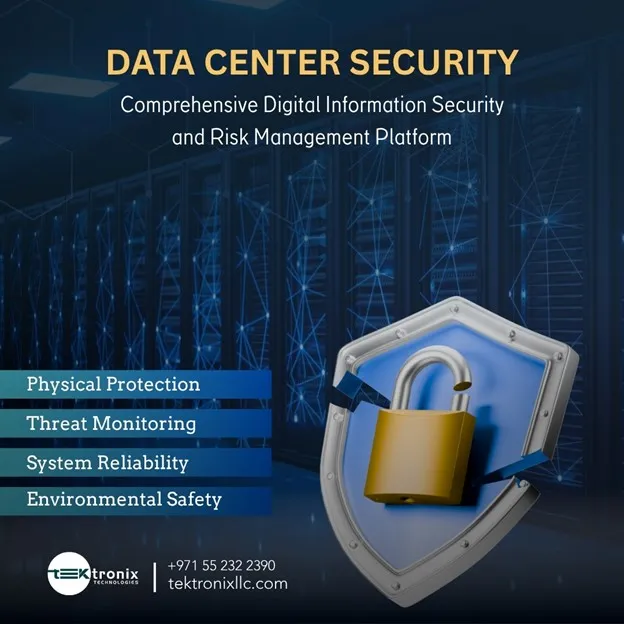

Banks, payment processors, and financial regulators across the region are under growing pressure to demonstrate that the infrastructure hosting customer data and transaction systems is protected at every layer, and Data Center Security Qatar standards are rising to match international expectations. A comprehensive Data Center Security strategy covering physical and digital controls is now a baseline requirement for any financial institution operating across the GCC, not an optional upgrade reviewed only during an annual audit.
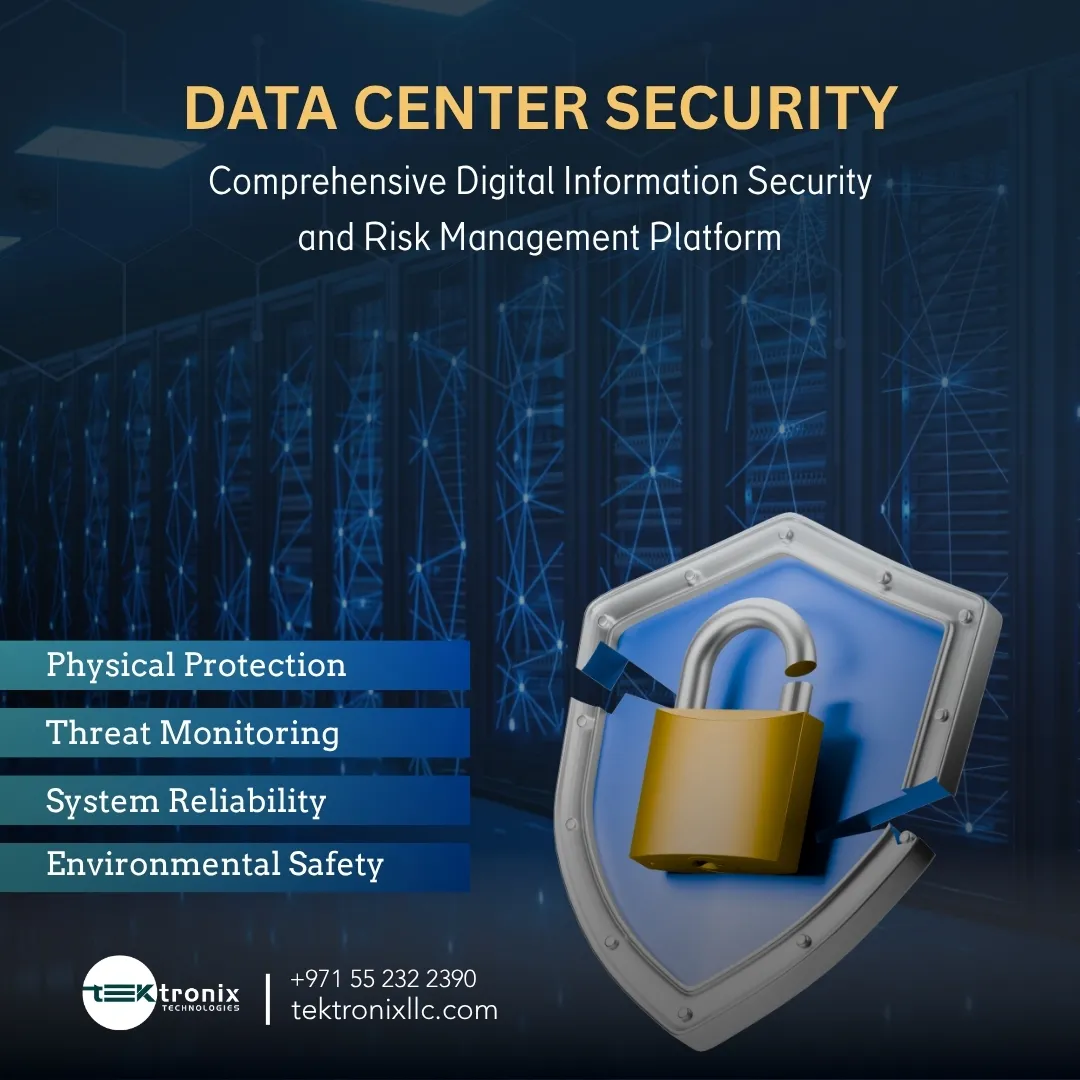
Why Banking Data Centers Across the GCC Face a Unique Threat Landscape
Financial institutions are the most targeted sector for both physical intrusion and cyber-attack, and the data centers hosting their transaction systems and customer records are the highest-value targets within those institutions. A colocation facility in Doha serving multiple banks means a single control weakness can cascade across several organizations simultaneously, which is why Data Center Security GCC standards for the banking sector consistently exceed what general enterprise facilities are required to implement.
Cybersecurity for Data Center Environments Hosting Financial Systems
The financial transactions and customer data flowing through a banking data center make digital controls as critical as physical ones. Cybersecurity for Data Center environments in the banking sector covers network segmentation between institutional tenants, continuous patch management, vulnerability scanning of core banking application interfaces, and behavioural monitoring of east-west traffic between racks, not just the connection facing the internet. Many financial breaches originate from an unpatched internal management interface or a third-party vendor connection, both of which sit inside the perimeter and require the same vigilance as the external boundary.
Data Center Encryption: Non-Negotiable for Financial Data
Customer account records, transaction histories, and payment credentials stored in a banking data center must be protected even in the event of physical hardware removal. Data Center Encryption applied at rest and in transit ensures that data intercepted or removed from the facility remains unreadable without the corresponding keys, which are managed separately, rotated on a defined schedule, and subject to the same access controls as the systems they protect.
Data Center Firewalls: Segmenting Financial Networks at Every Layer
A flat network inside a banking data center is a serious risk: one compromised system can reach every other system with minimal obstruction. Data Center Firewalls enforced at both the perimeter and between internal segments create defined boundaries that contain a breach rather than allowing lateral movement to spread across the entire environment, with deep packet inspection adding behavioural analysis on top of policy-based filtering for the most sensitive application layers.
Data Center Access Control: Physical Security for the Most Sensitive Racks
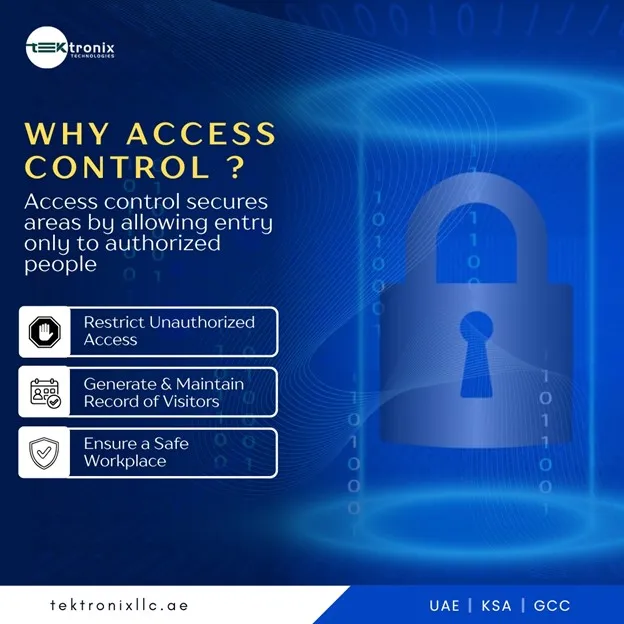
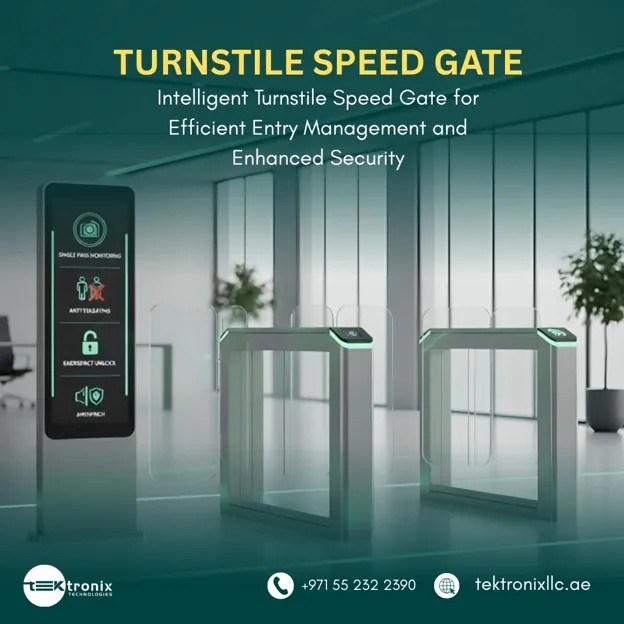
No amount of network security compensates for a physically accessible rack. Data Center Access Control in a banking context applies layered verification — biometric credentials, smart cards, and mantrap entries between zones — ensuring that access to the specific racks hosting core banking systems is restricted to a documented, auditable list of individuals whose presence can be verified and logged to the second. This physical audit trail is often the first evidence reviewed when an incident investigation begins.
Why Tiered Physical Access Matters for Regulatory Compliance
GCC financial regulators and international banking standards increasingly require facilities to demonstrate that physical access to systems hosting customer data is controlled, logged, and periodically reviewed, not simply locked behind a single shared PIN code at the building entrance.
Data Center Surveillance: Continuous Visual Coverage of Financial Infrastructure
Banking data centers require surveillance coverage that leaves no blind spots and retains footage long enough to be useful during a formal investigation. Data Center Surveillance deployments for financial facilities typically combine high-resolution cameras at every entry point, loading dock, and server aisle with intelligent analytics that flag anomalies automatically, such as an unattended bag, a cabinet door held open beyond a defined threshold, or a person lingering near a rack without an active access credential in the system.
Data Center Intrusion Detection: Catching What Cameras and Badges Miss
Physical sensors add a layer of detection that neither cameras nor badge readers cover on their own. Data Center Intrusion Detection systems monitor for forced entry, vibration on cabinet doors, or motion in areas that should be unoccupied at specific hours, triggering immediate alerts to security operations rather than waiting for a review of recorded footage the following morning. On the network side, the same principle applies: intrusion detection sensors watch for known attack signatures and unusual internal traffic patterns that a perimeter firewall alone would never see.
Data Center Threat Detection: A Continuous Intelligence Layer
The most sophisticated attacks on banking infrastructure unfold slowly, with individual actions designed to look unremarkable in isolation. Data Center Threat Detection correlates physical and digital signals over time — an access event, an unusual data transfer, an off-hours network connection — assembling them into a picture that reveals a developing threat before it completes, rather than only becoming visible after a breach has already occurred.
A Six-Layered Approach to Banking Data Center Security
The strongest banking data center security models apply protection at six distinct layers: physical perimeter, building access, server room access, rack-level access, network infrastructure, and data itself. Each layer assumes the one before it may be compromised, so protection does not depend on any single control remaining intact, which is the resilience model that Tektronix LLC's six-layered data center security framework is built around and that regional banking operators are increasingly specifying as their minimum acceptable standard.
Why Experience Matters When Securing Banking Data Centers in Qatar and Across the GCC
Designing security that genuinely satisfies GCC financial regulatory expectations requires direct experience with banking-grade facilities and the audit processes they face, not generic data center security products. Tektronix LLC has engineered layered security deployments for data centers and critical financial infrastructure across the region, working with banks and financial institutions that face the same regulatory scrutiny and threat landscape found across Qatar and the broader GCC. That regional experience, from site assessment through integrated system delivery, is detailed on Tektronix LLC's six-layered data center security page, where banking and financial facility operators can review the full framework before specifying their own deployment.
Implementation Best Practices for Banking Data Centers
- Apply zone-based access control so each layer of the facility requires independent verification.
- Enforce network segmentation between banking tenants sharing colocation infrastructure.
- Test encryption key management procedures independently from the systems they protect.
- Integrate surveillance analytics with access control and network monitoring into a single SOC view.
- Run tabletop exercises annually simulating both physical and cyber intrusion scenarios.
Conclusion
Banking infrastructure across Qatar and the GCC demands a security posture that treats each layer as both independent and interconnected. Strong Data Center Encryption and Data Center Firewalls protect financial data on the network, while Data Center Access Control and Data Center Surveillance defend the physical building, reinforced by Data Center Intrusion Detection and Data Center Threat Detection operating continuously in the background, and supported by disciplined Cybersecurity for Data Center practices across every system. Financial institutions ready to evaluate a proven, layered approach can review Tektronix LLC's six-layered data center security framework to compare current controls against a banking-grade architecture.
FAQs
1. What does Data Center Security Qatar banking facilities typically require beyond general enterprise standards?
Banking facilities typically require tiered physical access with individual audit trails per person, tenant-level network segmentation, documented encryption key management, and continuous intrusion monitoring rather than periodic review alone.
2. How is Cybersecurity for Data Center environments different in a financial institution?
The combination of highly sensitive customer data and real-time transaction systems means monitoring must extend to internal east-west traffic between racks, third-party vendor connections, and core banking application interfaces, not just the external network perimeter.
3. Why is Data Center Encryption considered mandatory for banking workloads?
Customer account data and payment credentials must remain unreadable even if physical hardware is removed, which makes encryption at rest and in transit a baseline regulatory expectation rather than an optional enhancement.
4. What is the difference between intrusion detection and threat detection in a banking context?
Intrusion detection responds to specific events such as a forced door or a flagged network signature, while threat detection correlates signals across physical and digital systems over time to identify slow-moving attacks that individual alerts would never reveal in isolation.
5. How does Data Center Security GCC standards compare to international banking security frameworks?
GCC financial regulators are increasingly aligning with international frameworks around documented access control, encrypted storage, and continuous monitoring, meaning a facility that meets regional standards is generally well positioned for international audit requirements as well.
For more information contact us on:
Tektronix Technology Systems Dubai-Head Office
+971 55 232 2390
































Sign in to leave a comment.