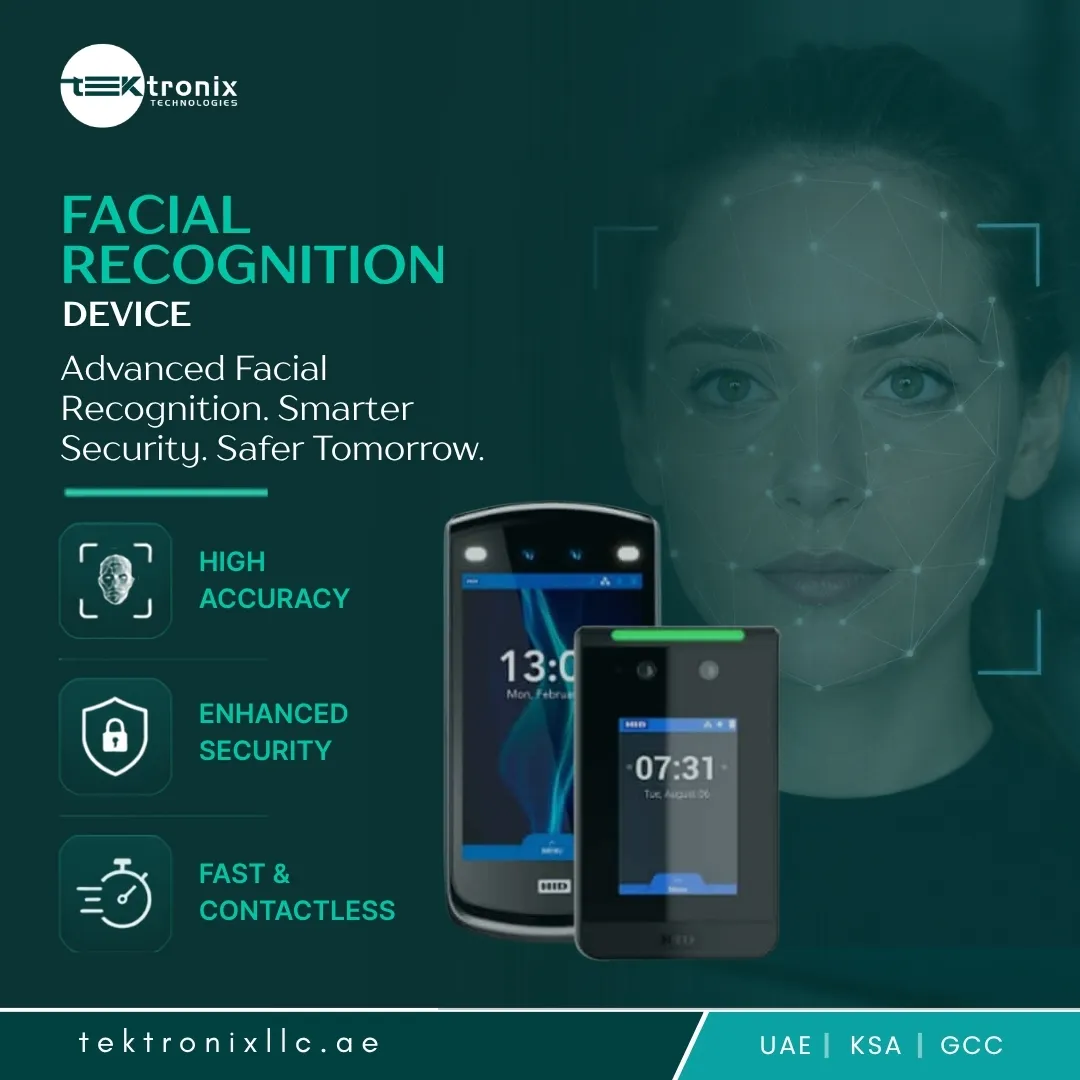

Deploying facial recognition at a single office is a straightforward hardware decision. Standardising a Facial Recognition System across twelve buildings, three emirates, and thousands of employees is a governance problem first and a technology problem second, and enterprise IT and security leaders reviewing enterprise-scale facial recognition deployments are learning that consistency across sites matters as much as the underlying accuracy of any single reader.
Large UAE organisations — banks, healthcare groups, logistics networks, and multi-tower corporate campuses — increasingly want one facial recognition standard applied consistently everywhere, rather than a patchwork of systems procured independently by each site or business unit over the years. That consolidation effort surfaces challenges a single-site deployment never has to consider.
What Changes When Facial Recognition Moves to Enterprise Scale
A single-site deployment answers to one facilities manager and one budget line. An enterprise rollout answers to IT security policy, HR onboarding workflows, procurement standards, and often a board-level risk committee — meaning technical decisions get filtered through considerably more governance before they're approved.
Consistency becomes the central challenge. An employee transferring between offices expects the same access experience at every location, and a security team auditing compliance expects the same data format and reporting structure from every site rather than reconciling different vendors' incompatible logs each quarter.
The Verification Pipeline That Has to Hold Up Across Every Site
Face Detection Consistent Across Varied Site Conditions
Reliable Face Detection has to perform equally well in a glass-walled Dubai tower lobby and a dimmer warehouse entrance in an industrial zone, since inconsistent detection performance across sites undermines the case for a single enterprise standard in the first place.
Facial Identification Against a Single Enterprise-Wide Database
At enterprise scale, Facial Identification typically runs against one consolidated employee database rather than separate site-by-site enrolment lists, allowing a transferring or visiting employee's access to work correctly at any company location without a separate local enrolment step.
Facial Authentication Delivering the Same Standard at Every Door
Enterprise deployments require Facial Authentication to apply identical confidence thresholds and security rules regardless of location, since a door in one building granting access more permissively than an equivalent door elsewhere creates an inconsistency auditor will inevitably flag.
Facial Recognition Access Control as Enterprise Governance, Not Just Entry
At this scale, Facial Recognition Access Control functions as much as a governance and compliance tool as a physical security measure — centralised reporting lets a single security team demonstrate consistent access policy enforcement across the entire organisation during an internal or external audit, rather than assembling data from a dozen disconnected local systems.
Standardising Hardware and Software Across the Organisation
Facial Recognition Device Standardisation Across Multiple Sites
Enterprise buyers benefit from standardising on a single Facial Recognition Device family across all sites, simplifying spare parts inventory, technician training, and firmware update management compared to supporting several different hardware lines procured independently over time.
Facial Recognition Software Centrally Managed and Reported
Centrally deployed Facial Recognition Software gives IT security teams one dashboard for policy configuration, incident review, and compliance reporting across every site, replacing the fragmented visibility that comes from each location managing its own separate system independently.
Facial Recognition Solution Procurement for Enterprise Buyers
Enterprise procurement for a Facial Recognition Solution typically weighs vendor stability, long-term support commitments, and integration capability with existing enterprise systems like HRIS and identity management platforms far more heavily than a single-site buyer would, since a poor vendor choice at this scale is considerably costlier to unwind.
Facial Recognition System UAE: Multi-Site Enterprise Deployment
Organisations rolling out a Facial Recognition System UAE-wide across multiple offices typically phase deployment by site priority, starting with headquarters or highest-risk locations before extending the same standard to smaller branch offices over subsequent phases.
Facial Recognition System Dubai — Head Office and Flagship Site Rollouts
A Facial Recognition System Dubai deployment often begins at a company's Dubai headquarters or flagship location, establishing the configuration standard and integration pattern that subsequent site rollouts across the region then replicate rather than reinventing the approach at each new location.
Regulatory and Governance Considerations
Enterprise deployments must maintain UAE PDPL compliance consistently across every site, with a single organisation-wide data retention and consent policy rather than differing local interpretations. ISO 27001 alignment becomes particularly important at this scale, since a centralised biometric database represents a higher-value target requiring correspondingly robust information security governance across the entire organisation.
Why Enterprise Organisations Choose Tektronix for Multi-Site Deployments
Tektronix LLC supports enterprise facial recognition rollouts for banks, healthcare groups, and multi-site corporate clients across the UAE, working with manufacturers including HID Amico, Suprema, and ZKTeco to deliver a standardised hardware and software configuration across every location. Every engagement includes a phased rollout plan, integration with the client's HRIS and identity management systems, and a governance framework covering data retention and access policy consistently across all sites rather than leaving each location to interpret compliance independently.
Organisations planning a multi-site or organisation-wide rollout can review Tektronix's facial recognition solutions in Dubai to understand how a single deployment standard scales from headquarters to branch offices.
Conclusion
Rolling out a Facial Recognition System across an entire enterprise surfaces governance and consistency challenges a single-site deployment never encounters. Reliable Face Detection performing equally across varied site conditions, Facial Identification against one consolidated database, and consistent Facial Authentication standards at every door together give large organisations the uniform experience employees and auditors both expect. Treating Facial Recognition Access Control as a governance tool, standardising Facial Recognition Device hardware, and centrally managing Facial Recognition Software all reduce the operational complexity that comes with scale. Choosing the right Facial Recognition Solution through a genuinely enterprise-grade procurement process makes that consistency achievable. As Facial Recognition System UAE deployments extend across entire organisations — often beginning with a Facial Recognition System Dubai headquarters rollout before expanding regionally — enterprises that plan for governance from day one avoids the fragmented, difficult-to-audit patchwork that ad hoc, site-by-site procurement inevitably creates.
FAQs
1. How does an enterprise rollout differ from installing facial recognition at a single office?
An enterprise rollout requires standardised hardware and software across every site, centralised database management, and a consistent governance policy, whereas a single-office deployment only needs to satisfy that one location's requirements independently.
2. Can employees use the same facial enrolment across multiple company locations?
Yes, when enrolled against a single enterprise-wide database, an employee's facial profile typically works correctly at any company site without requiring separate local enrolment at each new location they visit.
3. How long does a full enterprise-wide rollout typically take?
Timelines vary by organisation size, but a phased rollout across a dozen sites often spans several months to a year, prioritising headquarters and highest-risk locations first before extending to smaller branch offices.
4. What integration is typically required with existing enterprise systems?
Most enterprise deployments integrate with HR information systems for automated enrolment and offboarding, and often with existing identity and access management platforms to maintain a single source of truth for employee credentials.
5. Who typically owns governance decisions for an enterprise facial recognition deployment?
Governance typically sits jointly between IT security, HR, and facilities teams, with data retention and consent policy decisions usually requiring sign-off from legal or compliance functions given the biometric data involved.
































Sign in to leave a comment.