
The digital age has created more opportunities to innovate, collaborate, and become connected to the world than ever before. However, it has also spawned highly advanced cyber threats that are not easily countered even by the most developed organizations. Current hackers use automation-driven tools, social engineering, and even artificial intelligence (AI) to exploit vulnerabilities to their advantage. Consequently, one of the most crucial questions cybersecurity teams are grappling with is whether machines can outwit hackers.
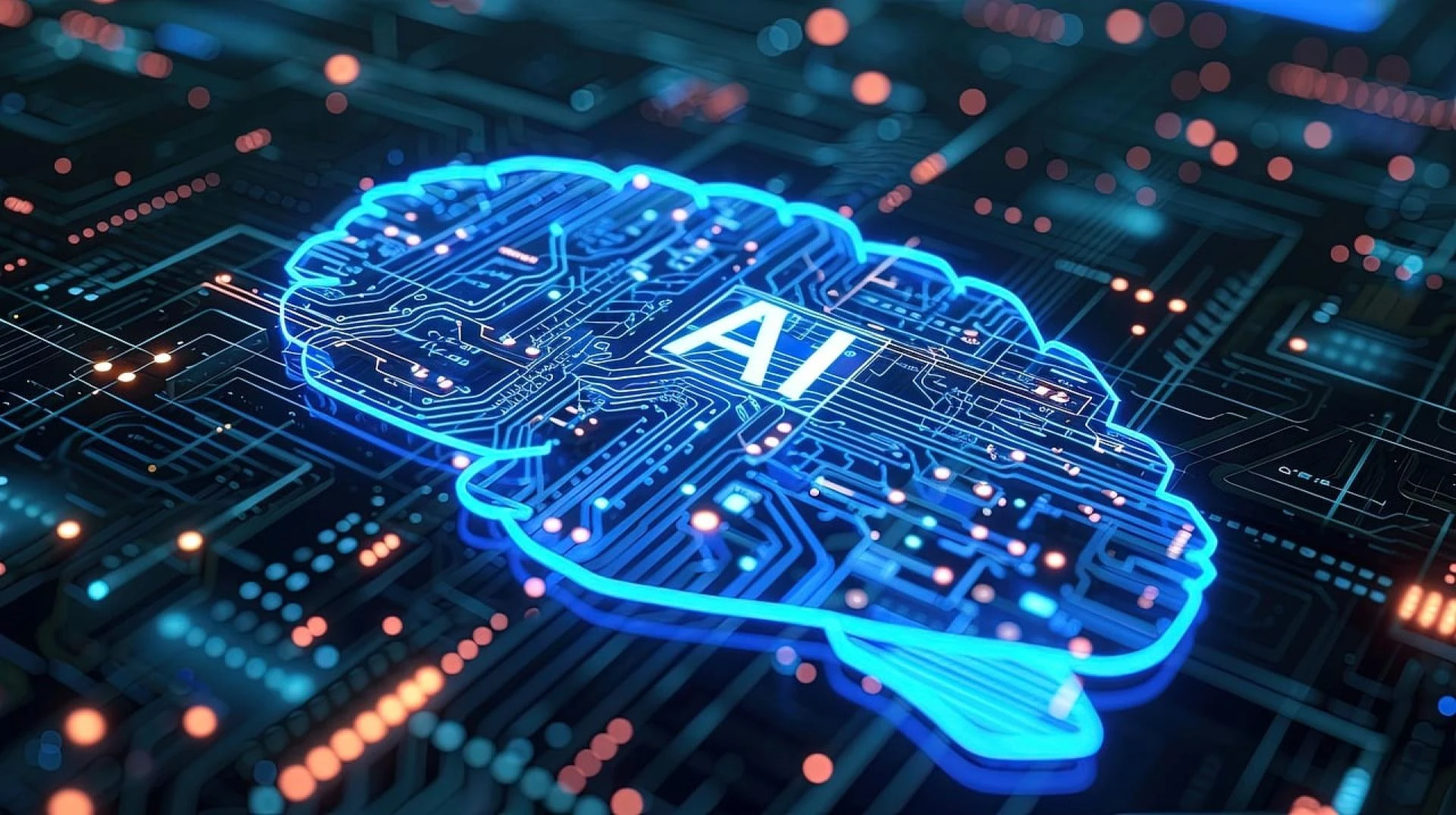
Artificial intelligence is fast changing the way we identify, prevent, and counter cyber threats. Businesses no longer have to use human analysts only but use AI-powered solutions to process large volumes of data, detect concealed trends, and detect malicious activity more quickly than ever. Such a combination of AI and cybersecurity is turning into one of the defense measures of our era.
The Increasing Demand for AI in Cybersecurity.
Conventional security systems, though vital, will tend to be reactive. They rely on signature-based detection or rule-based models that struggle to keep pace with new and previously unknown attack techniques. Hackers exploit this loophole to create zero-day threats or polymorphic malware, which changes its code each time an attack is launched.
Artificial intelligence comes with a proactive benefit. Machine learning algorithms can compute billions of events in real time, identify anomalies, and notify people of suspicious activity long before humans can do it. Through detecting patterns that could signify an intrusion, AI will change the state of affairs, where the defense has to be reactive and the security must be proactive.
This need has also been the one to promote interest in specialized education. Professionals are also resorting to courses such as an AI course in Chennai to develop skills in implementing AI methodologies in actual cybersecurity issues. This kind of training makes the learners capable of creating AI-enhanced security models that can predict and negate threats successfully.
How AI Strengthens Cybersecurity
AI increases cybersecurity in several aspects. It enhances detection and forecasting of threats based on user actions or network traffic and system activity to identify abnormal activities. For instance, if a user is accustomed to logging in from Chennai but attempts to log in from a different continent, the system can automatically create a flag to indicate the anomaly. Predictive models also aid in predicting possible vulnerabilities based on the historical attack data.
The other strength of AI is that it automates security operations. AI manages to cope with routine tasks like log monitoring, patch management, and compliance checks compared to human analysts, who might be overwhelmed with routine tasks. This liberates professionals to work on more difficult and pressing issues.
Phishing and social engineering are also addressed through AI, which analyzes millions of emails and identifies suspicious text, attachments, or actions of the sending party. These systems evolve with time, and therefore, due to their continual learning, they change fast with the new tricks that hackers are employing to deceive users.
Also, AI is of critical importance in the security of Internet of Things (IoT) and cloud environments. The growth of interconnected gadgets and cloud-based applications has increased the size of the attack surface exponentially. With the capability of offering real-time monitoring, detecting anomalies, and providing automatic responses, AI can protect these distributed environments against cyberattacks.
The Human-AI Collaboration
AI will not put humans out of work in the field of cybersecurity, but when it is combined with human intelligence, its power is formidable. Robots excel at processing large volumes of data and identifying behavioral irregularities on a large scale, whereas human operators offer creativity, context sensitivity, and moral judgment.
In case AI systems identify odd behavior, human experts decide to determine whether the behavior poses a real threat or a harmless anomaly. Furthermore, in terms of the security-individual privacy rights balance, the moral issues must be controlled by human factors. This partnership makes cybersecurity sound and accountable.
The contribution of education to AI-driven cybersecurity.
Security in cyberspace is not only a technological issue; it is an educational issue. Hackers are using more sophisticated techniques, which means professionals must upgrade their skills regularly. Education is thus an essential consideration in fortified defense.
The AI course in Chennai provides students with practical knowledge in the fields of machine learning, deep learning, and natural language processing. These are critical in designing smart systems that identify abnormalities and reject fraud as well as fight adversarial attacks. On the same note, taking an artificial intelligence course in Chennai will give a wider perspective on the use of AI in different sectors such as healthcare, finance, and, naturally, cybersecurity. The two programs equip learners with the ability to develop smart systems that can respond to the new threats.
Real-World Applications of AI in Cybersecurity
AI is already demonstrating its value in the real world. In the finance industry, it helps identify fraudulent activity in real time by the behavior of the spending offices and indicates possible suspicious activities. Endpoint protection tools now use AI to detect anomalous activity on devices, even in instances where malware signatures are not available. Cloud providers also implement AI to track traffic and protect data centers against hacking. On a larger scale, governments are utilizing AI to safeguard their critical infrastructures, including power grids, healthcare systems, and military networks. These applications show that AI is not just a hypothetical solution but the key to current cybersecurity.
Into the Future: Can AI be more intelligent than hackers?
The rivalry between computer security professionals and hackers will continue to increase. Hackers themselves are moving towards the adoption of AI tools, and it is time for the defense community to make regular progress in its advancement. The issue is not whether AI will be able to outwit hackers forever, but whether it will be able to generate a sufficient benefit to human beings to react favorably.
In forecasting the threats before they arise, AI-driven systems will be in a defensive position. Nevertheless, the maintenance of this benefit depends on the professionalism of individuals, morality, and continuous learning of human professionals and smart machines. An artificial intelligence course in Chennai or an AI course in Chennai will make sure that the future of professionals will be ready to face this change.
Conclusion
Artificial intelligence is transforming the field of cybersecurity by identifying threats, automating the process, and keeping up with the ever-advanced techniques of hackers. Yet AI is not a silver bullet. Using a combination of the speed and accuracy of AI and the wisdom and ingenuity of human intelligence is the most appropriate.
The needs of professionals trained in AI will be on the increase due to the complexity of the threat environment. To the ambitious, their choice of a course is an AI course in Chennai_ or an artificial intelligence course in Chennai, which equips them with the tools to become part of the first line of defense against digital onslaught. Education and innovation will continue to be our greatest tools in the fight against machines and hackers.
























Sign in to leave a comment.