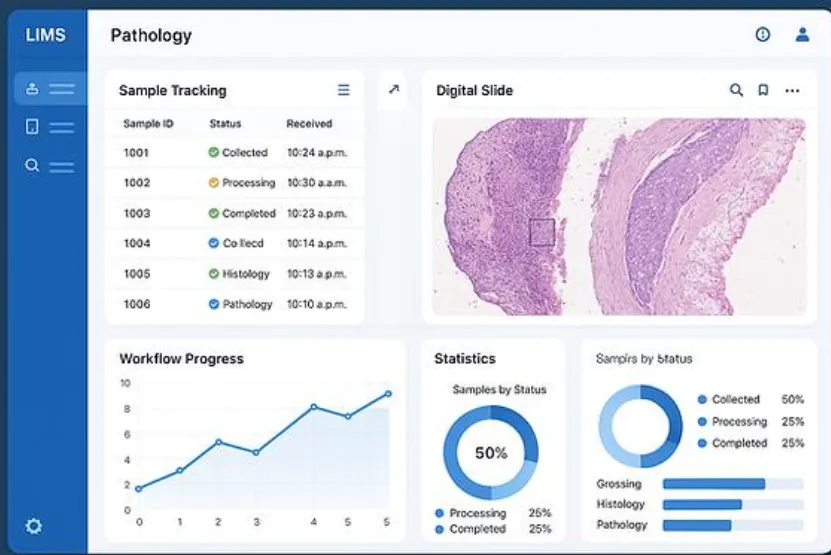

Artificial intelligence is expanding the possibilities for digital pathology, from image prioritization to pattern recognition and workload forecasting. For laboratories, however, adopting an algorithm is only one part of the challenge. AI depends on consistent data, traceable workflows, reliable integrations, and clear human accountability. Without that foundation, advanced tools can add complexity instead of reducing it.
An AI-ready lab begins with pathology software that organizes the operational journey around the case. Orders, specimen events, images, observations, approvals, reports, and billing details should remain connected. The goal is not to automate every decision. It is to ensure that technology supports pathologists and laboratory teams with timely context while preserving professional review.
Standardize Data Before Introducing Intelligence
AI systems perform best when inputs are consistent and interpretable. Laboratories often receive orders from multiple sources, use different naming conventions, and generate information across several instruments and applications. Before introducing an intelligent feature, teams should define data fields, terminology, validation rules, and ownership.
Strong pathology management software can help standardize accessioning, specimen status, work assignments, and report structures. It can also maintain a record of changes and approvals. This creates more dependable data for analytics while helping employees understand how a case moved through the laboratory. Standardization does not mean forcing every specialty into the same rigid template; configurable workflows can preserve meaningful differences.
Keep AI Recommendations Explainable and Reviewable
AI may help flag cases for priority review, identify possible areas of interest in an image, or surface patterns across historical data. These outputs should be presented as decision support, with relevant context and a clear path for human confirmation. Users need to know when a recommendation was generated, what information it considered, and how to record disagreement or correction.
Effective pathology lab software should also support validation and monitoring after an AI feature is introduced. Laboratories can examine performance across specimen types, workflows, and user groups, then investigate unexpected changes. Governance should define who approves a model for use, who reviews incidents, and when the tool must be reevaluated or paused.
Build for Integration and Operational Resilience
Digital pathology can involve scanners, analyzers, EHRs, laboratory information platforms, cloud services, billing tools, and external consultation networks. Custom interfaces may be required to move information between these systems while preserving identifiers, timestamps, status, and report versions. Downtime procedures are equally important because laboratory work cannot simply stop when one connection fails.
Thoughtful Pathology Software Development should therefore include interface monitoring, error queues, retry logic, access controls, backup processes, and documented recovery steps. Testing should cover routine transactions as well as corrected orders, duplicate records, unavailable systems, and delayed messages. These scenarios reveal whether the workflow remains understandable under pressure.
Support Remote Collaboration Without Creating Confusion
Digital images and centralized case information can make consultation and distributed review more practical. A pathologist may access an assigned case from another approved location, request a second opinion, or collaborate with a specialist. Yet remote access also creates questions about authorization, image quality, case ownership, and final signoff.
A custom platform can align routing rules with the laboratory's staffing model and specialty mix. It can present pending work by urgency and qualification while maintaining a clear record of who reviewed each item. Secure messaging and annotations can keep case communication attached to the correct record rather than scattered across email or separate chat tools.
Choose a Roadmap Based on Real Laboratory Needs
Laboratories considering pathology software should begin with a limited, measurable use case. A team might focus on specimen visibility, report turnaround, consultation routing, or inventory monitoring before adding more advanced capabilities. User feedback, workflow observations, and quality measures can then guide the next phase.
The most sustainable approach treats AI as one component of a broader laboratory system. Reliable data, accountable review, secure exchange, and resilient operations come first. With those elements in place, intelligent tools have a better chance of helping pathologists manage growing complexity without weakening the human oversight at the center of diagnostic work.




























Sign in to leave a comment.