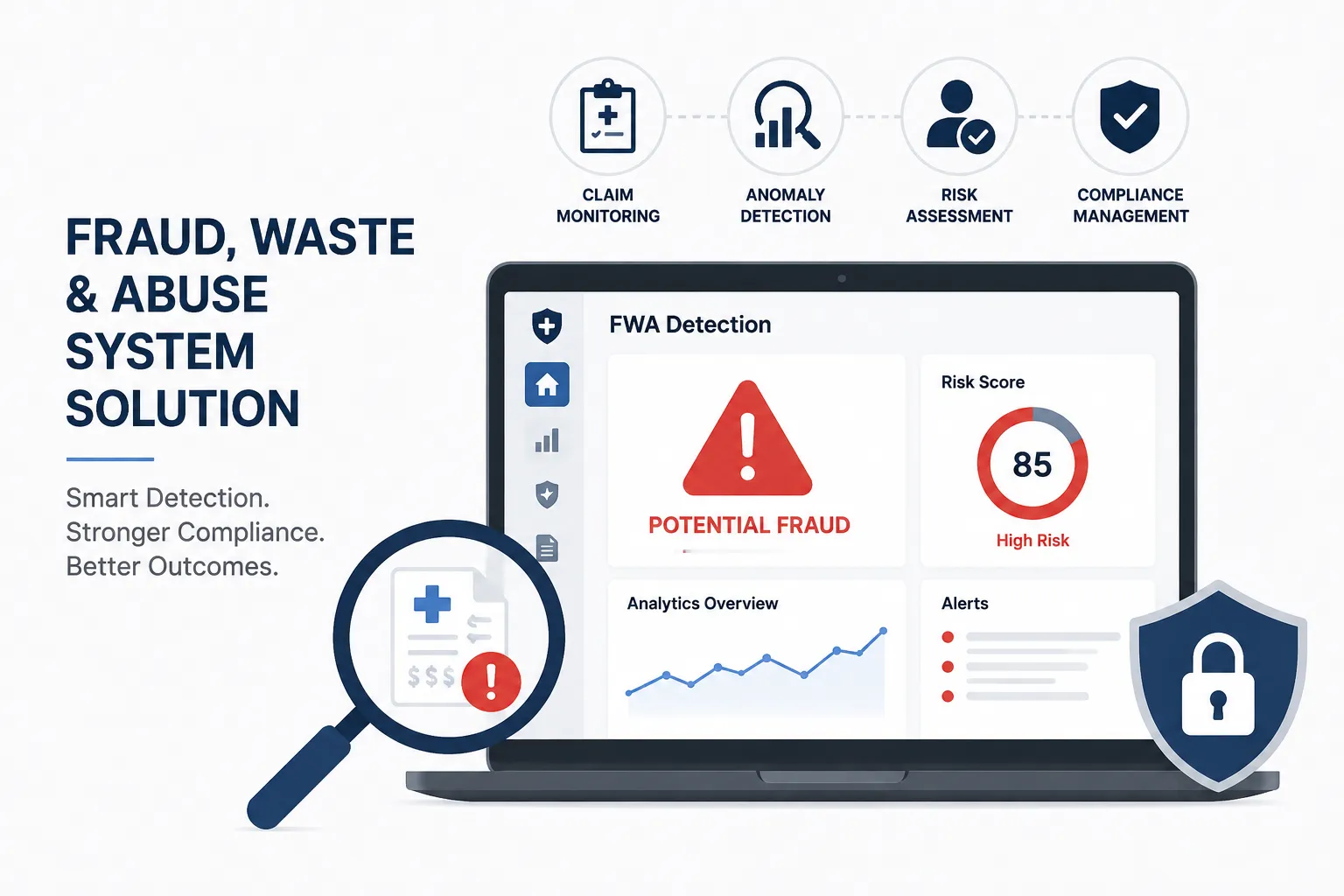

Healthcare payers face a difficult balancing act. They must identify suspicious claims early without delaying legitimate reimbursement, overwhelming investigators, or creating unnecessary friction for providers and members. As claim volumes grow and billing patterns become more complex, traditional review methods can struggle to keep pace. That is why many payer organizations are taking a closer look at Healthcare fraud detection software that combines automation with clear, reviewable evidence.
The strongest technology does not simply label a claim as suspicious. It helps an investigator understand why the claim deserves attention. A useful alert might highlight an unusual billing frequency, a mismatch between a diagnosis and a procedure, repeated use of the same member information, or a relationship among providers that would be difficult to detect manually. This context matters because a flagged claim is not proof of fraud. It is a starting point for informed review.
Moving Beyond Static Rules
Rules remain important in fraud, waste, and abuse programs. They can identify known scenarios such as duplicate billing, impossible dates, unbundling, excessive units, or services that conflict with established coverage criteria. However, bad actors can adjust their behavior once familiar controls become predictable. Static rules may also generate large numbers of false positives when they lack clinical, geographic, or provider-specific context.
A modern healthcare fraud waste abuse system can supplement rules with anomaly detection, predictive analytics, and network analysis. Instead of examining each claim in isolation, the system can compare behavior across providers, members, facilities, specialties, and time periods. It can surface changes from a provider's own historical pattern as well as deviations from appropriate peer groups.
This broader view helps investigation teams focus on claims and relationships that present the strongest signals. It also supports earlier intervention, before a questionable pattern becomes a larger payment-integrity problem.
Why Explainability Matters
Artificial intelligence is gaining attention across US healthcare, but fraud detection presents a particularly sensitive use case. A risk score alone is not enough. Investigators, compliance teams, auditors, and business leaders need to understand the factors that influenced the score. They also need consistent records of who reviewed an alert, what evidence was considered, and how the case was resolved.
Explainability should therefore be treated as a workflow requirement, not an optional technical feature. An effective Insurance fraud detection software platform should present supporting claim details, related entities, historical comparisons, and the rules or model signals behind an alert. Investigators should be able to document decisions, attach evidence, assign follow-up tasks, and escalate a case through a controlled process.
Human oversight remains essential. Algorithms can identify correlations and unusual behavior, but they may not understand every contractual, clinical, or operational circumstance. A provider serving a unique population, for example, may appear different from an overly broad comparison group. Expert review helps distinguish a legitimate exception from a pattern that warrants deeper investigation.
Building a Reliable Data Foundation
Detection quality depends heavily on the data entering the system. Claims, eligibility, provider, payment, authorization, and clinical data may reside in separate platforms and use inconsistent identifiers. Duplicate records, missing fields, delayed feeds, and coding variations can weaken analysis and increase false alerts.
Before expanding automation, payers should establish data-quality checks, shared definitions, and reliable integration pipelines. They should also determine which information investigators need at each stage of review. Bringing the right evidence into one workspace can reduce time spent switching between systems and manually assembling a case.
Privacy and access controls require equal attention. Role-based permissions, activity logs, secure data exchange, and retention policies should reflect the sensitivity of claims and member information. Models and rules also need ongoing evaluation as payment policies, utilization patterns, and fraud schemes evolve.
The future of healthcare fraud detection is not a fully autonomous system making unchallengeable decisions. It is a connected, explainable environment that helps skilled investigators recognize meaningful patterns sooner. When automation improves prioritization while preserving transparency and human judgment, payers can strengthen payment integrity without losing sight of fairness, accuracy, or legitimate patient care.




























Sign in to leave a comment.