

A few weeks ago, you had a good idea - in the car, on a client call, in a team meeting. You hit record so you wouldn't lose it.
Now you need it again, and you can't find it. Voice memos app? A note in Slack? A file buried in a folder called "misc"? The information exists. You just can't get back to it.
That's the real problem with personal knowledge management: most professionals already capture more than they can track. The gap isn't capturing - it's retrieving. That's exactly what an AI note taker is built to close.
The Problem Isn't Capturing Anymore
Between text notes, voice memos, meeting recordings, and screenshots, most people generate more raw information than they can organize. Capturing a thought has never been easier - the trouble starts after.
A voice note titled "New Recording 47" is technically saved but practically invisible. A decision made three months ago is only useful if someone can find it later.
What Is Personal Knowledge Management?
PKM is the process of capturing information, organizing it, and being able to find and reuse it later. It's less a piece of software, more a workflow:
- Traditional version: Capture → Store → Forget where it is
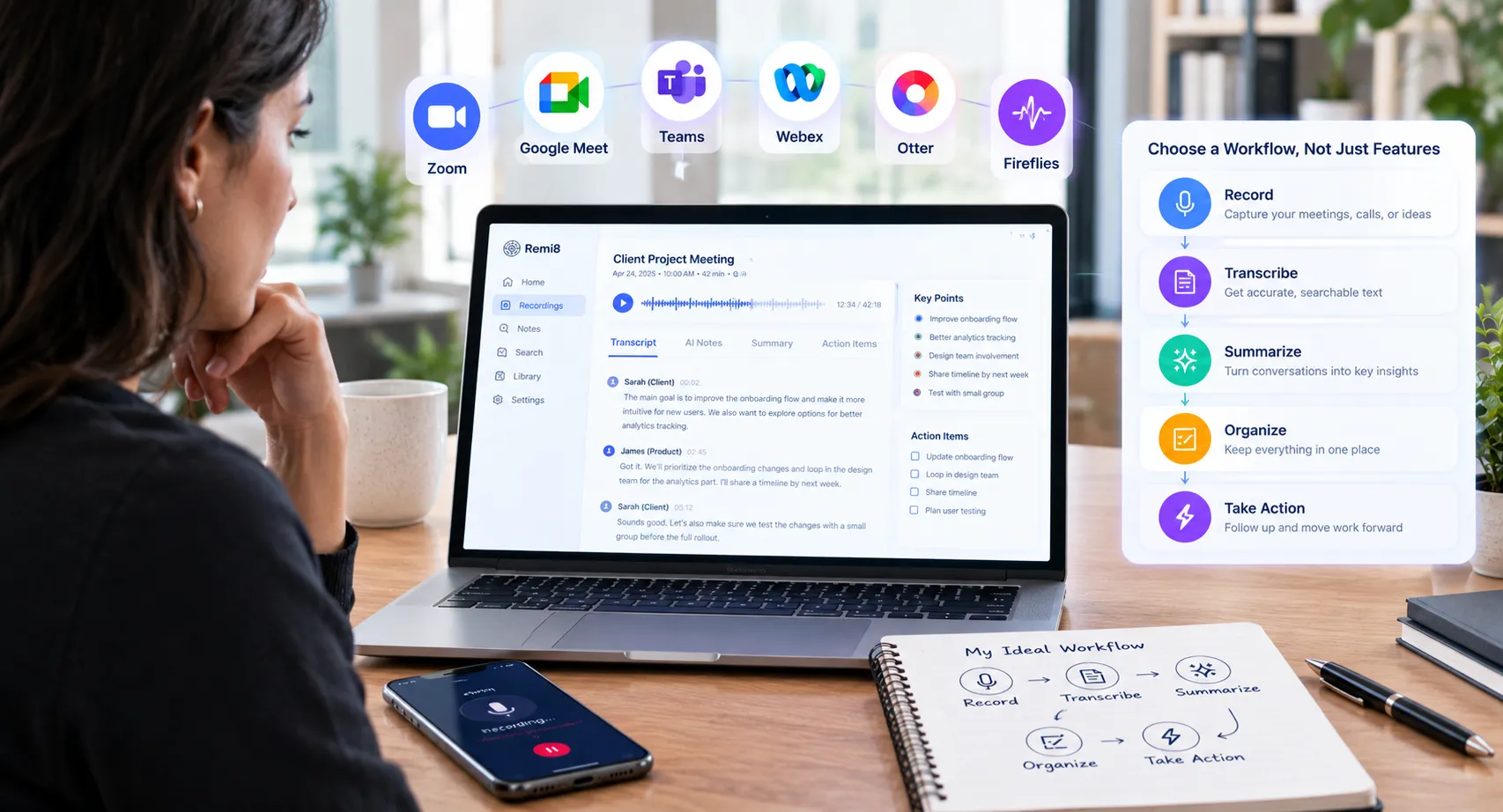
- AI-assisted version: Capture → Transcribe → Organize → Search → Recall → Use
The extra steps matter. Transcription makes spoken thoughts searchable. Search means you don't need to remember a filename - just the shape of what you're looking for.
How AI Note Takers Work
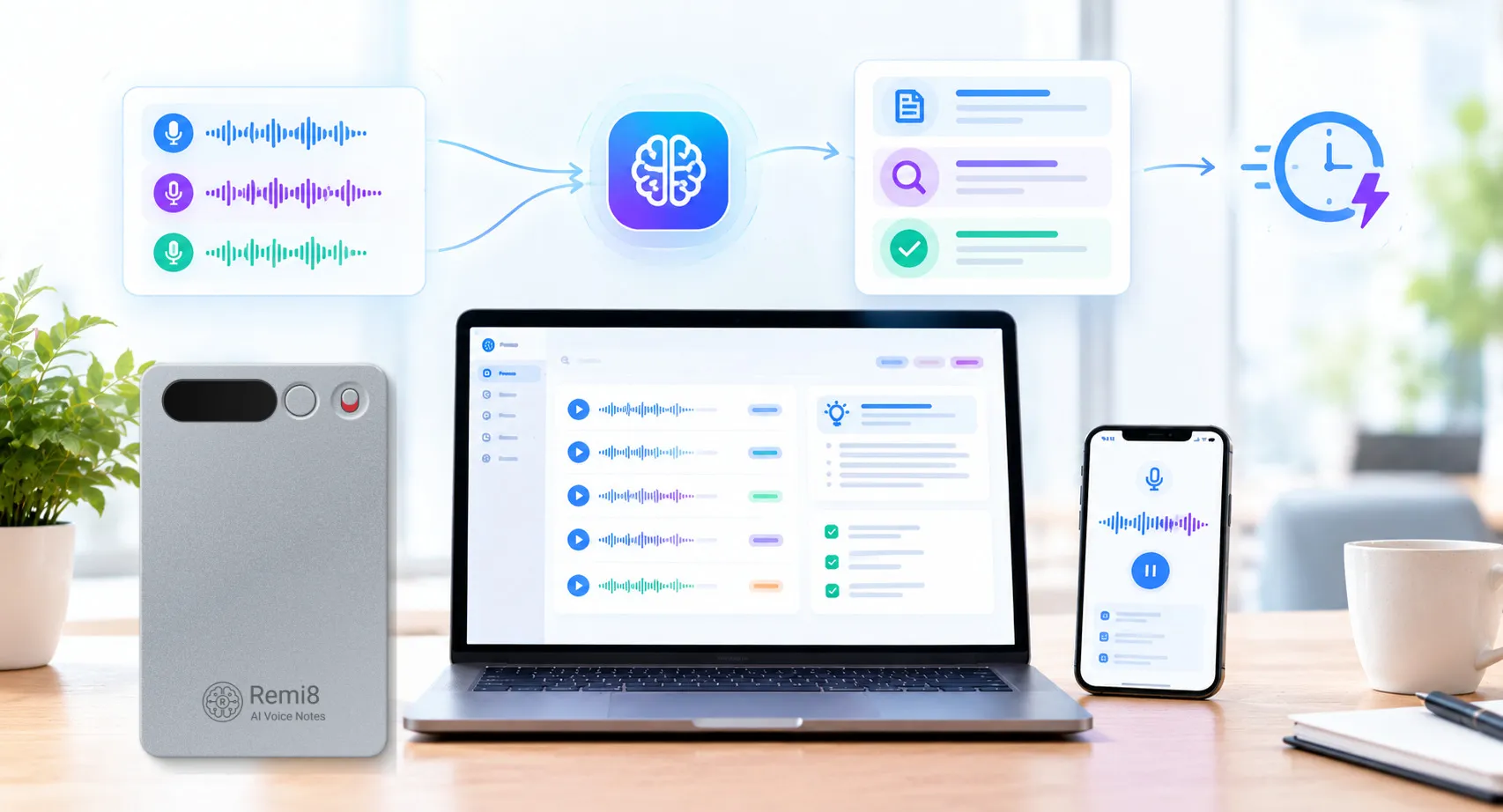
An AI note taker uses AI to capture, transcribe, summarize, organize, and retrieve information from spoken or written notes. In practice:
- Capture - speak naturally instead of pausing to type
- Transcription - speech becomes searchable text
- Organization - notes get tagged or grouped automatically
- Search - retrieve by keyword, date, speaker, or topic
- Recall - ask a natural-language question instead of guessing a search term
- Action - useful information becomes a task or reminder
This is also what separates it from a traditional notes app, which is built mainly for storage - you type, save, and finding it later depends on remembering roughly where you put it. Not every AI tool covers all six steps, so it's worth checking what a given product actually supports.
Why Voice Notes Are Becoming More Useful
Voice isn't always faster than typing, but it removes friction when typing isn't practical - walking between meetings, driving, holding onto an idea mid-brainstorm. An app that transcribes voice automatically turns that moment into a searchable record, not an audio file you'll never replay.
Real-World Uses
- Entrepreneurs capture ideas mid-work and revisit them without reconstructing what they meant
- Managers recall decisions and ownership from recorded meetings
- Researchers capture field observations by voice, retrieved later by topic
- Consultants build a searchable record across long client engagements
- Students capture lecture explanations, building a library to search before exams
A single searchable note isn't dramatic on its own - a year's worth of them functions as a real knowledge base.
Where Remi8 AI Fits In?
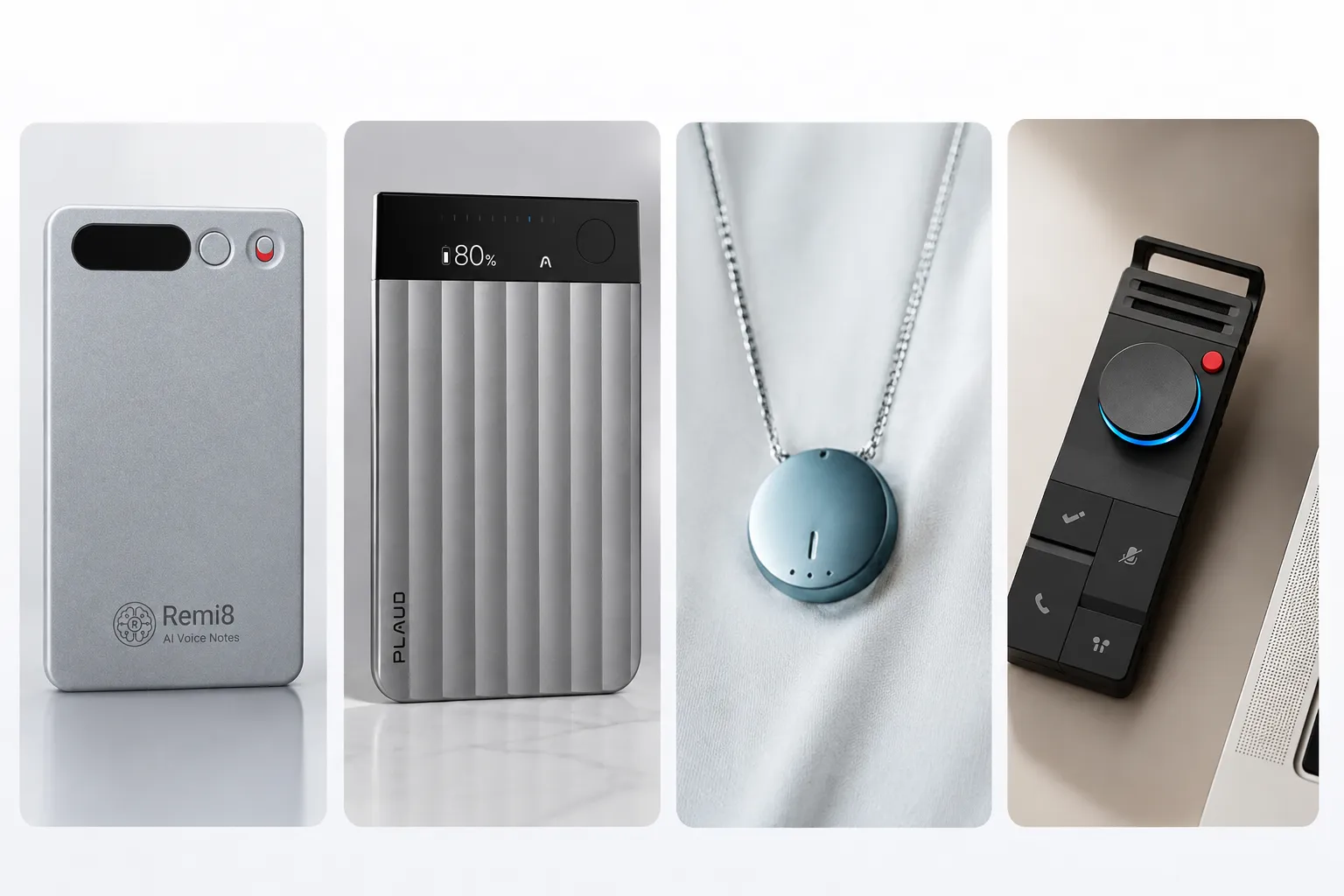
Remi8 AI is a voice-first system built around this workflow: recording voice notes and meetings, transcribing them, identifying speakers, generating summaries and action items, and letting you search or ask natural-language questions to recall what was said. Notes can be tagged automatically, synced across devices, and paired with reminders. It's available as a mobile app and as a standalone recording device for in-person meetings or calls.
It doesn't promise perfect accuracy or replace your own judgment - it's meant to narrow the gap between capturing something and being able to use it again.
Limitations Worth Knowing
- Transcription can misfire with heavy accents or overlapping speech
- Summaries can miss context - verify figures, commitments, and quotes against the original
- Recording other people raises consent questions that vary by situation and jurisdiction
AI should support your judgment here, not replace it.
Building a Useful System
- Capture as close to the moment as possible
- Prefer voice when typing would interrupt what you're doing
- Tag consistently, even with a simple habit
- Search existing notes before recreating information you may already have
- Turn useful information into a task or reminder before it gets buried
- Verify anything AI-generated that actually matters
FAQ
What is an AI note taker?
A tool that captures, transcribes, summarizes, organizes, and retrieves spoken or written notes - turning voice input into searchable text and, often, action items.
Is it better than a traditional notes app?
Depends on your needs. Traditional apps suit typed storage. AI note takers add voice capture, transcription, and search - useful if you rely on spoken input or need to find things fast across many notes.
Can voice notes really become searchable?
Yes - once transcribed, a voice note can be searched like any written note: by keyword, topic, date, or speaker.
Back to the Idea You Almost Lost
The future of personal knowledge management probably isn't about capturing more - most people already capture plenty. It's about making what you've already captured easier to find, understand, and act on.
Capture less manually. Remember more naturally. That's what Remi8 AI is built to help with.






















Sign in to leave a comment.