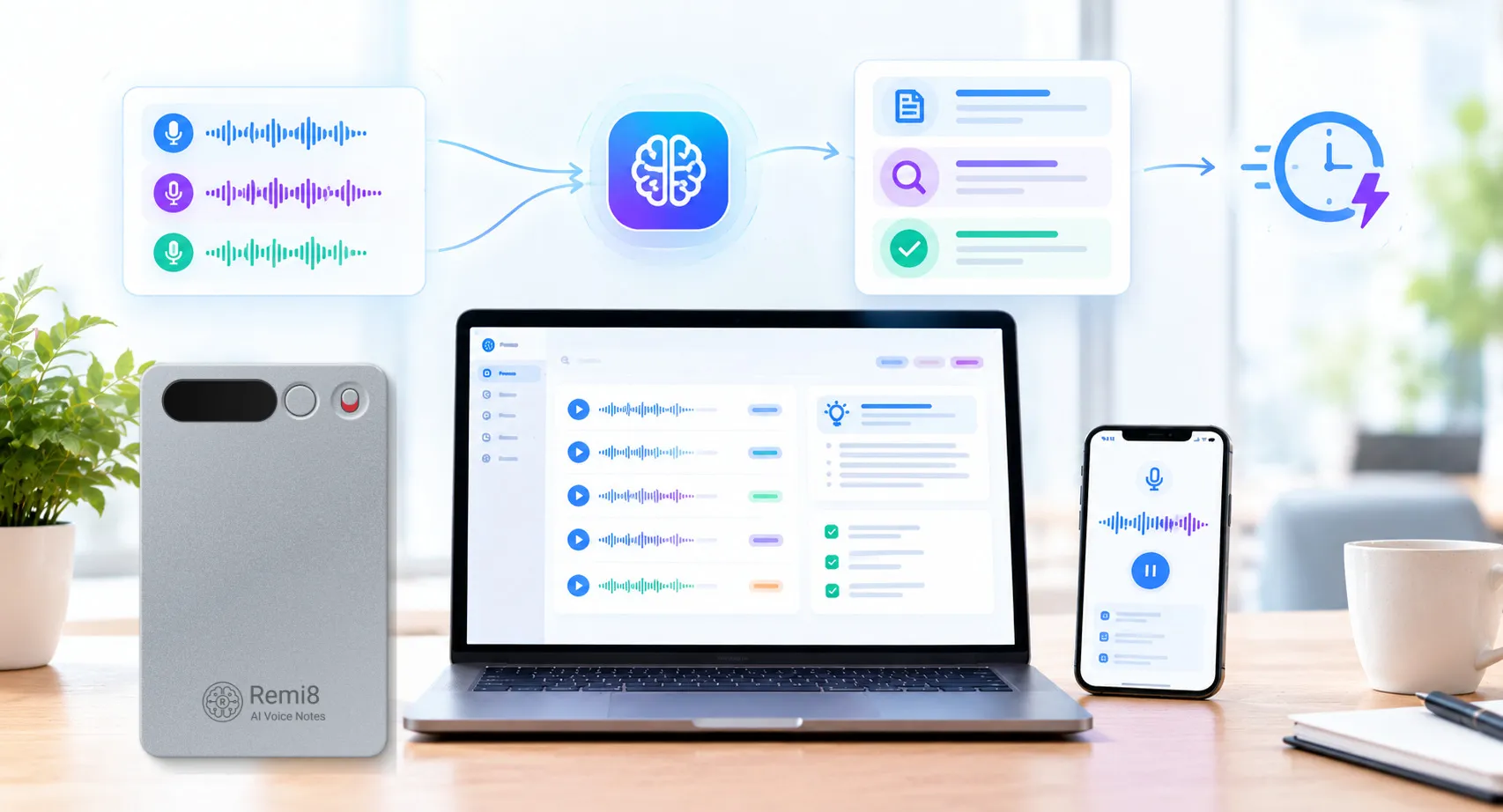

Introduction - The Calls a Sales Manager Never Gets Time to Hear
Priya has six reps on her team. By Thursday afternoon, her CRM shows forty-one call recordings from the week, and she's listened to four of them.
She knows something useful is sitting in the other thirty-seven. A rep might have fumbled a pricing objection. A prospect might have named a competitor. Someone might have promised a follow-up that never happened. But between one-on-ones, forecast calls, and her own pipeline, there's no time to sit and listen.
This isn't a discipline problem, it's math: the problem isn't a lack of sales conversations. It's a lack of time to review them. This is where AI sales conversation analysis matters - not as a replacement for a manager's judgment, but as a way to cut the manual work of finding and acting on what was said in a call.
Why Sales Managers Can't Review Every Conversation
A team of five or six reps can generate dozens of call recordings a week - far more than anyone can listen to in full. Even a 40-minute call rarely has 40 minutes of important content; the real signal might be a two-minute stretch buried in the middle. Add the usual constraints: reps too busy for detailed notes, CRM entries written after the fact, and customer language that never makes it into a CRM field.
Not every minute deserves equal attention. Without a way to find the minutes that matter, managers are stuck choosing between listening to everything, which is impossible, or almost nothing, which is risky.
What AI Changes About Sales Conversation Review?
AI sales conversation analysis is the use of AI to transcribe, summarize, and organize sales conversations so they can be searched and reviewed without listening to the full recording. It turns a call from an audio file into something a manager can scan, search, and act on.
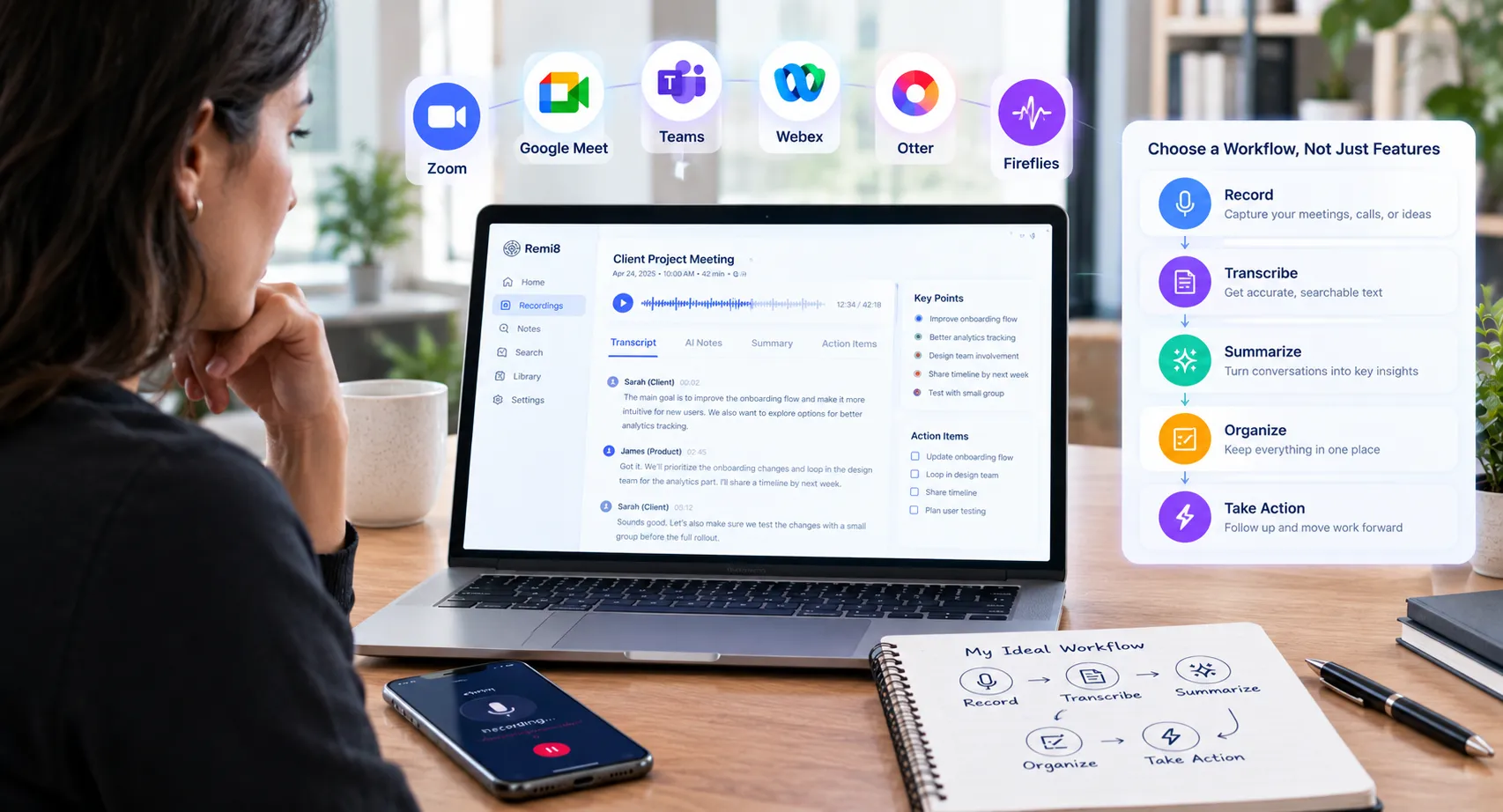
The workflow behind it: Record → Transcribe → Summarize → Search → Review → Act. Recording captures the call. Transcribing turns it into searchable text. Summarizing condenses what was discussed and decided. Searching finds specific words across one call or many. Review means reading the summary or checking a section. Act covers coaching, follow-up, or updating the deal.
The real shift is subtle: instead of asking "which recording should I listen to?", a manager starts asking "what information do I need to find?" - moving from browsing recordings to querying conversations.
5 Ways AI Helps Sales Managers Review Conversations Faster
1. Start With a Summary Instead of the Entire Recording
A summary gives a fast first read: customer concerns, main points, decisions, open questions, follow-up items. That's usually enough to judge whether a call needs a closer look or can be skimmed and closed. Summaries don't replace the recording - they help decide whether deeper review is worth the time.
2. Search for Specific Customer Concerns
Once a call is transcribed, it becomes searchable text. A manager can look for a topic - pricing, a competitor, implementation timelines, procurement - across one call or every call from the week, instead of opening recordings one at a time and guessing where the moment is. Searching a transcript takes seconds; scrubbing through a recording does not.
3. Find Objections and Buying Signals
AI can help surface conversations containing certain themes - objections, recurring questions, language suggesting hesitation or interest. Worth being precise: it can help locate conversations where these topics come up, but it can't reliably determine buying intent on its own. Used well, this gives a manager a shortlist worth a closer read, not a verdict to act on unchecked.
4. Capture Commitments and Action Items
Sales calls usually end with something that needs to happen next: send a proposal, schedule a demo, loop in procurement. These get missed more often than managers would like, usually because they were said out loud and never written down. AI-generated action items pull these moments out automatically, making follow-through easier to check.
5. Make Sales Coaching More Specific
This is where the time savings become something more valuable than time. Generic coaching sounds like "you need to handle objections better" - true, but hard to act on. Evidence-based coaching sounds like "the customer raised a pricing concern about eleven minutes in - let's look at how you responded." A shared transcript turns coaching from a general impression into a specific, shorter conversation.
From Call Review to Sales Conversation Intelligence
A folder full of recordings isn't much more useful than no recordings if nobody has time to listen. The value shows up once conversations move through a longer chain: Recorded → Transcribed → Organized → Searchable → Reusable. With months of searchable conversations, patterns appear that no single call would reveal - recurring questions, common objections, product requests, competitor mentions.
AI note-taking and transcription tools handle recording, transcribing, and summarizing well. Dedicated sales conversation intelligence platforms, built for revenue teams specifically, often go further - deal-stage tracking, talk-time ratios, CRM-native scoring. Not every AI note-taking tool is a complete conversation intelligence platform.
Where an AI Note Taker Fits Into the Workflow?
This is where a tool like Remi8 AI's AI note taker fits - one piece of the workflow, not the whole solution. For a sales team, it removes the manual side: recording the call, transcribing it, generating a summary, identifying who said what, and making it searchable. None of that replaces reviewing a call and deciding what it means - it removes the friction of getting from "a conversation happened" to "here's what's actually in it."
A Practical AI-Powered Call Review Workflow
Before - check the summary, scan action items, prioritize high-value calls.
During - search the transcript for specific topics, jump to relevant sections, review how an objection was handled.
After - write coaching notes tied to specific moments, follow up on commitments, update the CRM.
What AI Doesn't Replace?
AI does not replace a sales manager's judgment, and any tool that implies otherwise is overselling itself. It can't understand the full context of a relationship built over months, read the tone of a difficult conversation the way someone who was there can, or hold the actual coaching conversation.
Technical limits matter too: transcriptions can contain errors, especially with accents or background noise, and summaries can miss context. Where accuracy matters most, check the original recording. Businesses should also consider recording consent, privacy expectations, and applicable laws before recording customer conversations - requirements vary by location, so confirm with legal counsel rather than assume one rule applies everywhere.
The Real Benefit Isn't Listening Faster
The goal isn't really to help managers listen to twice as many calls. The bigger benefit is prioritization. A manager might have a hundred conversations in a week and only need to deeply review ten or twenty. AI helps answer which ones - which need attention, which reps need coaching. That doesn't make judgment less important; it puts it to better use.
Frequently Asked Questions
What is AI sales conversation analysis?
The use of AI to transcribe, summarize, and organize sales calls so managers can review them without listening to full recordings.
How can AI help sales managers review calls?
AI turns recordings into searchable transcripts and summaries, so a manager can scan a summary and jump straight to the part of a call that needs closer review.
Can AI analyze sales conversations?
Yes - AI can transcribe calls, generate summaries, identify commitments, and surface conversations mentioning specific topics. It can't reliably judge buying intent or replace a manager's own read of a relationship.
How does AI transcription help sales teams?
It converts spoken calls into searchable text, removing the need for manual notes or scrubbing through audio, and creates a record reps and managers can reference later.
Can AI identify action items from sales calls?
Yes. AI can detect commitments like sending a proposal or scheduling a follow-up and list them automatically, making it easier to track what was promised.
Can AI help sales managers coach their teams?
It can give managers concrete material, like a transcript of how a rep handled an objection, supporting more specific coaching - though the coaching itself still depends on the manager.
What is an AI note taker for sales calls?
A tool that records a conversation and automatically produces a transcript, summary, and action items - meaning less manual note-taking and an easier way to revisit what was discussed.
Conclusion
Priya's Thursday afternoon problem was never about discipline. It was about volume - more conversations than any one person can review by listening alone.
AI doesn't remove that volume, but it makes each conversation easier to transcribe, summarize, search, and revisit, so review stops depending entirely on a manager's available hours. The goal was never to replace judgment with an algorithm - it's to make sure that judgment gets spent where it's needed most.
If you're looking for a straightforward way to capture and organize sales conversations without adding more manual work to your week, it's worth seeing how Remi8 AI's AI note taker handles recording, transcription, and summaries for teams juggling more calls than hours in the day.


























Sign in to leave a comment.