

It's 6:40 p.m. and the story is due at 8. Somewhere in a 70-minute conversation with a city council candidate is one line about the parks budget that will anchor the whole piece. The reporter remembers the tone of it - a little defensive, said right after a question about last year's cuts - but not the exact wording, and definitely not the timestamp.
This is one of the most common small crises in daily journalism. Not a lack of material, but too much of it, recorded in real time, with no easy way back into the middle of it.
The old way of finding a quote
For a long time, the only real options were memory, handwritten notes, or dragging a scrubber bar back and forth across an audio file hoping to land near the right spot. All three work, sort of. None of them scale to a 90-minute interview with a source who talks fast and circles back on themselves.
Reporters have built workarounds for this for years - timestamping notes as they listen live, flagging strong quotes with a tap on a recorder app, keeping a running document of "good lines" during transcription. These habits help, but they depend on the reporter doing extra work in the moment, often while also trying to actually listen to the person in front of them.
It's not only breaking-news reporters who run into this. A freelance writer working on a longer feature might sit on four or five recorded interviews for weeks before drafting, and by the time they sit down to write, remembering which source said which thing - and where - becomes its own small research project. A podcast producer scripting an episode from a 90-minute conversation faces the same wall: great material, buried in the middle of an hour they don't have time to re-listen to in full.
What changes once the interview becomes searchable text?
The workflow gets simpler once a recording exists as text rather than only as audio. A search for "parks" or "budget" or even a half-remembered phrase turns a 70-minute recording into a handful of candidate lines in seconds. That's the basic function of a quote finder: it doesn't decide what's newsworthy, but it removes the physical bottleneck of finding where something was said.
A practical version of this workflow looks something like:
- Record the interview as usual.
- Let it transcribe into text, ideally with timestamps attached to each line.
- Search the transcript for keywords, names, or phrases tied to the quote you're trying to recall.
- Jump to that point in the audio to confirm the exact wording and tone.
- Pull the verified quote into your draft.
Step four matters more than it might seem. A transcript search finds candidates. It doesn't confirm them.
For a journalist juggling several stories at once, this five-step shape also does something less obvious: it turns "journalist tools" from a vague category into a specific, repeatable habit. Instead of every interview generating its own ad hoc note-taking system, the same workflow applies whether the source is a school board member, a startup founder, or a scientist speaking carefully about uncertain results.
Search finds it. Verification confirms it.
This is the part of the process worth being deliberate about. Automated transcription is genuinely useful for locating a section of a long recording, but transcripts - human or AI-generated - can misplace a word, flatten sarcasm, or turn a mumbled qualifier into something more definite than the speaker intended. A search result is a lead, not a citation.
Before a quote goes into a published piece, it's worth listening to the actual audio around it: What came right before the line? Was there a laugh, a pause, a "well, I mean" that changes the meaning? Did the source name someone whose name the transcript spelled differently three lines later? None of this is about distrusting the technology so much as applying the same standard reporters already apply to handwritten notes - check it against the source material before it's attributed to someone in print.
Where a tool like Remi8 AI fits into this
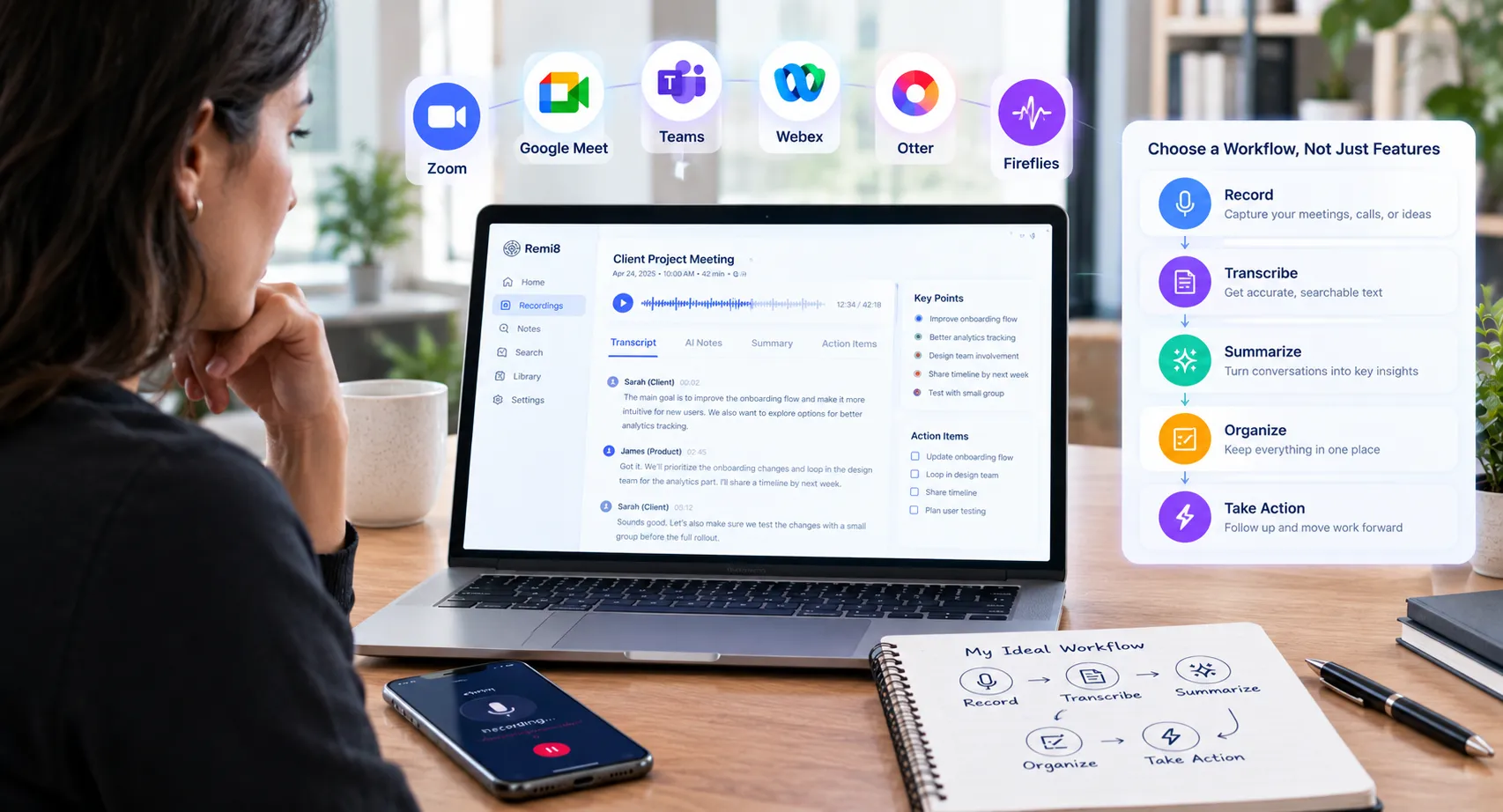
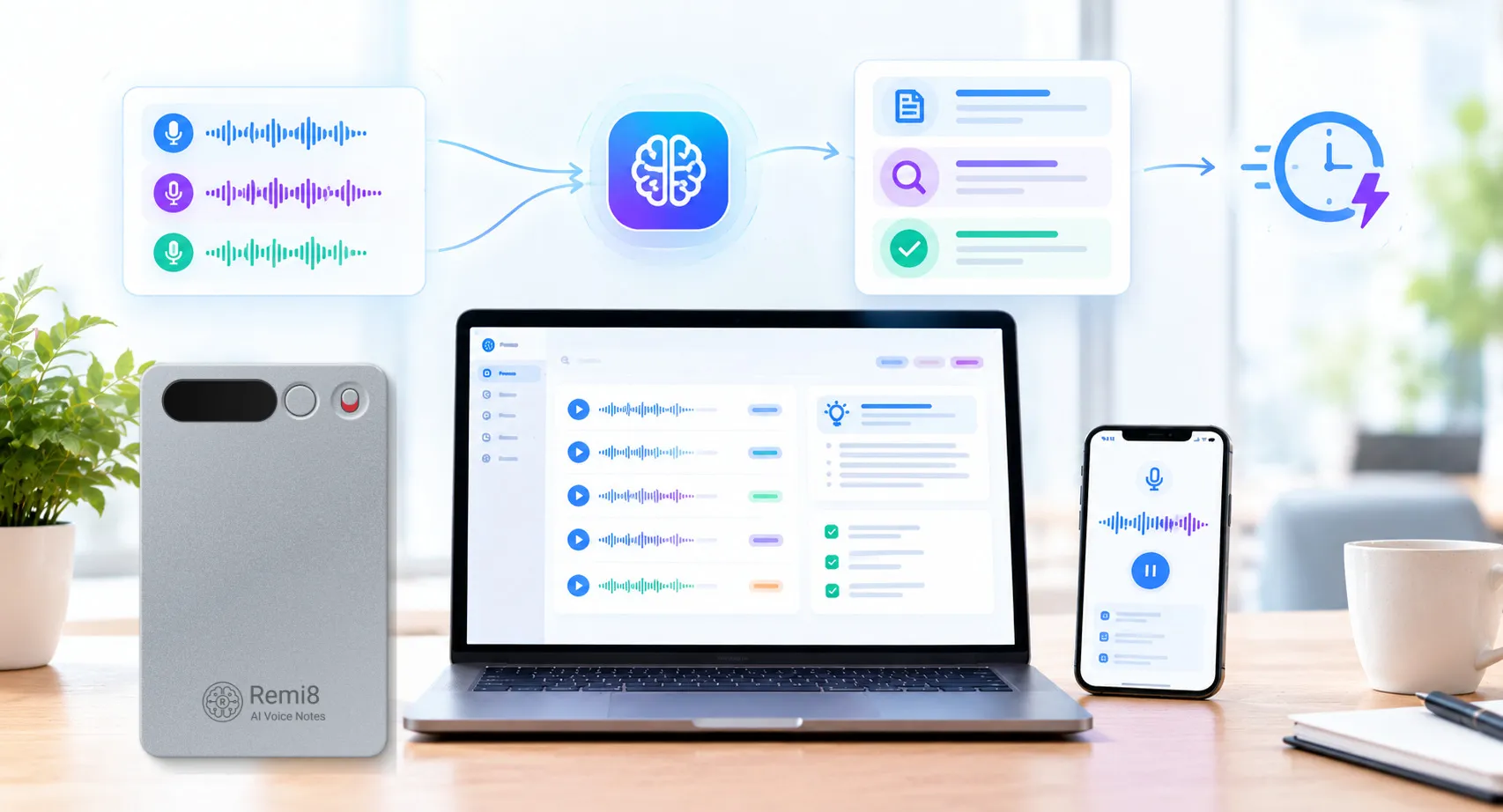
Apps built around voice recording and searchable transcripts are designed for exactly this kind of retrieval problem. Remi8 AI records the conversation, transcribes it, and lets a reporter search across past interviews rather than scrolling through folders of audio files looking for the right one. For a beat reporter juggling a dozen interviews a month, being able to search "parks budget" across every recorded conversation from the past quarter - not just the most recent one - turns into real time saved, especially close to deadline.
That said, no transcription tool replaces the judgment call about what's fair to quote, in what context, and with what framing. The tool finds the passage. The reporter still decides what belongs in the story.
Interview notes still have a job to do
None of this makes handwritten or typed interview notes obsolete. In-the-moment notes capture things a transcript never will - which answer made the source visibly uncomfortable, which question got dodged, what was happening in the room. The difference is that notes no longer have to carry the full weight of "remembering everything said." They can stay focused on impressions and follow-up questions, while the transcript handles the job of preserving exact wording. Used together, the two cover each other's blind spots.
A note on consent and recording practices
Quote-finding tools only matter if the underlying recording was made appropriately in the first place. Recording laws vary by state and country, and many newsrooms have their own policies about disclosing that a conversation is being recorded, even in one-party-consent jurisdictions. That's a separate conversation from the technology, but it's the one that has to happen first.
The practical takeaway
Finding a quote quickly isn't really about typing a keyword into a search bar. It's about building a workflow - record, transcribe, search, verify - that turns a messy hour of conversation into something a reporter can actually use under deadline pressure, without sacrificing the accuracy that makes the quote worth publishing in the first place.
FAQs
How can journalists search a long interview for one specific quote?
Once an interview is transcribed into text, most transcription tools allow keyword search across the full document. Searching for a name, topic, or remembered phrase narrows a 60-to-90-minute recording down to a few likely sections in seconds, rather than requiring a manual scrub through the audio.
Is a searchable transcript accurate enough to quote directly from?
Not on its own. Transcripts - automated or human-typed - can misplace words or misrepresent tone. A transcript search is a good way to locate a quote, but the audio around it should be checked before the line is attributed to a source in a published piece.
Do reporters still need to take notes if the interview is recorded and transcribed?
Many still do, at least briefly. Notes taken during the conversation capture context a transcript alone won't - body language, what wasn't said, or which comment felt most important in the moment. Transcripts and notes work best as complements, not replacements for each other.






















Sign in to leave a comment.