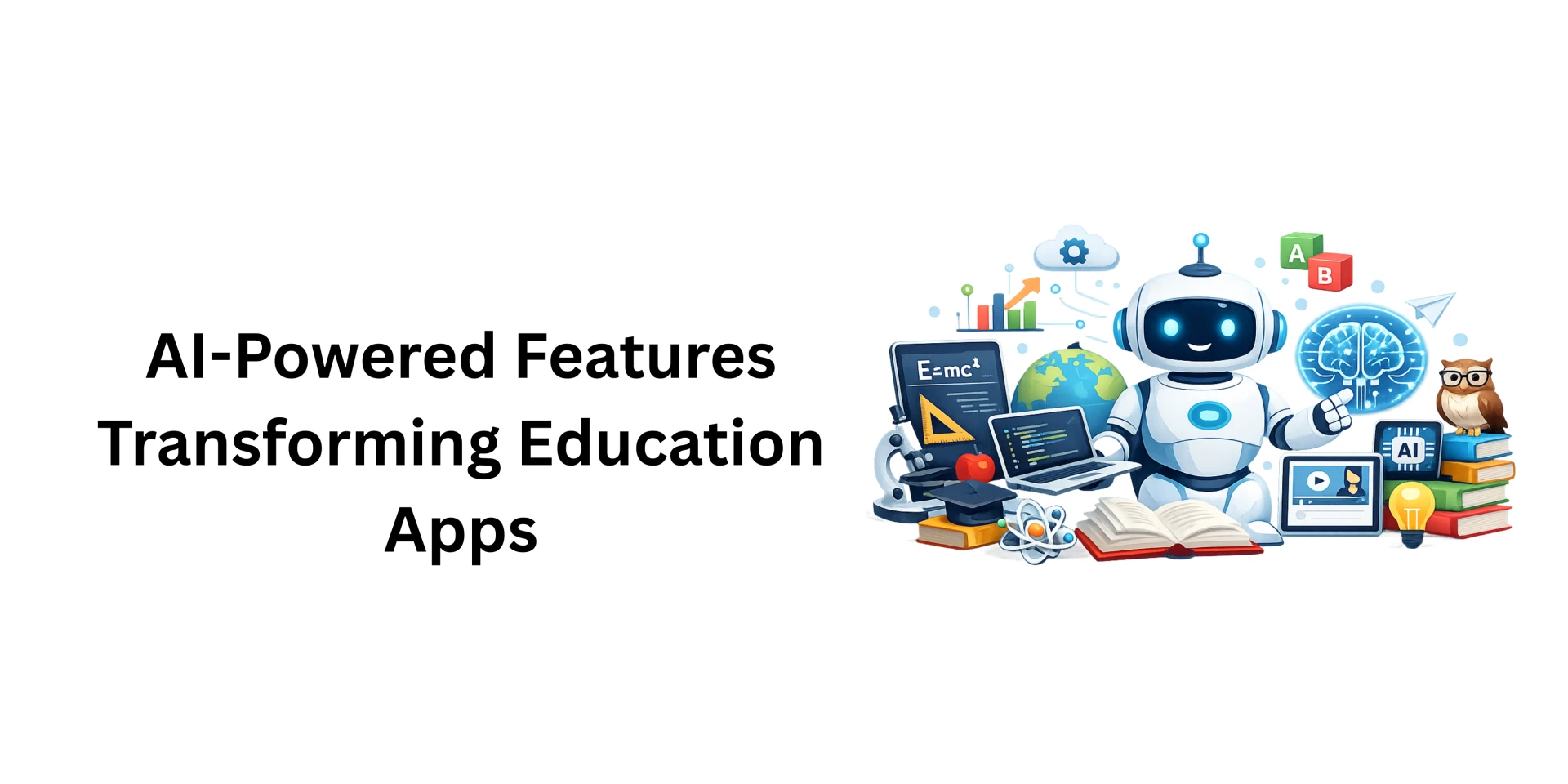

AI is already part of most education apps, whether teams openly label it or not. Recommendation engines, analytics layers, automated feedback—these are no longer experiments. For businesses and enterprises, AI has become a way to manage scale without increasing operational load.
What matters now isn’t adding AI. It’s using it where it quietly improves learning efficiency, adoption, and outcomes.
If you’re evaluating education app development from a business perspective, it helps to look at AI features through a practical lens: does it reduce friction, improve insight, or save time?
For a clear overview of how education apps are structured today—including core features and development considerations—you can refer to this guide.
Adaptive Learning Paths That Change Over Time
Traditional learning paths are fixed. AI-driven ones aren’t.
In modern education apps, AI tracks how users move through content and adjusts accordingly. Someone struggling with a concept may see supporting material automatically. Someone progressing quickly may skip repetitive modules.
For enterprises, this avoids wasted learning hours. Employees focus only on what actually improves their skills, not what looks good on paper.
Smarter Content Discovery
As content libraries grow, navigation becomes a problem.
AI helps surface relevant material by observing:
- Previous courses accessed
- Topics users spend time on
- Incomplete or abandoned lessons
Instead of browsing endlessly, learners are guided—subtly—toward what makes sense next. This reduces drop-offs without pushing notifications or reminders too aggressively.
Automated Evaluation and Feedback
Manual grading works at a small scale. It breaks quickly at the enterprise level.
AI-based assessment tools handle routine evaluations, generate instant feedback, and highlight patterns instructors might miss. This doesn’t remove human oversight. It removes repetitive work.
Many educational app development services now treat automated assessments as a standard capability rather than an advanced add-on.
Predictive Learning Analytics for Managers
One of AI’s most useful roles sits behind the scenes.
Predictive analytics allows businesses to see:
- Who is likely to disengage
- Which courses underperform
- Where skill gaps are forming across teams
This shifts training decisions from reactive to informed. Adjustments happen while programs are live, not after outcomes disappoint.
In-App AI Assistants for Learner Support
Waiting for answers disrupts learning flow.
AI-powered assistants inside education apps can respond to common questions, guide users through features, and help them resume where they left off. For large organizations, this significantly reduces support tickets.
Well-implemented assistants don’t feel like bots. They feel like helpful shortcuts.
Language Processing and Accessibility Tools
AI-driven language features are especially valuable for global teams.
Common applications include:
- Speech-to-text for note-taking
- Translation support for multilingual learners
- Pronunciation feedback in training modules
These tools make education apps more inclusive without requiring separate systems or manual intervention.
Continuous Content Improvement Using Data
AI doesn’t just analyze learners. It analyzes content.
By tracking engagement patterns, AI can identify lessons that users skip, abandon, or complete unusually fast. Over time, content teams gain clear signals about what needs revision.
This turns learning platforms into evolving systems, not static repositories.
Security, Ethics, and Responsible AI Use
For enterprises, AI must be controlled, not experimental.
Modern education apps are expected to handle data responsibly, apply transparent AI logic, and comply with data protection requirements. Trust plays a bigger role here than innovation.
AI features that ignore governance rarely survive enterprise scrutiny.
Closing Perspective
AI-powered features are quietly changing education apps, not dramatically. The most successful platforms don’t advertise intelligence—they apply it where it saves time, improves learning relevance, and supports decision-making.
Strong education app development focuses on restraint as much as capability. And choosing the right educational app development services partner determines whether AI becomes an advantage or a complication.
The future of education apps isn’t louder AI. It’s better judgment in how AI is used.





























Sign in to leave a comment.