
Retail operations are becoming increasingly data-driven as businesses look for ways to improve customer experience, reduce operational inefficiencies, and manage inventory more accurately. Traditional retail systems often depend heavily on manual supervision, barcode scanning, and periodic inventory checks. These methods still work, but they struggle to keep pace with modern customer expectations and high-volume retail environments.
This shift has increased interest in AI Retail Solutions using YOLO Computer Vision. Retailers are now using artificial intelligence and computer vision systems to automate checkout operations, monitor shelves, analyze customer movement, and detect suspicious activity in real time.
Among modern computer vision models, YOLO has gained significant attention because of its speed and accuracy in object detection. It allows retail systems to process live video feeds quickly while identifying products, people, and movement patterns with minimal delay.
This article explains how YOLO-based retail systems work, where they are being used today, and why computer vision retail automation is becoming a central part of smart retail systems.
Understanding AI Retail Solutions Using YOLO Computer Vision
What Is YOLO Object Detection?
YOLO, short for “You Only Look Once,” is a deep learning object detection framework designed for real-time image analysis. Unlike traditional image recognition methods that process objects in multiple stages, YOLO identifies and classifies objects within a single processing cycle.
This approach makes YOLO particularly useful for retail environments where large amounts of visual data must be analyzed continuously. Cameras inside stores generate constant video streams, and retail systems need fast object recognition to support real-time decision-making.
Why YOLO Works Well for Retail Environments
Retail stores contain dynamic environments with constant movement, crowded aisles, varying lighting conditions, and thousands of product types. YOLO models are well suited for these conditions because they provide:
- Fast detection performance
- Real-time object tracking
- High accuracy across multiple objects
- Efficient edge-device deployment
Modern YOLO versions also handle overlapping objects more effectively, which is important in retail spaces where products are stacked closely together.
Role of Computer Vision in Smart Retail
Computer vision retail automation allows stores to interpret visual information automatically. Instead of relying entirely on human observation, AI systems analyze customer activity, inventory movement, and operational patterns continuously.
This technology supports smarter decision-making across several retail functions, including checkout operations, shelf management, security monitoring, and customer analytics.
Key Retail Applications of YOLO Computer Vision
AI-Powered Self-Checkout Systems
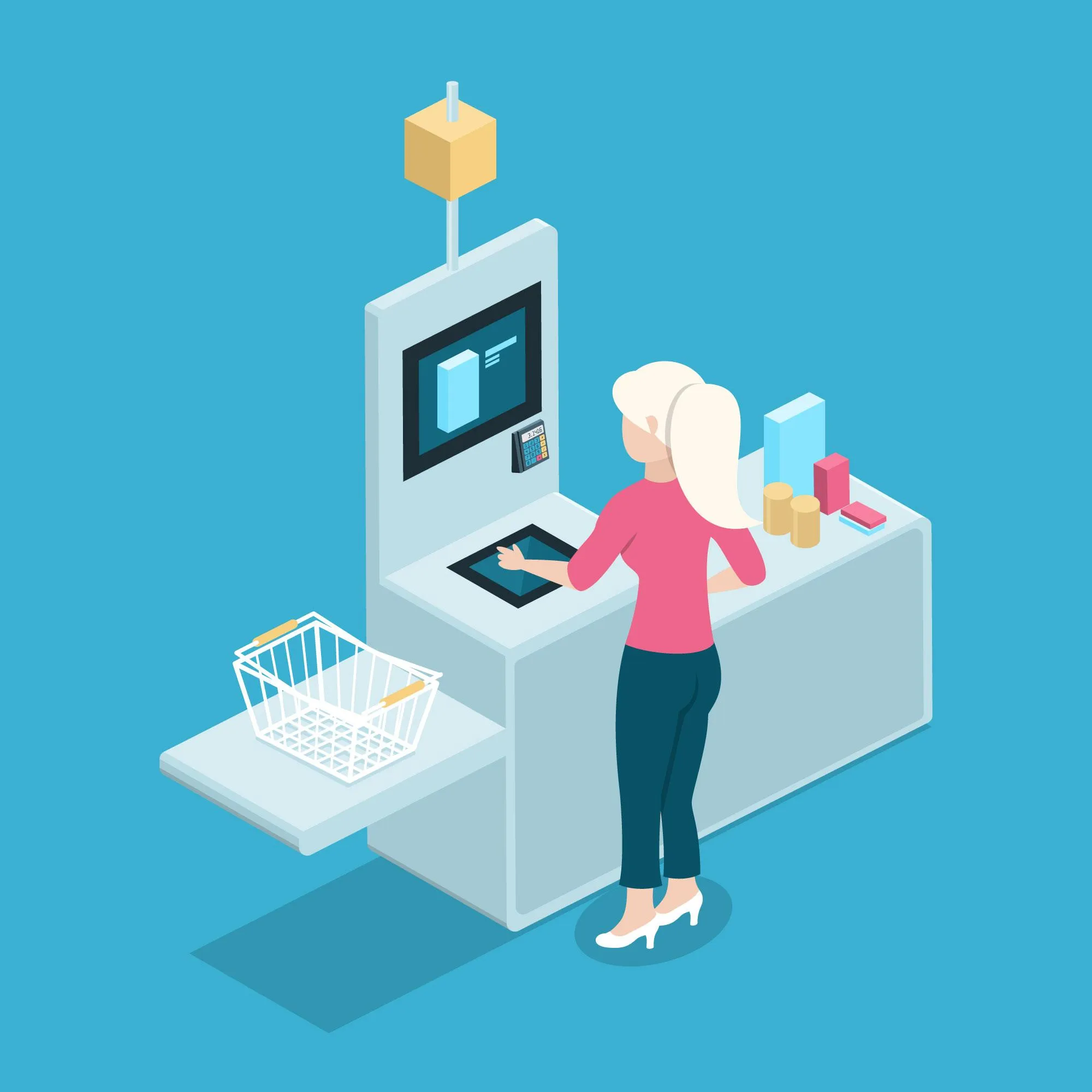
One of the most visible applications of AI retail monitoring is self-checkout automation. YOLO-based systems identify products through cameras rather than barcode scanners.
Customers can place items on a counter or inside a smart cart while the system detects products automatically and generates the bill in real time. This reduces checkout delays and improves customer convenience.
Shelf Monitoring and Inventory Tracking
Retail inventory management remains a major operational challenge, especially in large stores. YOLO retail analytics systems can monitor shelf conditions continuously using cameras and AI detection models.
These systems help retailers identify:
- Out-of-stock products
- Misplaced items
- Shelf gaps
- Inventory shortages
Continuous monitoring improves stock accuracy and reduces manual inventory checks.
Customer Movement Analytics
Retailers increasingly use computer vision retail automation to understand customer behavior inside stores. YOLO-based systems track movement patterns, dwell times, and shopping routes without relying solely on sales data.
This information helps retailers improve store layouts, product placement, and customer flow management.
Retail Theft Detection
Retail shrinkage remains a costly problem worldwide. AI-powered retail intelligence systems can detect suspicious activity such as concealed products, unusual movement patterns, or unauthorized access to restricted areas.
Although human review is still important, AI systems improve response times by identifying potential risks earlier.
Queue and Crowd Monitoring
Long checkout lines often reduce customer satisfaction. YOLO systems can monitor crowd density and queue length in real time.
Retail managers can use this data to:
- Open additional counters
- Redirect customers
- Improve staffing allocation
- Reduce congestion during peak hours
How YOLO-Based Retail Systems Work
Video Capture and Processing
Retail AI systems begin with video capture through ceiling-mounted or shelf-mounted cameras. These cameras provide continuous visual data across the store environment.
Video frames are processed either on edge devices or cloud infrastructure, depending on system architecture.
Product Recognition and Tracking
The YOLO detection engine identifies products, shopping carts, and customer movement in real time. Object tracking algorithms maintain visibility even when products move across different camera angles.
This process supports accurate inventory tracking and automated checkout operations.
Behavioral Pattern Analysis
Beyond object detection, AI systems also analyze behavior patterns. Retailers can identify shopping trends, congestion areas, and customer interaction patterns within the store.
Behavioral analytics provide operational insights that traditional POS systems cannot capture independently.
Real-Time Analytics Processing
AI-powered retail intelligence platforms process large volumes of visual and transactional data continuously. Real-time analytics allow retailers to respond quickly to operational issues such as stock shortages or overcrowding.
This capability becomes especially important in large retail chains with multiple store locations.
Alert and Reporting Systems
Modern smart retail systems generate automated alerts when unusual conditions occur. These alerts may include:
- Inventory shortages
- Security risks
- Queue congestion
- Shelf compliance issues
Managers receive dashboards and reports that improve operational visibility across the retail environment.
Technologies Supporting AI Retail Solutions
Deep Learning Models
YOLO itself is built on deep learning principles. Retail AI systems often combine object detection with classification, tracking, and anomaly detection models.
Training these models requires large retail image datasets collected under different lighting and environmental conditions.
Edge AI Infrastructure
Many retailers now process visual data directly on local devices instead of sending everything to the cloud. Edge AI reduces latency and allows faster response times for real-time retail operations.
This approach also helps reduce bandwidth costs.
Cloud Retail Platforms
Cloud infrastructure supports centralized monitoring, analytics, and long-term data storage. Multi-store retailers often rely on cloud platforms to manage operations across distributed retail locations.
Retail Data Pipelines
Retail AI systems generate enormous amounts of video and transaction data. Structured data pipelines help process, clean, and store this information efficiently.
Reliable data pipelines are essential for maintaining accurate AI predictions.
Sensor Integration Systems
Some retail environments combine cameras with weight sensors, RFID systems, and motion detectors. Sensor fusion improves accuracy in difficult retail conditions where visual detection alone may not be sufficient.
Benefits of YOLO-Based Retail Automation
Faster Retail Operations
Automated monitoring and checkout systems reduce delays across retail operations. Faster transactions improve customer satisfaction while increasing store throughput.
Better Inventory Accuracy
Continuous shelf monitoring allows retailers to maintain more accurate inventory records and respond to shortages more quickly.
Reduced Retail Shrinkage
AI-based monitoring systems improve visibility into theft risks and operational anomalies. This helps retailers reduce financial losses caused by shrinkage.
Improved Customer Experience
Customers increasingly expect faster and more convenient shopping experiences. Smart retail systems reduce checkout friction and improve in-store navigation.
Better Operational Decision-Making
YOLO retail analytics provide actionable insights into customer behavior, inventory movement, and store efficiency. These insights support better planning and resource allocation.
Challenges Retailers Must Address
Data Privacy Regulations
Retailers using AI-powered retail intelligence systems must comply with privacy regulations regarding video surveillance and customer data collection.
Transparent policies and secure data handling are becoming increasingly important.
Video Data Storage Complexity
Continuous video monitoring creates large storage requirements. Managing and processing this data efficiently remains a technical challenge for many retailers.
Product Detection Accuracy
Retail environments contain visually similar products, changing packaging designs, and crowded shelves. Maintaining high detection accuracy requires regular model updates and retraining.
Infrastructure Scalability
Expanding AI systems across multiple retail locations can become expensive and operationally complex.
Integration With Legacy POS Systems
Many retailers still operate older POS infrastructure. Integrating modern AI systems with existing retail technology often requires additional customization work.
Future of AI Retail Automation
Autonomous Retail Stores
Retail stores with minimal or no checkout counters are becoming more practical as computer vision accuracy improves.
Predictive Retail Analytics
Future retail systems will likely predict customer demand, inventory shortages, and staffing needs using historical and real-time AI analysis.
Personalized Shopping Experiences
AI systems are beginning to support personalized recommendations based on customer movement patterns and purchasing behavior.
AI-Driven Retail Intelligence Networks
Retailers are gradually moving toward centralized intelligence platforms that connect analytics, inventory systems, customer insights, and operational monitoring across multiple locations.
Conclusion
AI Retail Solutions using YOLO Computer Vision are becoming increasingly important in modern retail operations. Retailers are using computer vision retail automation not only for checkout systems but also for inventory tracking, customer analytics, security monitoring, and operational management.
YOLO-based systems offer the speed and scalability required for real-time retail environments. Although challenges remain around infrastructure costs, data privacy, and detection accuracy, the direction of retail technology continues moving toward intelligent automation.
As AI retail monitoring systems mature, stores will rely more heavily on connected analytics platforms capable of improving operational visibility across the entire retail ecosystem.
























Sign in to leave a comment.