
Introduction
In today's competitive manufacturing landscape, increasing productivity while reducing machining costs is a top priority. One of the most effective ways to achieve this is by using PVD-coated cutting tools, which offer exceptional wear resistance, higher cutting speeds, and longer tool life.
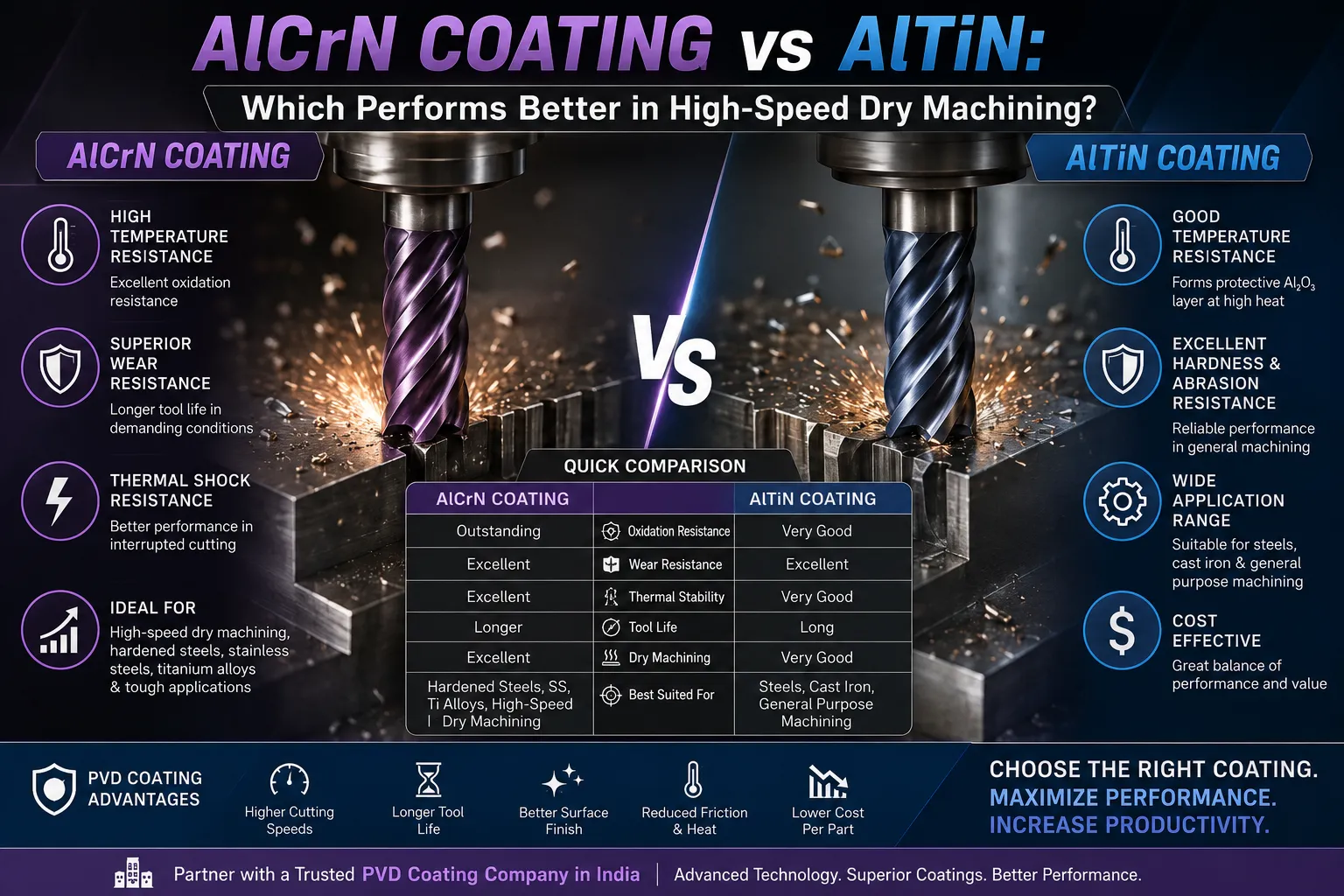
When it comes to high-speed dry machining, two of the most widely used PVD coatings are AlCrN (Aluminum Chromium Nitride) and AlTiN (Aluminum Titanium Nitride). Both coatings are engineered to protect cutting tools from extreme heat and wear, but they differ in composition, performance, and ideal applications.
If you're looking to maximize machining efficiency and extend tool life, understanding the differences between AlCrN and AlTiN is essential.
What is PVD Coating?
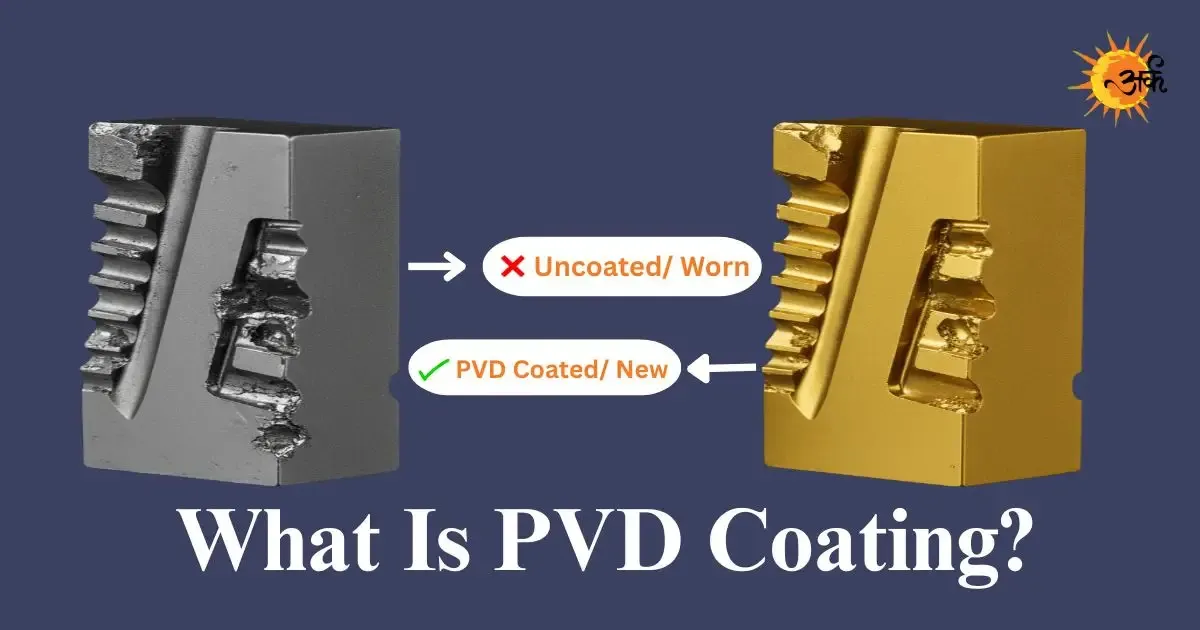
Physical Vapor Deposition (PVD) coating is an advanced surface treatment process that applies an ultra-thin, extremely hard ceramic coating onto cutting tools and industrial components inside a high-vacuum chamber.
During the process, coating materials such as titanium, aluminum, chromium, and other metals are vaporized into plasma and deposited atom by atom onto the tool surface. This creates a dense, uniform coating that significantly improves surface properties without affecting the tool's dimensions.
Compared to uncoated tools, PVD coating offers several advantages:
- Superior hardness
- Excellent wear resistance
- High oxidation resistance
- Reduced friction
- Longer tool life
- Improved cutting performance
- Better heat resistance
- Enhanced corrosion protection
Because of these benefits, PVD coatings are widely used in industries such as automotive, aerospace, medical, die & mould, oil & gas, precision engineering, and general manufacturing.
Among the various PVD coatings available today, AlCrN and AlTiN are considered two of the best options for high-performance cutting tools.
Understanding AlCrN Coating
AlCrN (Aluminum Chromium Nitride) is a premium PVD coating designed for applications involving extremely high temperatures and demanding machining conditions.
Its combination of aluminum and chromium provides excellent oxidation resistance and thermal stability, making it highly effective for dry machining.
Key Benefits of AlCrN Coating
- Outstanding oxidation resistance
- Excellent hot hardness
- Superior wear resistance
- Exceptional thermal stability
- High resistance to thermal cracking
- Longer tool life
- Ideal for interrupted cutting
Understanding AlTiN Coating
AlTiN (Aluminum Titanium Nitride) is another widely used PVD coating known for its excellent hardness and abrasion resistance.
When exposed to high temperatures, AlTiN forms a protective aluminum oxide layer that helps shield the cutting edge from excessive heat.
Key Benefits of AlTiN Coating
- High hardness
- Excellent abrasion resistance
- Good heat resistance
- Suitable for high-speed cutting
- Reliable performance on alloy steels
- Cost-effective for general machining
Performance Comparison
1. High-Temperature Performance
High-speed machining generates significant heat, especially when no coolant is used.
AlCrN performs exceptionally well because chromium improves oxidation resistance and maintains coating stability even at elevated temperatures.
AlTiN also provides excellent heat protection but begins to lose effectiveness sooner under prolonged extreme thermal loads.
2. Wear Resistance
Wear resistance determines how long a cutting tool can maintain its sharp edge.
AlCrN offers:
- Lower flank wear
- Better crater wear resistance
- Reduced edge chipping
- Longer cutting edge retention
AlTiN also performs well but generally exhibits faster wear under severe machining conditions.
3. Dry Machining Performance
Dry machining eliminates coolant, making heat management critical.
AlCrN excels due to its:
- Superior oxidation resistance
- Lower friction
- Better thermal stability
- Improved resistance to thermal fatigue
Manufacturers performing dry milling, drilling, and turning often choose AlCrN for its ability to withstand continuous high temperatures.
4. Machining Hardened Materials
For hardened steels, die steels, and difficult-to-machine alloys, coating integrity is essential.
AlCrN performs exceptionally well on:
- Hardened tool steels
- Stainless steel
- Titanium alloys
- Nickel-based superalloys
- Inconel
- Die & mould steels
AlTiN also performs well but generally offers slightly shorter tool life under extreme conditions.
5. Thermal Shock Resistance
Interrupted cutting repeatedly heats and cools the cutting edge.
AlCrN's chromium content provides greater resistance to thermal fatigue and crack formation, making it ideal for milling and rough machining.
6. Surface Finish
Because AlCrN maintains edge sharpness longer, it often delivers a more consistent surface finish throughout extended production runs.
Best Applications
AlCrN Coating
AlCrN is recommended for:
- High-speed dry machining
- Hardened steel machining
- Aerospace components
- Medical components
- Die & mould manufacturing
- Heavy milling
- High-feed machining
- Stainless steel machining
- Titanium machining
AlTiN Coating
AlTiN is suitable for:
- General-purpose machining
- Alloy steels
- Carbon steels
- Cast iron
- CNC milling
- Drilling
- Medium-speed machining
Cost vs Performance
Although AlCrN coatings may have a slightly higher initial cost than AlTiN, they often provide greater long-term value through:
- Extended tool life
- Reduced downtime
- Fewer tool replacements
- Higher productivity
- Lower cost per machined component
For demanding industrial applications, the improved performance of AlCrN typically outweighs the additional investment.
Which Coating Should You Choose?
Choose AlCrN Coating if you require:
- High-speed dry machining
- Maximum tool life
- Extreme heat resistance
- Hard material machining
- Superior wear resistance
- Long production runs
Choose AlTiN Coating if you require:
- General CNC machining
- Reliable all-around performance
- Cost-effective tooling
- Moderate cutting temperatures
- Standard production applications
Why Choose a Trusted PVD Coating Company in India?
Selecting the right coating is only part of the equation. Working with an experienced PVD coating company in India ensures that your cutting tools receive consistent, high-quality coatings tailored to your machining requirements.
A reliable coating partner offers:
- Advanced PVD coating technology
- High-quality coating materials
- Uniform coating thickness
- Excellent coating adhesion
- Customized coating solutions
- Faster turnaround times
- Technical support for optimized tool performance
Whether you manufacture automotive components, aerospace parts, precision dies, or industrial tooling, choosing the right PVD coating partner can significantly improve productivity and reduce tooling costs.
Conclusion
Both AlCrN and AlTiN are exceptional PVD coatings that enhance cutting tool performance. However, for high-speed dry machining, AlCrN consistently outperforms AlTiN due to its superior oxidation resistance, thermal stability, wear resistance, and longer tool life.
If your machining operations involve hardened materials, elevated cutting temperatures, or prolonged dry machining cycles, AlCrN coating is generally the preferred choice.
Partnering with a trusted PVD coating company in India can help you select the ideal coating solution for your application, improving productivity, extending tool life, and reducing overall manufacturing costs.
Frequently Asked Questions (FAQs)
1. What is PVD coating?
PVD (Physical Vapor Deposition) coating is a vacuum-based surface treatment process that deposits a thin, hard ceramic layer onto cutting tools and industrial components, improving wear resistance, hardness, heat resistance, and tool life.
2. Which is better for dry machining: AlCrN or AlTiN?
AlCrN is generally the better choice for high-speed dry machining because it offers higher oxidation resistance, better thermal stability, and longer tool life under extreme temperatures.
3. Is AlCrN suitable for stainless steel machining?
Yes. AlCrN performs exceptionally well on stainless steel, hardened steels, titanium alloys, nickel-based superalloys, and other difficult-to-machine materials.
4. Is AlTiN still a good coating?
Absolutely. AlTiN remains an excellent option for general-purpose machining, particularly for alloy steels, carbon steels, and cast iron where machining conditions are less extreme.
5. How do I choose the right PVD coating?
The right coating depends on your workpiece material, cutting speed, machining environment (wet or dry), operating temperature, and desired tool life. Consulting with an experienced PVD coating provider ensures you select the most suitable coating for your specific application.

























Sign in to leave a comment.