
Digital trend shifts are constantly happening and marketing strategies change just as quickly. However, one thing that can still always be relied on is email marketing.
Email marketing continues to explode in popularity even as influencer campaigns, AI personalization, and short-form video are where the money is right now. Email marketing delivers unprecedented ROI and the ability to directly reach your audience no matter if you are running an e-commerce shop, local service business, or content-first brand.
Knowing the types of email marketing available to you can help improve audience engagement, increase sales and create lasting relationships with customers.
Let's take a look at the best forms of email marketing in 2025 — and how to use each to your advantage.
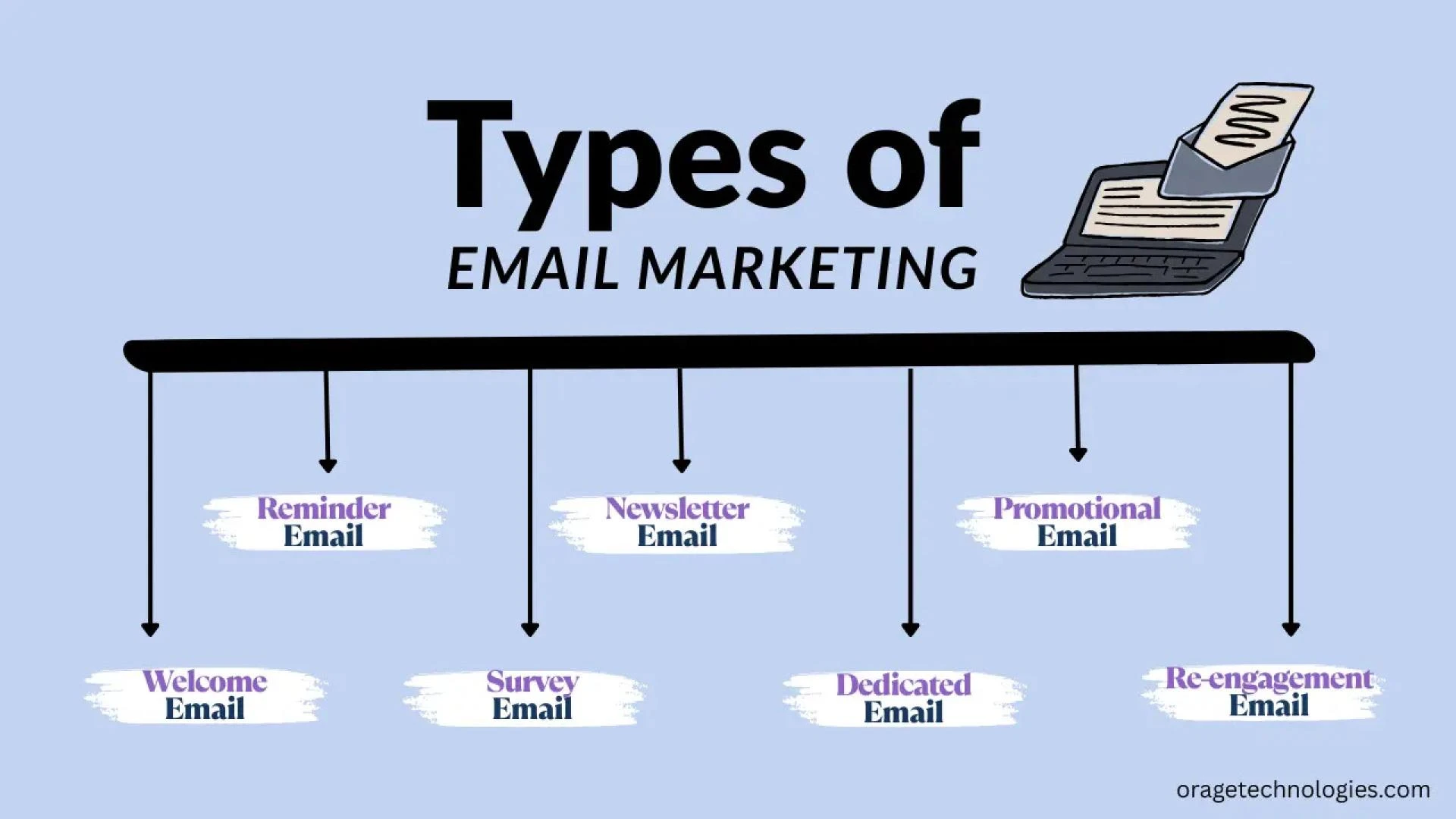
Most Common Types of Email Marketing Campaigns
1. Welcome Emails
This is generally the first communication someone will receive after subscribing to your email list. It’s friendly, brief, and sets the tone. Welcome emails are your first opportunity to say hello and tell people what they will receive from you. The click-through rates for welcome emails are often high, so you want to utilize this opportunity well.
2. Newsletter Emails
Newsletters are defined by a regular schedule, whether weekly, monthly, or on any other basis you choose. A newsletter email allows you to keep in touch with your audience by sharing company announcements, blog posts, product features, or even tips related to your industry. It’s a good way to continue to build trust while maintaining some top-of-mind awareness of your brand.
3. Promotional Emails
Promotional emails are what most people typically think of — articles that send deals or discounts, product launches, and special events. A good promotional email builds excitement and will usually drive readers to take some action. Just be careful not to send too many offers, as your audience will simply ignore them.
4. Re-engagement Emails
Over time, some of your subscribers will simply stop opening your emails. Re-engagement emails are a way to get them back. Whether that is a simple nudge or just a trivial gift for subscribing, re-engagement emails try to reconnect with someone who is not actively using the content or service you're providing and the quality of your email list.
5. Feedback or Survey Emails
Have you thought about improving your products or services? Ask your customers! Sending a short survey or soliciting feedback lets them know you value their opinion. You can gain a lot of knowledge from their responses — and potentially use that to improve your marketing or customer service.
6. Dedicated Emails
Dedicated emails are singular topic messages, focused on one purpose, and one target. When you send a dedicated email about a specific topic, it is simple to promote a webinar, your new service, or a last-minute flash sale. There is no other topic in your email making it easy to understand and act on
.
7. Reminder Emails
Everyone forgets. Reminder emails help your subscribers pick up where they left off. Maybe they left something in their cart, an event is coming up, or they forgot to meet a deadline. Regardless, they now are reminded to take the next step, let them know they're still on your radar, and can often increase conversions.
Understanding the Five T’s of a Successful Email Campaign
1. Tease
Begin with a catchy subject line. That is the first thing a person sees, and most of the time will determine whether they open the mail or delete it. Tease the value inside without sounding too pushy.
2. Target
Do not ever send the same email to everyone. Segment your list based on their interests, behaviours, or previous purchases. Targeting the right message to the right person works better.
3. Teach
Teach your subscribers. Share tips, share insights, or share answers to common questions. Each mail given is filled with value and builds authority.
4. Test
Try things such as variations of subject lines, changes in the layout or calls-to-action (CTA). A/B testing enables you to find out what is favoured by your audience. Even the smallest tweaks, at times, can bring two significant improvements.
5. Track
Analyse tracking information regarding your email performance. Information given by performance review on open rate, click-through rate, and unsubscribe rate will show you what is doing well or what needs to be addressed.
Why These Email Approaches Still Work
There are plenty of new tactical approaches available like influencer marketing, social video campaigns, and so forth, but email continues to drive results – and it shows no signs of slowing down. Over 4 billion people use email to communicate every day, and marketers love it — and for good reason.
Even now, in 2021, most brands that are wildly successful use various approaches to email marketing campaigns, to keep in touch, lead up to nurturing more leads, and incentive sales. When you incorporate segmentation and automation, email can be a powerful tool.
Quick Tips to Improve Your Email Strategy
- Keep it brief and to the point: Readers scan, they don’t read; no one has time to read blocks of text anymore.
- Include one clear call-to-action: Don’t confuse readers with excessive links and buttons.
- Ensure mobile-friendliness: Most email readers will look at emails on their phones.
- Be consistent, not annoying: See what frequency works for your business to ensure you're top of mind without going to spam.
- Add value first: Readers prefer when they get something of value first.
Conclusion
Email marketing is still one of the most effective tools for relationship building and generating outcomes. Regardless of whether you are just getting started or refining your existing email marketing strategy, engaging the right types of email marketing will make a substantial difference.
After receiving a brief overview of the types of email marketing campaigns that are available, and applying some thoughtful tactics along the way, you will be able to reach your audience thoughtfully and effectively. Incorporate some personalized messaging, be candid and straightforward, and always measure your outcome. Most of all, think about your audience and how you are creating value for them — the rest will take care of itself!























Sign in to leave a comment.