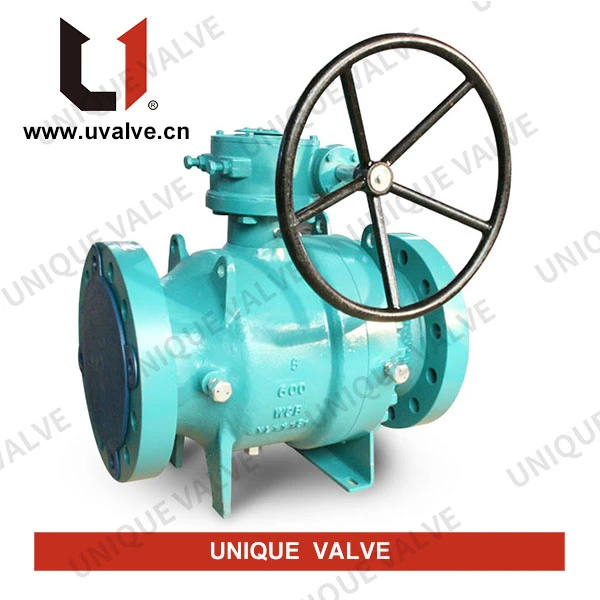

The differences between one-piece, two-piece and three-piece stainless steel ball valves are as follows:
A one-piece ball valve is a manual valve, which has an integral design. The ball is fixed by a plug, so that it is convenient for maintenance, and the diameter of the ball valve is also small. The ball is inserted from one side of the valve body. The valve seat is screwed to press the ball. Some non-standard one-piece ball valves have a short structure, so the structure of the valve body is the best way to distinguish the ball valve. A one-piece ball valve is fixed by a plug, which easily maintains and is practical. It often has small sizes.
A two-piece ball valve is composed of left and right valve bodies connected by bolts. The two left and right valve bodies are used to clamp the ball. It is relatively difficult to maintain the two-piece ball valve. The tightness of the screws in the middle is directly related to the tightness of the sealing. In addition, a two-piece ball valve is mainly used in conditions that have normal pressure or high pressure. Non-standard valves with a nominal diameter lower than DN50 are also two-piece valves. A two-piece ball valve is a valve whose ball is fixed by two pieces of valve bodies, which has difficult maintenance. The tightness of the middle screw is very important to the leakage of the two-piece ball valve.
A three-piece ball valve is similar to a two-piece ball valve, but the three-piece ball valve can be used in ultra high pressure environments. A three-piece ball valve has three-piece valve bodies, which are fixed by neck flanges on the left and right sides. Its nominal diameter is above DN50. A three-piece ball valve is similar to a two-piece ball valve, but there are multiple valve bodies in the middle of the ball, which are clamped by neck flanges on both sides.
Applications of ball valves
Ball valves are used for various pipelines with working temperatures of -29 to 180℃(reinforced polytetrafluoroethylene for the sealing ring) or -29 to 300℃(para-polyphenyl for the sealing ring). They are used to cut off or connect the medium in the pipeline. Different materials can be chosen for ball valves and they can be applied to water, steam, oil, nitric acid, light industry, food, medicine, environmental protection. They are widely used in the petroleum, chemical, metallurgy, and electric power industry.
A ball valve is mainly used to stop, distribute and change the flow direction of the medium in the pipeline. A ball valve is a new type of valve that has been widely used recently. It has the following advantages:
1. A ball valve has small fluid resistance, and its resistance coefficient is equal to that of pipe sections of the same length.
2. A ball valve has a simple structure, small size, and light weight.
3. A ball valve has tightness and reliability. Nowadays, plastic is widely used for the sealing surface of the ball valve, which has good sealing performance, and it has also been widely used in the vacuum system.
4. A ball valve is easily operated and has a fast opening and closing. From full opening to full closing can be realized by rotating 90°.
5. A ball valve is easily maintained because of its simple structure. Its sealing ring is generally movable, and it is convenient to disassemble and replace it.
6. When a ball valve is fully opened or fully closed, the sealing surface of the ball and the valve seat is isolated from the medium, and the medium will not cause erosion of the valve's sealing surface when the medium passes.
7. A ball valve is used widely, ranging from a few millimeters to a few meters, high vacuum to high pressure. When the ball rotates 90 degrees, a spherical surface will be shown at the inlet and outlet to cut off the flow.
A ball valve can be closed well only by a 90-degree rotation and a small torque. The completely equal internal cavity of the valve provides a channel with straight flow and little resistance for the medium. It is generally believed that a ball valve is most suitable for direct opening and closing, but the recent development makes the ball valve have the functions of throttling and controlling the flow. A ball valve has the main features of compact structure, easy operation, and maintenance, which is suitable for general working media such as water, solvent, acid, and natural gas. Moreover, a ball valve can be applied to media in harsh working conditions, such as oxygen, hydrogen peroxide, methane, and ethylene. The valve body of the ball valve can be integral or combined.










Sign in to leave a comment.