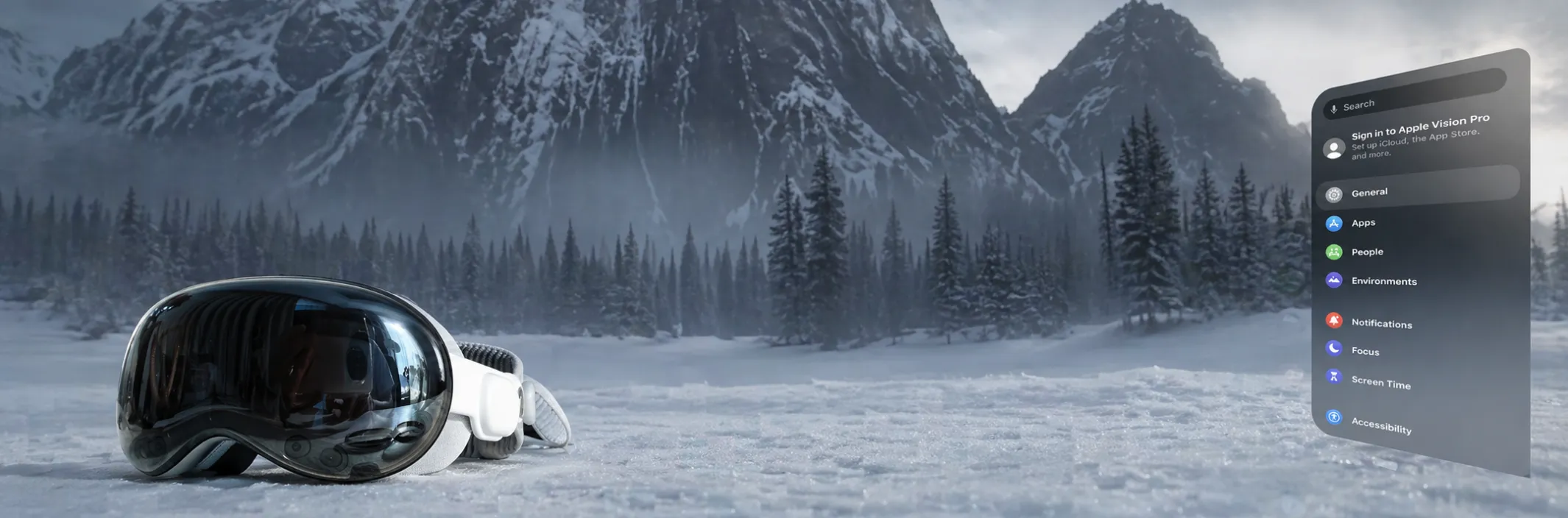

When many people first see Apple Vision Pro, what they notice most is its “premium feel”: a clean front surface, rounded contours, and a unified material language. It feels as if a complex technology product has been turned into a quiet piece of consumer electronics. But what truly makes it feel premium is not just glass, aluminum alloy, or Apple’s consistent industrial design language. It is that a complex structure has been well hidden inside a more restrained exterior.
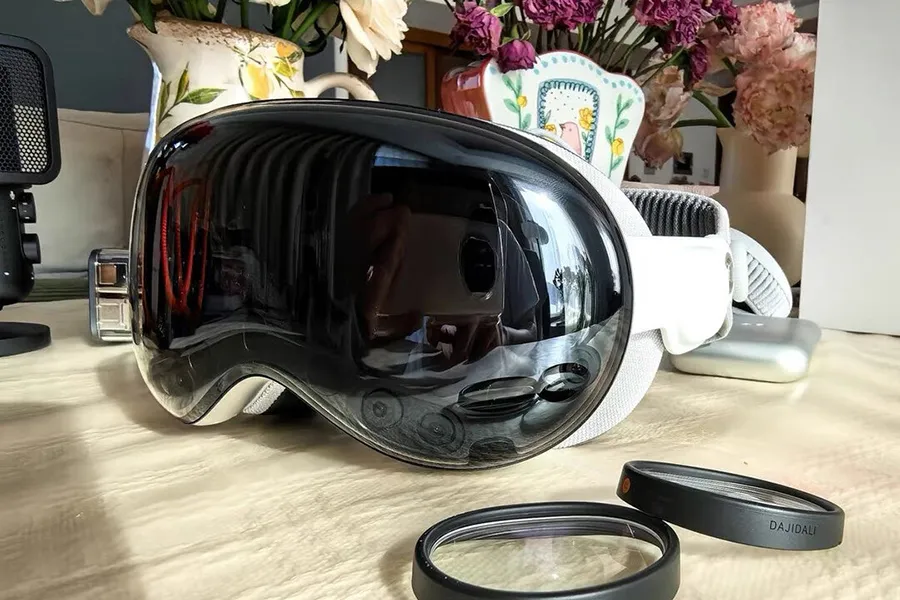
This article does not involve undisclosed specifications. Instead, from a manufacturing perspective, it looks at why its structure is far from simple by referring to its public appearance, module information, and the general engineering logic of similar products. From this angle, Vision Pro involves at least the front cover, metal load-bearing frame, facial contact system, head band and adjustment mechanism, audio modules, battery connection, and internal support for optics and sensors. Because there are so many layers, it cannot be completed with only one material or one manufacturing process.
It Looks Simple, But It Is Actually Built from Multiple Structural Layers
The real challenge of a high-end headset is not simply adding more parts, but fitting different functions into a smaller and more restrained form. Judging from publicly visible structures and the general design path of similar headsets, although the front area of Vision Pro visually looks like one continuous surface, from a manufacturing perspective it is usually not just a single “panel.” Similar areas often need to serve multiple purposes at the same time, including appearance, opening fit, sensor windows, assembly boundaries, and structural transitions. Behind the surface, it is therefore closer to a collaboration of multiple layers rather than a single independent part.
This is also why a minimalist appearance places even higher demands on manufacturing. The fewer the parts, the fewer the gaps, and the more continuous the curves, the higher the requirements for dimensional consistency, boundary treatment, and assembly precision. What users see is “clean.” What manufacturing teams face is a much higher level of fitting difficulty.
The Front Appearance Part Is Not Just About Attractive Materials, But Also About Function
The most noticeable part of the headset front is its glass-like appearance, but for this type of product, the front cover is never only about looking good. It also needs to support sensor layout, curved surface transitions, surface treatment, and overall product consistency. Based on publicly visible appearance and common practices in similar products, this type of area usually combines glass processing, coating, bonding, structural adhesive, and precision assembly to turn “visual simplicity” into an appearance part that can actually be mass-produced. The real difficulty here is not the material name itself, but boundary consistency, curve continuity, and assembly reliability.
For this reason, not every supplier can make appearance parts for high-end devices. From the outside, it may seem like there is only one layer. In reality, it tests dimensional control, edge treatment, optical consistency, and assembly reliability.
Metal Frames Handle Precision, While Injection-Molded Parts Handle Complexity
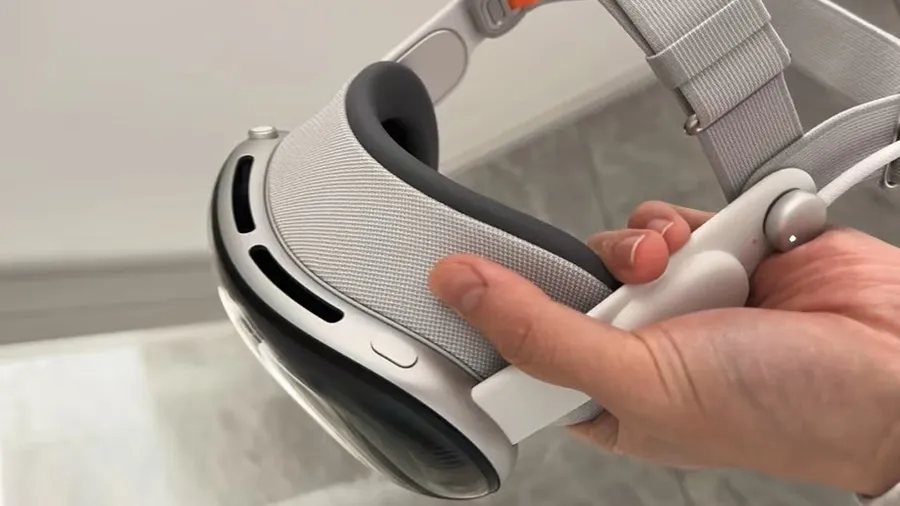
In this type of product, metal parts usually take on precision reference and load-bearing functions. For a device like Vision Pro, which emphasizes fit and assembly precision, metal frames or metal connectors are better suited for positioning key modules and maintaining overall rigidity. This is also why processes such as CNC machining and anodizing are often used. Metal parts are good at keeping “critical dimensions” stable, but they are not naturally suited to handling every complex internal feature.
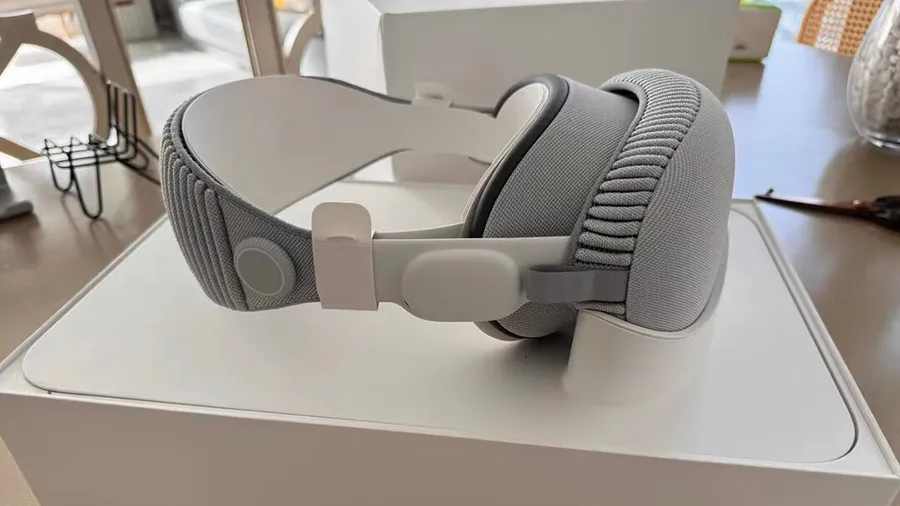
However, if everything were made only from metal, many problems would not be easy to solve. Internal mounting posts, clips, cable guides, button seats, local supports, isolation parts, and complex curved transitions are often better handled by engineering plastics. This is where the value of injection molding comes in: it can form thin walls, ribs, snap-fit structures, and mounting features within a single part, making the internal structure more compact and easier to reproduce at scale. For highly integrated devices, injection-molded parts may not be the most visible, but they often determine whether the internal layout can be efficient.
The Parts That Touch the Human Body Compete on Comfort and Stability
A headset is not a device that sits on a desk. It stays close to the face for long periods and is fixed on the head, so the parts that contact the human body follow a completely different logic from ordinary housings. Facial contact parts, cushioning materials, fabric wrapping, head band adjustment systems, and local soft rubber parts all directly affect wearing stability, breathability, and pressure.
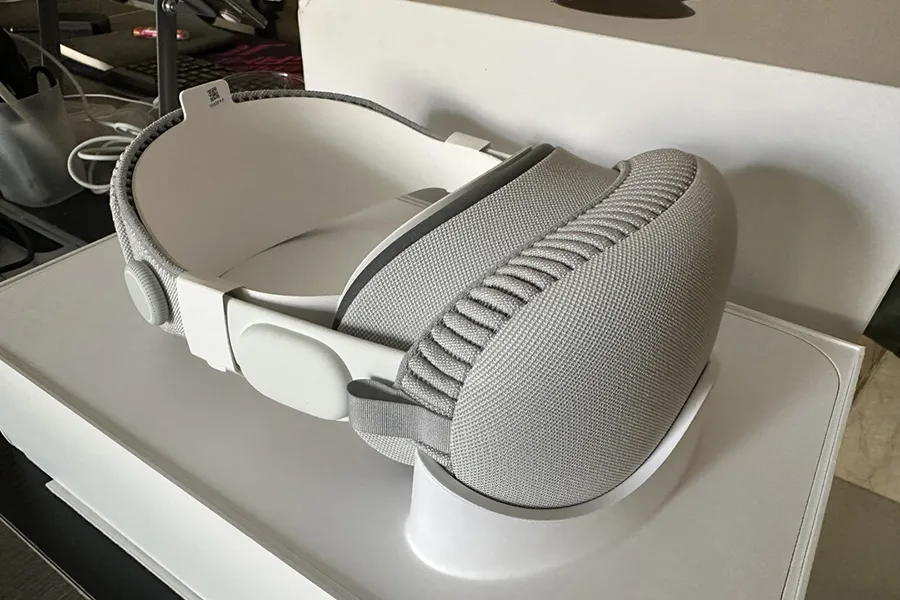
This part of the structure often involves foaming, overmolding, fabric lamination, heat pressing, stitching, and adhesive bonding, not just hard-shell forming. A truly mature product does not place “premium feel” only on the outer layer. It also builds in touch, fit, and long-term wearing experience.
True Premium Feel Comes from Multi-Process Coordination
If Vision Pro is understood simply as “glass + metal,” the manufacturing difficulty of a high-end device is actually underestimated. A more realistic understanding is that a complete product usually calls on multiple processes at the same time, including injection molding, CNC machining, silicone or soft rubber wrapping, surface spraying, laser engraving, adhesive bonding, die cutting, laminating, and precision final assembly. Different processes solve different problems: some are responsible for appearance, some for structure, some for human contact experience, and others for long-term stability. Premium feel is not created by piling up one particular process. It comes from placing different processes in the right positions.
This also explains why truly high-end hardware is often not about using the most expensive single material, but about putting each part on a more suitable manufacturing path. What we see on the outside is simplicity. What runs inside is a complete manufacturing logic.
For Brand Development, the Key Is Not to Imitate the Appearance, But to Analyze the Structure
What Apple Vision Pro is truly worth learning from is not “making one layer of glass and one ring of metal.” Instead, it reminds developers of a more basic fact: premium feel comes from the shared matching of structure, materials, and processes. For AR/VR devices, wearable terminals, medical instruments, or portable smart hardware, what is truly worth studying is never whether the appearance looks similar, but which manufacturing paths should be used for appearance parts, load-bearing parts, functional parts, and contact parts, and how they can finally be integrated into a unified product experience.
In real projects, injection-molded parts may not be the most visible, but they often determine whether the internal structure is reasonable. CNC parts may not be the most numerous, but they often determine whether key precision remains stable. Surface treatment, bonding, and soft wrapping determine the quality users finally perceive. Understanding this is more valuable than simply discussing “premium feel.”

If you are developing a head-mounted device, portable instrument, or another highly integrated electronic product, the real key is not choosing one material that “looks premium.” It is to separate appearance parts, load-bearing parts, functional parts, and contact parts, then match each of them with a more suitable manufacturing path. The successful implementation of many mature projects does not rely on a single process, but on allowing injection molding, CNC machining, bonding, wrapping, and precision assembly to work together, finding a more stable balance between appearance, structure, and mass production.























Sign in to leave a comment.