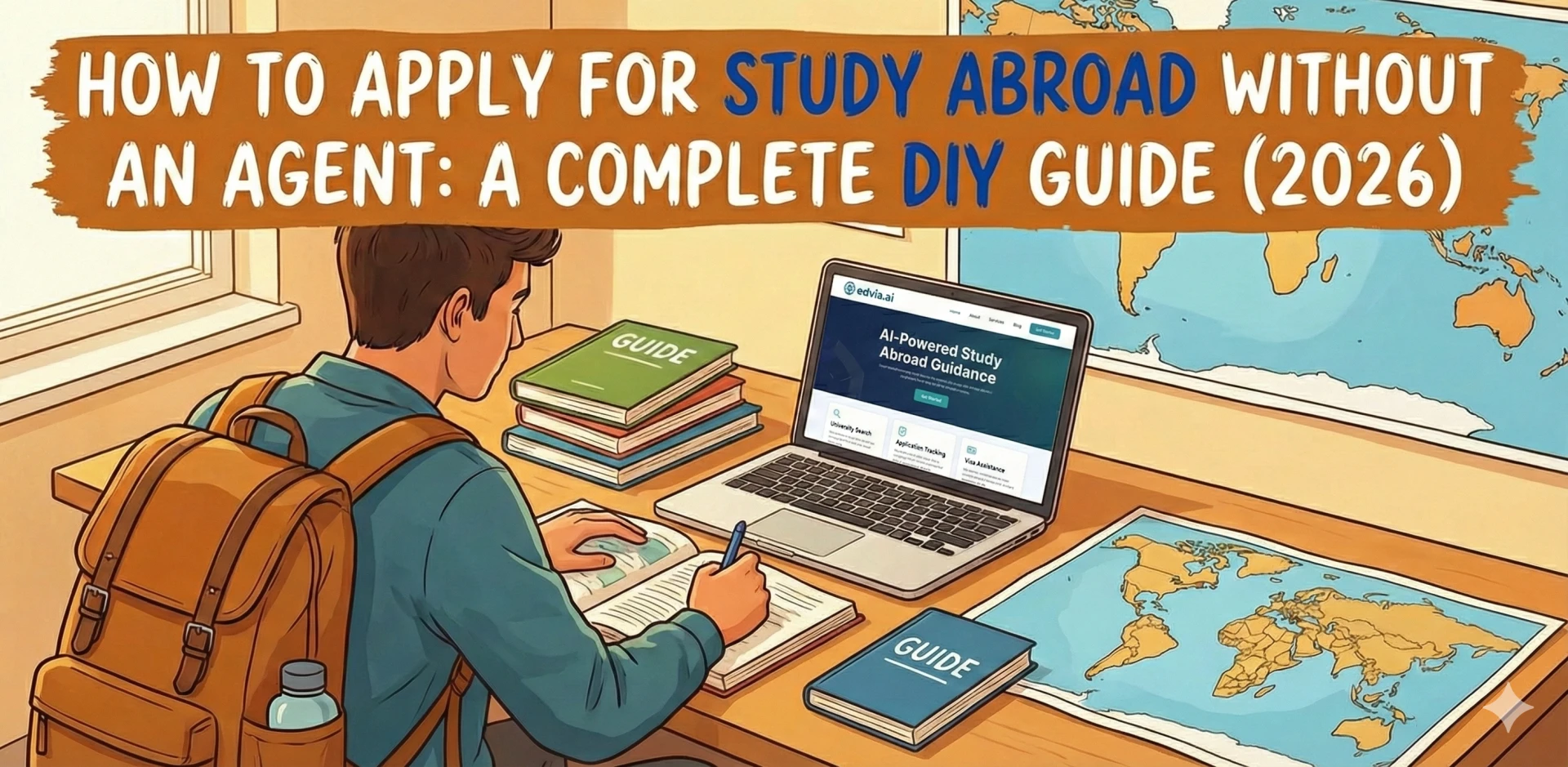
Studying abroad is a dream for millions of students, but the journey often begins with confusion. Should you hire an agent? Can you handle applications yourself? The truth is, you don't need expensive middlemen to secure admission to your dream university. With the right approach and free AI-powered tools, you can take complete control of your study abroad journey.
Why Skip the Agent?
Education agents often charge hefty fees—sometimes thousands of dollars—for services you can easily manage yourself. Worse, some agents push students toward universities that pay them commissions rather than what's best for the student. When you apply independently, you make decisions based on your goals, not someone else's profit margin.
The process isn't as complicated as agencies want you to believe. It requires research, organization, and attention to deadlines—skills you already possess as a prospective student.
Step-by-Step: Applying Without an Agent
1. Self-Assessment and Goal Setting Start by asking yourself the right questions. What field interests you? Which countries fit your budget? Do you prefer urban campuses or quieter locations? Understanding your priorities helps narrow down thousands of options to a manageable shortlist.
2. Research Universities and Courses Visit official university websites to explore programs, entry requirements, tuition fees, and scholarship opportunities. Create a spreadsheet to track deadlines, document requirements, and application fees. Most universities provide detailed admission guidelines online—you just need patience to find them.
3. Prepare Your Documents Early Standard requirements include academic transcripts, recommendation letters, statement of purpose (SOP), resume, and English proficiency test scores (IELTS/TOEFL/PTE). Start gathering these at least 6-8 months before deadlines. Your SOP deserves special attention—it's your chance to tell your story beyond grades.
4. Take Standardized Tests Schedule your English proficiency exams early. Many universities accept multiple test types, so choose what suits you best. Some programs may require GRE or GMAT—check specific requirements for your target courses.
5. Apply Directly Through University Portals Most universities offer online application systems. Create accounts, fill forms carefully, upload documents, and pay application fees directly. Keep screenshots and confirmation emails for every submission.
6. Track Applications and Follow Up Use a simple tracking system to monitor application statuses. Universities typically respond within 4-8 weeks. If delayed, send polite follow-up emails to admission offices.
7. Secure Funding and Visas Once accepted, arrange your finances through personal funds, education loans, or scholarships. Then begin your visa application using official embassy guidelines—never rely on agent interpretations of immigration rules.
The Game-Changer: Free AI Tools Like Edvia
While DIY application is straightforward, modern technology makes it even easier. Edvia has emerged as a popular AI-powered platform among students who want professional-grade guidance without the price tag.
Edvia's standout AI Course Finder matches your academic profile with suitable universities from over 850+ institutions across 50+ countries—instantly. Instead of spending weeks browsing random websites, you get personalised recommendations based on your qualifications, interests, and budget.
What makes Edvia particularly valuable for independent applicants:
- 24/7 AI Chatbot Support: Get instant answers about courses, fees, and requirements without waiting for business hours
- Complete Financial Transparency: See tuition costs, living expenses, and scholarship opportunities upfront—no hidden surprises
- Application Tracking Dashboard: Monitor your progress in real-time, ensuring you never miss deadlines
- SOP and Document Guidance: Access resources to craft compelling applications without expensive consultants
Best of all? Everything is completely free. Edvia operates on the principle that every student deserves access to global education, regardless of their financial background.
Common Mistakes to Avoid
When applying independently, watch out for these pitfalls:
- Applying to wrong-fit universities: Use tools like Edvia's AI matcher to ensure you meet eligibility criteria before applying
- Missing financial documentation: Prepare bank statements and funding proofs early—visa rejections often stem from incomplete financial evidence
- Ignoring deadlines: Set calendar alerts 8 weeks before due dates to avoid last-minute rushes
- Poor research: Don't choose universities based solely on rankings. Consider course content, location, and career outcomes
Final Thoughts
Applying for study abroad without an agent isn't just about saving money—it's about owning your future. You know your aspirations better than any consultant. With free AI tools like Edvia handling the heavy lifting of research and matching, you can focus on what matters: crafting applications that truly reflect your potential.
The future of education is transparent, accessible, and student-centric. Start your journey today—no middlemen required.
Ready to find your dream university? Try Edvia's free AI Course Finder and discover your perfect match in minutes.






























Sign in to leave a comment.