Arabic calligraphy is more than beautiful writing—it’s a living art that carries faith, culture, and centuries of craftsmanship. In 2025, we’re seeing a vibrant renaissance: brands are embracing Arabic letterforms in visual identity, architects are integrating scripts into façades and interiors, and collectors are seeking bespoke pieces with impeccable lineage. At the heart of this movement is the balance between historical authenticity and contemporary design—a balance that master calligrapher Nihad Dukhan has refined over decades.
What Makes Arabic Calligraphy Unique?
Unlike most writing systems, Arabic script is built for beauty. Letters connect, stretch, and flow in ways that create rhythm and harmony. Each style—Thuluth, Naskh, Taliq (Ta‘liq), Dewanee, Dewani Jali, Riqaa’—has its own character and rules. Thuluth is majestic and architectural, Naskh is clear and readable (traditionally used for Qur’anic text), Taliq is elegant and cascading, while Dewanee styles are ornate and regal. Mastery requires years of disciplined practice, precise proportions, and an unbroken chain of instruction.
That chain matters. In the classical tradition, achievement is confirmed through an Ijazah—a master’s certification that proves a calligrapher can write, teach, and protect the canon. It’s this lineage that safeguards quality as Arabic calligraphy moves confidently into modern applications.
Meet the Artist: Nihad Dukhan
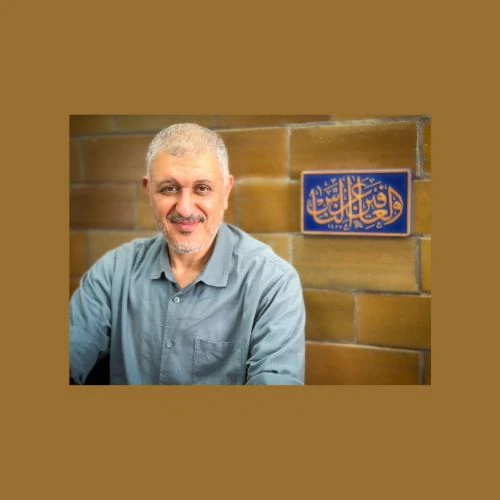
Nihad Dukhan is a certified master of Arabic and Islamic calligraphy and a professor of mechanical engineering. He received his Ijazah in Thuluth and Naskh from Istanbul grand master Hasan Çelebi in 2009, and in Taliq from Mohamed Zakariya in 2013. He studied Dewanee and Dewani Jali with Abdul Razzak Qaraqash, Taliq Jali with Mustafa Parıldar, and Riqaa’ with Mahfod Thunnon. Building on this classical foundation, Dukhan began developing his personal modern form of Arabic calligraphy in 1989—work that has since been exhibited and collected worldwide.
His dual background—art and engineering—brings an uncommon rigor to proportion, spacing, and structure. Whether he’s composing a devotional panel or a contemporary logo, you’ll see exact geometry paired with expressive movement. Explore more at ndukhan.com.
Tradition Meets Innovation
Today’s audiences want works that respect heritage but feel current. Dukhan’s approach merges the two:
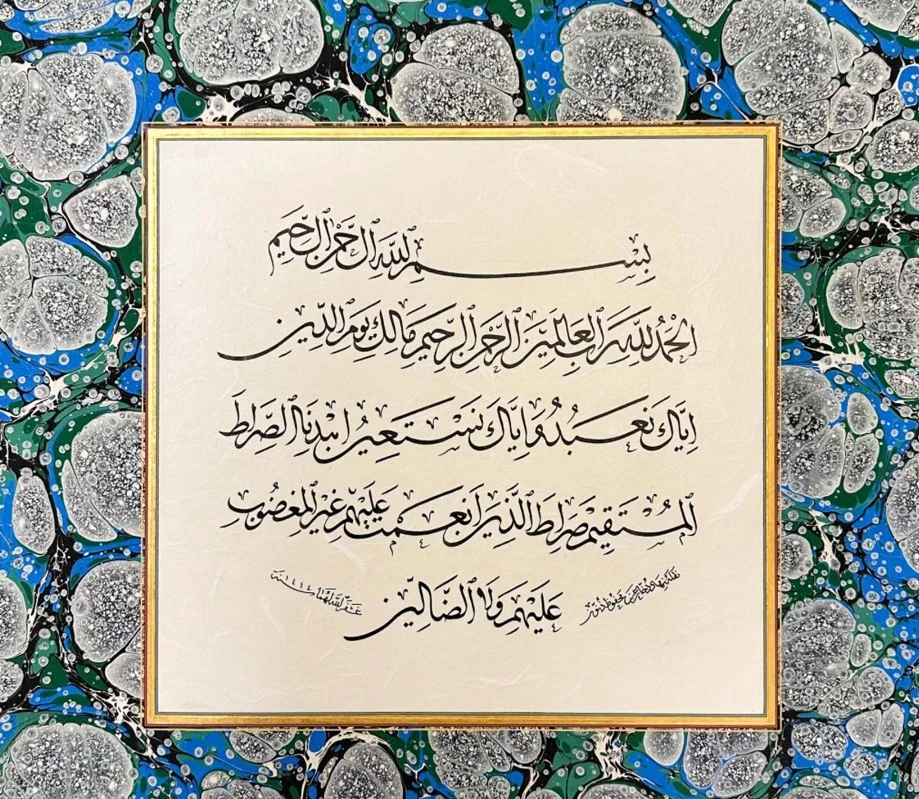
- Classical originals: Handwritten panels in Thuluth, Naskh, Taliq, Dewanee Jali or Dewanee, executed with reed pen and traditional inks on archival papers.
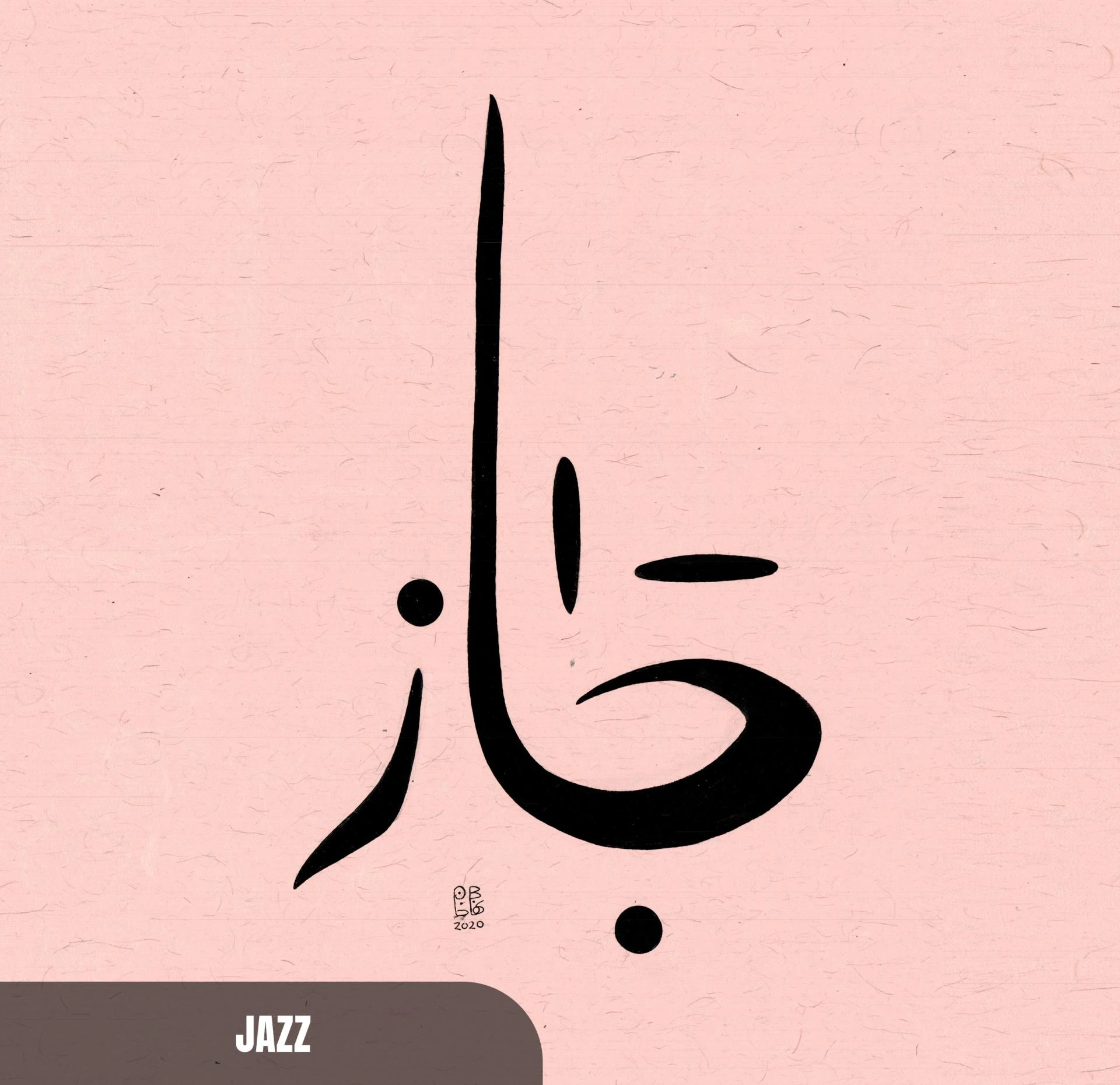
- Modern compositions: Minimalist layouts, dynamic ligatures, and abstract letter explorations that fit contemporary interiors.
- Custom typography & branding: Bespoke wordmarks and logotypes that retain the soul of Arabic calligraphy while performing across digital and print media.
- Architectural applications: Calligraphy translated into stone, metal, glass, and wood, scaled accurately from hand-drawn originals to building façades and feature walls. (Dukhan would work with craftsmen to transfer calligraphy to those media).
The Craft: From Sketch to Masterwork
A fine calligraphy piece begins well before ink touches paper. Here’s how a typical commission unfolds with Nihad Dukhan:
1. Intent & Text Selection
You might choose a Quranic verse, a poetic line, or a meaningful name. Dukhan advises on style suitability—e.g., Thuluth for grandeur, Taliq for lyrical flow, Naskh for clarity.
2. Grid & Proportion
Classical scripts are built on a measured system using the dot (nuqta) as a unit. Letter heights, curves, and spacing are calibrated to this grid to ensure harmony.
3. Rough Sketches (Tashkil & Composition)
Multiple arrangements test balance, rhythm, and diacritic placement. This is where the artwork’s voice emerges.
4. Final Execution
The reed pen (qalam) is cut to a specific angle. Pressure, speed, and ink flow are controlled to produce consistent strokes and lively counters.
5. Finishing & Presentation
Gold accents, borders, and mounting options are considered with longevity in mind—archival materials and conservation framing are standard recommendations.
This disciplined process is why a master’s work feels effortless: every curve is the result of trained judgment.
Choosing Authentic Arabic Calligraphy
With digital fonts and AI-generated imitations everywhere, how do you select a piece with integrity?
- Ask about Ijazah: A certified master ensures classical standards and an authentic chain of instruction.
- Review multiple scripts: True mastery shows across styles—Thuluth, Naskh, Taliq, Dewanee, Dewani Jali, and Riqaa’.
- Study proportions: Look for consistent letter anatomy, clean joins, and balanced spacing—no awkward collisions or inconsistent thickness.
- Request originals: Even when commissioning digital adaptations, begin with a hand-executed master composition.
- Consider context: The intended space, lighting, and viewing distance influence size, contrast, and style choice.
Applications for Homes, Mosques, and Brands
- Residential & devotional art: Statement pieces for living rooms, studies, and prayer areas.
- Institutional & sacred spaces: Mosque panels, school installations, and cultural centers.
- Hospitality & workspace: Feature walls that celebrate identity and heritage.
- Branding & editorial: Wordmarks, packaging, and limited-edition prints that amplify cultural storytelling.
Because Dukhan unites classical training with modern design thinking, his pieces translate seamlessly from fine art to architecture and brand systems.
Education, Workshops, and Community
As a professor of mechanical engineering and a master calligrapher, Nihad Dukhan is deeply committed to education. He offers lectures, demonstrations, and workshops that introduce the history of Arabic calligraphy, tool preparation, and script basics. For organizations, these sessions can be tailored to designers, architects, and students eager to apply calligraphy thoughtfully in contemporary projects.
Commissioning a Piece with Nihad Dukhan
Commissioning is straightforward:
1. Share your idea: Provide the text (Arabic or transliteration), preferred style, and where it will live.
2. Get guidance: Dukhan recommends scripts, formats, and materials suited to the use case.
3. Approve a sketch: You’ll see composition options before final execution.
4. Receive your artwork: Originals are produced on archival materials; digital adaptations for signage or branding are delivered production-ready.
Whether you’re seeking an heirloom panel, a mosque inscription, or a contemporary logo built on authentic calligraphy, you’ll benefit from a master’s eye and an engineer’s precision.
About Nihad Dukhan
- Certified master of Arabic and Islamic calligraphy (Ijazah).
- Ijazah in Thuluth & Naskh from Hasan Çelebi (2009); Taliq from Mohamed Zakariya (2013).
- Studied Dewanee & Dewani Jali with Abdul Razzak Qaraqash, Taliq Jali with Mustafa Parıldar, and Riqaa’ with Mahfod Thunnon.
- Developed a personal modern form of Arabic calligraphy since 1989.
- Exhibited and collected worldwide.
- Learn more and inquire at ndukhan.com.
If you’re ready to bring the grace of Arabic calligraphy into your space—or to translate it into a distinctive brand voice—Nihad Dukhan offers the rare combination of classical authenticity and contemporary vision.






















Sign in to leave a comment.