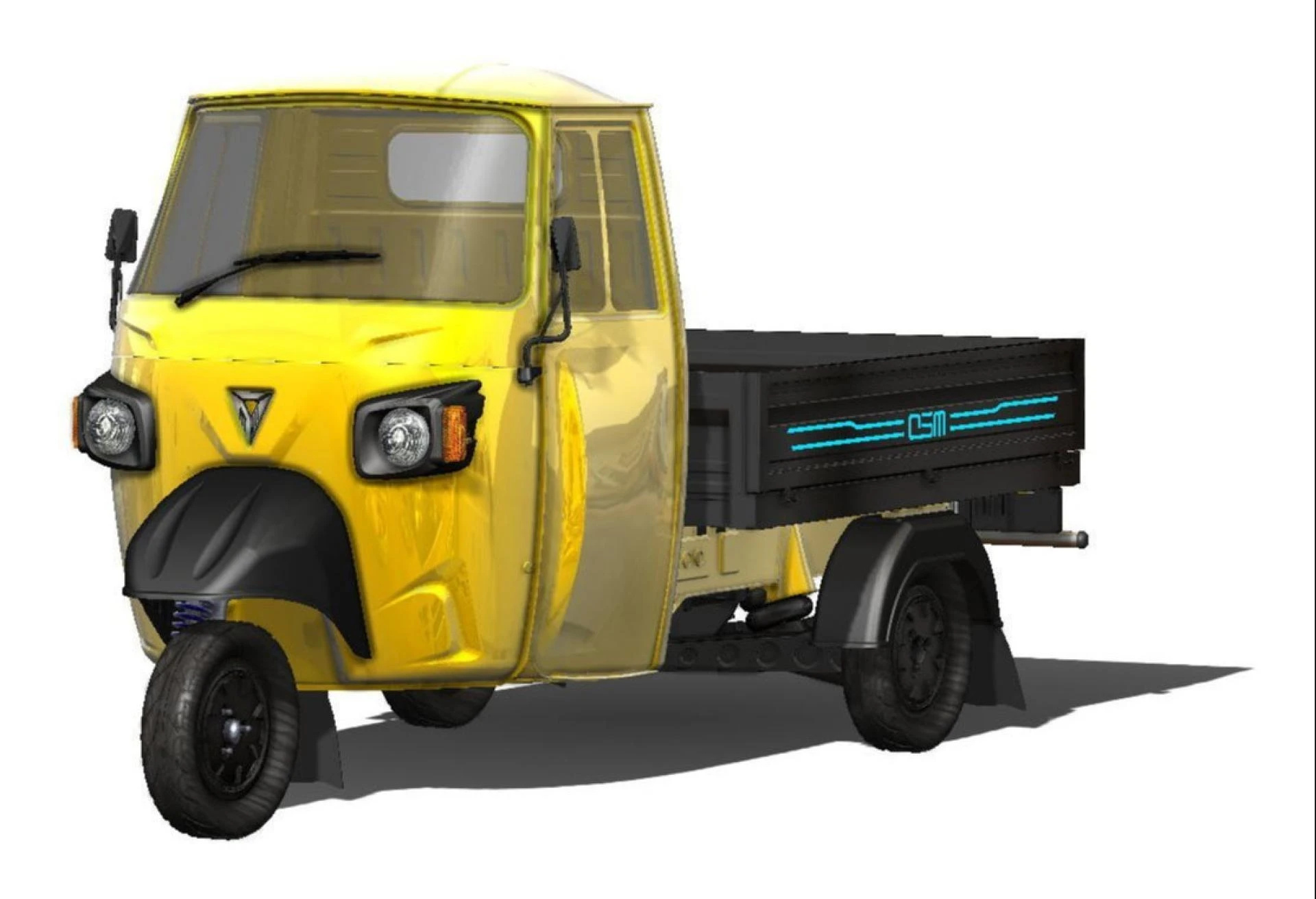

Companies that want to save money and have a smaller carbon footprint increasingly opt for battery operated cargo 3-wheelers. While the purchase price of an EV may be higher than that of a comparable gasoline or diesel-powered vehicle, the lower operating costs of EVs over their lifetime makeup for the difference. In addition to the rising fuel cost, business owners also face declining fuel efficiency and rising maintenance costs when purchasing a commercial cargo vehicle. Something must shift to break the cycle of negativity. Is the electric model a viable substitute? A resounding yes is the correct response.
Many consumers have begun considering the electric cargo variant as an alternative due to the steadily increasing fuel prices, declining fuel efficiency, and ever-increasing maintenance costs. The government is also making significant efforts to facilitate the switch from ICE (Internal Combustion Engine) to electric vehicles among consumers. This change, however, can only occur if consumers finally see the better value in electric vehicles. Below in this blog, we will understand what makes battery-operated cargo 3-wheelers worth the money.
Lower cost of ownership: The initial cost of purchasing an electric cargo vehicle is higher as compared to an internal fuel combustion engine vehicle, which is a significant barrier to entry. But one must consider the TCO - total cost of ownership, to understand why this is so deceptive. The total cost of ownership (TCO) includes the initial purchase price and ongoing expenses. The initial purchase price of a cargo EV by the best e-rickshaw manufacturers in India may be higher. Still, it has much lower operating and maintenance costs, making it the superior choice. Electric cargo has fewer moving parts, making it easier to service.Cost of fuel: Compared to diesel and CNG three-wheelers, electric cargo three-wheeler have a much lower operating cost, making them the superior choice. This expense varies from state to state, and the differences can be large. The Economic Times reports that the national average fuel price is between Rs 80 and Rs 120 per litre, but the cost of charging is much lower. Subsidies from the government: In 2015, the government of India introduced the FAME scheme to encourage people to buy electric vehicles. The plan incentivises the purchase of electric vehicles and the production and distribution of EV parts. The Indian government has also been working to expand access to electric vehicle charging infrastructure.
In summary, as an increasing number of nations adopt low-emission regulations and other incentives to promote the adoption of electric vehicles, the cost-effectiveness of EV cargo solutions may further improve for businesses. The initial investment in an EV cargo vehicle at the best e-rickshaw manufacturers in India can yield long-term benefits, rendering them a superb value proposition.




























Sign in to leave a comment.