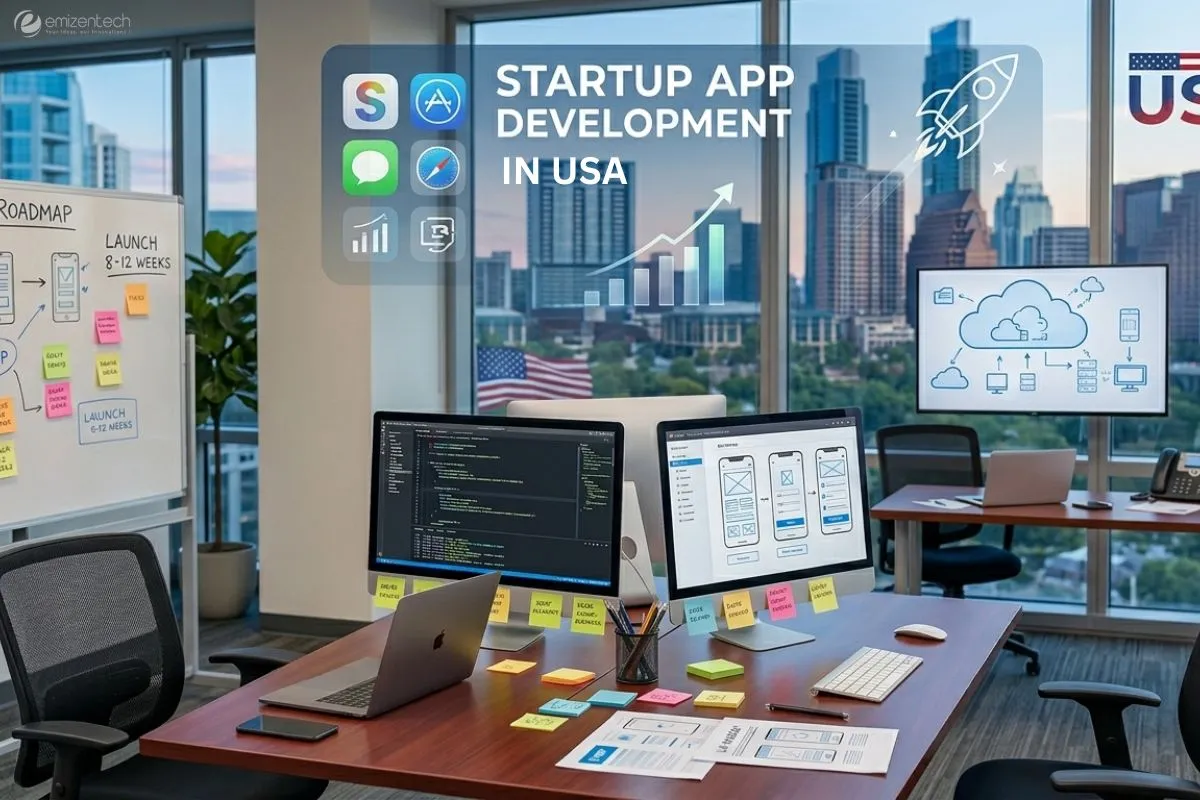

You’ve got an app idea that could genuinely solve a problem. Now comes the hard part—actually building it. If you’re a founder stepping into the world of startup app development in the USA for the first time, the landscape can feel overwhelming. Between choosing the right technology, finding developers, and managing budgets, there’s a lot that can go wrong.
In this guide, we’ll walk you through everything you need to know to turn your idea into a successful app—from validation and MVP planning to development choices and execution.
Start with Validation, Not Development
Here's the mistake I see constantly: founders jump straight into development without truly validating their idea. You might be convinced your app will change the world, but "I think this is great" is very different from "I've proven people will actually use this."
Before writing a single line of code, talk to at least 50 potential users. Don't pitch your solution—dig into their problems. What frustrates them about current options? How much would they pay to solve this issue? Create a simple landing page describing your app and see if people will actually sign up for updates.
If you can't get people interested in the idea of your app, you won't get them to download the actual product.
Define Your MVP Ruthlessly
This is where most founders go wrong: they want to build everything at once. They imagine an app with dozens of features, each one "absolutely essential."
Stop right there.
Your first version should do ONE thing exceptionally well. Instagram started as a simple photo-sharing app. Uber began by solving a single problem: getting a ride when you need one. Everything else came later.
Create your feature list, then brutally cut it down to only the must-haves—the absolute minimum needed for your app to deliver its core value. Everything else goes on the roadmap for version 1.1, 1.2, and beyond.
Building an MVP isn't about launching something incomplete. It's about launching something focused that you can actually get in front of users to learn what they truly need.
Choosing Your Development Approach
You've got three main options here, each with distinct tradeoffs.
- Building an in-house team gives you maximum control, but expect to pay $120,000-$180,000 annually for each senior developer in major US tech hubs. Plus recruitment time and equity considerations.
- Hiring freelancers is budget-friendly at $50-$200 per hour, but coordinating multiple freelancers and ensuring code quality falls entirely on you—a massive challenge without technical experience.
- Partnering with a development agency gives you access to a complete team with experience across design, development, and QA. For most early-stage founders, working with a specialized startup app development company offers the best balance of expertise, cost-efficiency, and reduced risk.
What to Look For in a Development Partner
If you go the agency route, don't just look at their portfolio. Dig deeper.
The best development partners ask probing questions about your business model and target users—they don't just nod and say "we can build that." They should challenge your assumptions constructively, not just agree with everything you say.
Look for startup-specific experience. Building apps for enterprise clients requires a completely different mindset than building for startups. You need a partner who understands your constraints and priorities.
Ask about their development process. Do they follow agile methodologies with two-week sprints? Will you see working software regularly, or do they disappear for months before revealing the final product?
Talk to at least three previous clients. Ask specifically about communication, meeting deadlines, and how they handled unexpected challenges.
Red Flags to Watch For
Some warning signs should make you walk away immediately:
- They guarantee unrealistic timelines ("We can build Instagram in 6 weeks!")
- They won't provide a detailed project proposal and timeline
- They push you to build everything at once instead of starting with an MVP
- They're significantly cheaper than everyone else (you really do get what you pay for)
- Previous clients report communication problems or missed deadlines
Understanding the Development Timeline
For a solid MVP, expect 3-6 months from start to launch. Here's roughly how that breaks down:
Discovery and Planning (2-4 weeks): User research, feature prioritization, technical architecture planning, and creating detailed wireframes.
Design (3-6 weeks): UI/UX design, interactive prototypes, and creating a design system for consistency.
Development (12-20 weeks): The actual coding, broken into two-week sprints with regular check-ins and working software you can test.
Testing and QA (2-4 weeks): Comprehensive testing across devices, security checks, and beta testing with real users.
Anyone promising significantly faster timelines is either cutting critical corners or hasn't built many apps before.
Budget Expectations: Real Numbers
The range for app development is enormous—$25,000 to $500,000+—depending on complexity. Here's what you should realistically expect:
Simple MVP: $25,000-$50,000 for basic functionality with limited backend needs. Timeline: 2-3 months.
Moderate Complexity: $50,000-$150,000 for apps with social features, real-time updates, payment integration, and custom design. Timeline: 3-6 months.
Complex Apps: $150,000-$500,000+ for applications with AI/ML features, sophisticated backend infrastructure, or apps in regulated industries like fintech or healthcare. Timeline: 6-12 months.
But don't forget the hidden costs: app store fees ($99/year for Apple, $25 one-time for Google), backend infrastructure ($50-500/month), third-party services, and ongoing maintenance (budget 15-20% of initial development costs annually).
And here's the tough truth: you'll likely need to spend as much or more on marketing than on development. The best app in the world is worthless if nobody knows it exists.
The Post-Launch Reality
Launching isn't the finish line—it's the starting line. Your first 1,000 users will tell you everything that's wrong with your app, and you need to listen.
Set up multiple feedback channels: in-app feedback mechanisms, monitor app store reviews religiously, conduct user interviews, and track everything through analytics. Where do users drop off? What features get ignored? What bugs come up repeatedly?
Then iterate based on data, not gut feelings. Fix critical bugs first, improve core features before adding new ones, and address issues affecting the most users.
Common Mistakes to Avoid
- Building for too long before launching: Perfectionism kills startups. Launch with your core features and learn from real users.
- Choosing developers based on price alone: The cheapest option almost always costs more in the long run when you factor in poor quality and eventual rebuilds.
- Ignoring user experience: Your app can have innovative features, but if users can't figure out how to use them, it will fail.
- Neglecting marketing until after launch: Build your audience before launch. Create buzz in your target community early.
Making It Happen
Building an app is challenging, but it's absolutely achievable with the right approach. Start with rigorous validation, build a focused MVP, choose your development approach carefully, and don't skimp on design and user experience.
Partnering with a trusted startup app development company is the smartest choice for most founders—make sure they align with your budget, timeline, and long-term vision.
The app ecosystem still has room for new ideas and better solutions. The question isn't whether there's opportunity—it's whether you're prepared to execute well enough to seize it.
The perfect time to start was yesterday. The second-best time is right now. Take that idea that's been keeping you up at night and start turning it into reality.




























Sign in to leave a comment.