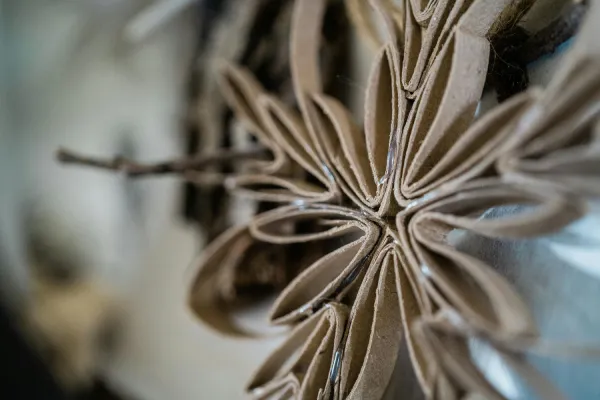

Today, the trade show floor is a high-velocity "Experience Economy" where brands are judged not just by what they sell, but by the physical and ethical footprint they leave behind. For marketing directors and event planners, the challenge has become a complex paradox: how do you create a "wow-factor" presence that is simultaneously ultra-lightweight, high-end in its aesthetic, and 100% sustainable?
The answer is found in the intersection of structural engineering and creative "Cardboard Carpentry." By moving away from the heavy, resource-intensive construction methods of the past, forward-thinking brands are discovering that they can achieve greater impact with less mass. This guide explores the actionable strategies for mastering the modern exhibition space, ensuring your brand stands out for its innovation rather than its waste.
The Narrative Wall: Beyond the 2D Surface
In a crowded hall, your primary visual anchor is often the largest surface area you occupy. Traditionally, this was treated as a simple billboard—a flat surface to mount a logo. However, the most successful designs in 2026 treat this boundary as a three-dimensional narrative.
A well-engineered backdrop does more than just define your space; it communicates your brand's "material honesty." When you utilize high-compression fiberboard instead of vinyl-wrapped plastic, you invite a tactile curiosity. Visitors are naturally drawn to the warmth and texture of precision-cut paper.
- 3D Depth: By layering corrugated sheets, you can create "relief" effects where logos or key messages are physically raised or recessed.
- Acoustic Softening: Convention centers are notoriously echoey and loud. High-density paper is a natural sound absorber, creating a "hush" within your booth that makes high-value conversations significantly easier.
- Lighting Integration: Because paper board is easily customized, you can embed LED strips into the internal "fluting" of the material, creating a soft, diffused glow that makes the wall appear to be breathing.
The Evolution of the "Instant" Space
For brands managing multiple roadshows or pop-up activations, the old "pull-up banner" is no longer enough to command authority. We have seen the rise of the "structural modular" environment, which offers the prestige of a custom build with the portability of a suitcase.
Choosing a high-end popup booth today means looking for structural integrity over mere ease of carry. Modern paper-based systems utilize a "Flat-Pack" philosophy. These units arrive in slim cartons, yet they assemble into sturdy counters, shelving units, and meeting pods that can support hundreds of kilograms.
- The Boutique Feel: Use modularity to create a "store-within-a-store" vibe. This "Boutique Approach" prioritizes the guest’s comfort, offering them a sanctuary from the sterile environment of the exhibition hall.
- Scalability: A modular system allows you to use two panels for a small foyer event or combine twenty panels for a flagship industry summit. This "chameleon" capability ensures a high ROI on your physical assets.
Operational Excellence: The "Zero-Tool" Setup
The "Move-In" day at a major exhibition is traditionally a scene of high stress, heavy machinery, and skyrocketing labor costs. If your booth requires a specialized crew with power drills and ladders, a significant portion of your marketing budget is being spent on "heavy lifting" before the first lead is even captured.
The revolution in exhibition booth setup is centered on the "Tool-Free" assembly. Using interlocking notches—a technique rooted in traditional joinery but perfected through CNC precision—entire structural environments can now be snapped together like a giant 3D puzzle.
- Speed: Reducing a setup time from eight hours to forty-five minutes isn't just about convenience; it’s about agility. It allows your team to focus on the event strategy rather than construction logistics.
- Team Empowerment: When a booth is lightweight and intuitive to assemble, your own marketing team can handle the installation. This ensures that the people who know the brand best are the ones shaping the space.
- Safety: Eliminating saws, drills, and heavy falling parts creates a safer environment for everyone on the floor, significantly reducing the insurance and liability risks associated with traditional builds.
Strategic Branding: Maintaining Presence in Digital and Physical Spaces
While the physical environment is essential, it must act as a conduit to your digital ecosystem. In 2026, we refer to this as "Phygital" design—the seamless merging of physical touchpoints with digital data.
Embedded Tech Mounting
Paper carpentry allows for precision-cut "pockets" where tablets, LED screens, and VR headsets can be mounted flush with the wall surface. This hides messy cables and bulky mounts within the internal ribs of the cardboard structure, maintaining a sleek, architectural look.
Interactive "Vision Walls"
Since high-quality paper board is an ideal writing surface, many brands are leaving sections of their booth "raw" or unprinted. This invites visitors to sketch ideas, write feedback, or sign their names directly on the structure. This "community-generated content" turns your booth into a living, breathing artifact of the event, which creates a goldmine for social media content.
Sustainability as a Structural Value
In the modern business climate, "Greenwashing" is easily spotted. If a brand stands inside a booth made of non-recyclable, formaldehyde-laden MDF while talking about their 2030 ESG goals, the visitor notices the disconnect.
The Circular Lifecycle
A truly sustainable booth follows a "Cradle-to-Cradle" lifecycle:
- Sourcing: Utilizing FSC-certified, renewable fibers.
- Longevity: Engineered for durability, allowing for dozens of uses across multiple years.
- End-of-Life: On the final night, while competitors are smashing timber with sledgehammers, your booth is simply flattened. Any worn-out components go into the local paper recycling stream, returning to the factory to become new resources.
This is the ultimate brand story: "We came, we inspired, and we left no trace."
10 Actionable Tips for Trade Show Success
To ensure your brand stands out in 2026, consider these tactical enhancements for your next activation:
- Verticality: Use height to be seen from across the hall. Lightweight paper "fins" or towers offer high visibility without the need for expensive ceiling rigging.
- Biophilic Integration: Paper is an organic material. It pairs beautifully with real greenery, moss walls, or ferns to create a "sanctuary" feel.
- Scent Marketing: Use subtle, natural scents (like cedar or citrus) to reinforce the organic, sustainable feel of your paper-based environment.
- Dwell-Time Seating: Integrate structural paper stools or sofas. A tired attendee will stay in your booth ten times longer if they have a sturdy, comfortable place to sit.
- 3D Typography: Use layered cardboard letters that "pop" off the wall to create shadows and depth.
- Hidden Infrastructure: Use the hollow fluting of your panels as conduits for power cables, keeping your space clean and hazard-free.
- The "Selfie-Spot": Design one corner specifically for social media with a unique geometric pattern or a 3D-sculpted paper element.
- Matte Finishes: Unlike plastic, paper offers a sophisticated matte finish that doesn't create glare in photos, making your booth much more "Instagrammable."
- Tactile "Artifacts": Display small, cardboard-folded models of your product. These "artifacts" encourage visitors to use their hands, which anchors the brand in their memory.
- The Unboxing Experience: Design your booth to arrive in branded boxes that can be reused for onsite storage during the show.
Agility as the New Premium
The evolution of exhibition design is moving away from the "permanent" and toward the "purposeful." We are realizing that temporary spaces do not require permanent-style construction. By embracing the principles of Paper Carpentry, brands can achieve a level of creative freedom, logistical ease, and environmental integrity that was previously thought impossible.
When you strip away the "heavy lifting" of traditional exhibiting, you are left with what truly matters: the ability to tell your story in a space that respects both the visitor and the planet. Whether you are planning a global roadshow or a singular flagship presence, the answer lies in the lightest materials.




















Sign in to leave a comment.