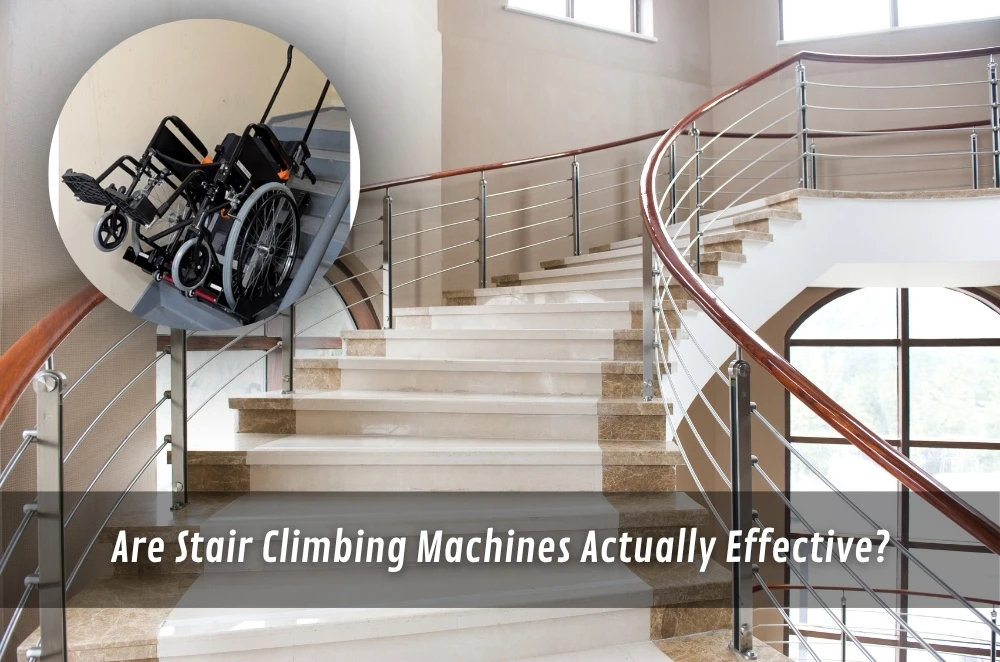

When I first came across stair climbing machines, I assumed they were just another form of gym gear. But after working in logistics and helping family members navigate steep stairways with reduced mobility, I discovered a very different type of equipment — one designed to carry loads or people safely up and down stairs. That’s when I started using a home stair climbing machine, not for cardio, but to transport goods and support accessibility. The difference it made in daily tasks — from deliveries to moving bulky furniture — was immediate. These machines don’t just offer convenience; they reduce physical strain and prevent long-term injury. But are they genuinely effective, or just another bulky tool collecting dust?
How stair climbers reduce physical strain and injury risk
In many work environments — from warehouses and construction sites to aged care and healthcare — stairs aren’t just a nuisance; they’re a risk factor. Navigating stairs while carrying weight increases the likelihood of slips, overextension, and long-term damage to joints and soft tissue.
Stair climbing machines tackle this issue head-on. They are designed to remove the need for excessive force, repetitive bending, or awkward grip positions while ascending or descending. This ties directly into Australia’s workplace safety landscape, particularly around hazardous manual tasks, which are a major contributor to injuries, absenteeism, and compensation claims.
Key ways stair climbers reduce injury risk:
- Eliminate the need to manually lift on stairs
- Reduce pressure on backs, knees, and shoulders
- Lower risk of slips, falls, and loss balance
- Create consistency in how loads are handled
In a previous role, I worked on-site during a retail shop fit-out. We had to shift dozens of flat-pack furniture boxes between a street-level entry and a second-floor unit. Without a stair-climbing trolley, we’d have needed two staff per load. With it? One person, controlled descent, no back strain — and no near misses.
The long-term benefit goes beyond reducing acute injury. Consistent use of stair climbers creates a safer lifting culture and reduces burnout from repeated stair use under load.
How to choose the right stair equipment for your needs
Selecting the right stair climbing machine depends entirely on the task at hand. While some models are industrial workhorses meant for moving fridges or filing cabinets, others are lightweight, foldable devices aimed at personal use, like delivering groceries or transporting delicate medical equipment. There are also models designed specifically for mobility assistance, helping people with limited movement safely ascend stairs while seated.
A friend of mine runs a courier business in an area filled with old terraced homes and apartments. After multiple delivery drivers reported back injuries, she invested in a compact stair climber. Since then, the same team has moved more efficiently, with fewer complaints and better retention.
Considerations when selecting a stair climber:
- What are you moving? (People, boxes, medical gear, heavy appliances?)
- Weight capacity — Does it match your heaviest common load?
- Stair surface and slope — Carpeted indoor stairs require a different tread than outdoor stone or metal
- Ease of use and training — Will different team members use it?
- Storage and portability — Foldable frames vs fixed heavy units
- Compliance — Does it meet workplace or mobility safety standards?
For businesses, choosing a stair climber isn’t just about efficiency — it’s about investing in injury prevention and compliance with safe handling policies. You can dive deeper into the specifics in this guide on how to choose stair equipment.
Common mistakes people make with stair machines
Despite being straightforward in function, stair climbing machines still require careful handling. Many users overlook basic principles, leading to awkward operation or even safety risks.
When I first trialled one in a commercial setting, I underestimated how much balance and positioning matter. I gripped the handles too tightly, didn’t secure the straps properly, and almost tipped the load mid-way. Lesson learned.
Common mistakes to avoid:
- Overloading beyond the rated capacity
- Rushing the climb or descent
- Skipping load balancing or restraint straps
- Using on surfaces it’s not rated for
These machines are incredibly effective — but only when used properly. Take the time to read the manual, adjust settings, and test with lighter items before taking on heavy jobs. For workplaces, introducing a quick onboarding session for new staff can make a world of difference in safe operation.
The role of electric stair climbers in adaptive mobility
While manual stair climbers require physical input or assistance, electric stair climbers offer motorised support and built-in safety controls. These are particularly useful in aged care settings or homes with mobility challenges.
I’ve assisted an elderly family member using an electric model that allowed us to move her safely between floors without transferring out of her wheelchair. The controls were intuitive, and the stability system reduced the margin for error.
Benefits of electric stair climbers:
- Motor-assisted movement reduces strain on users
- Programmable speed and incline settings
- Stabilisation for uneven stairs or small landings
- Ideal for both caregiving and independent users
They’ve become a game-changer in environments where access and dignity are priorities, without compromising on safety. These models also reduce the number of caregivers needed for transport, making the process more efficient for residential homes and families alike.
Why they’re becoming standard in workplaces
Beyond individual use, stair climbers are quietly becoming standard equipment in industries where vertical access is frequent. From last-mile delivery services to high-rise maintenance teams, these machines are showing up more and more on site equipment lists.
One of the major reasons? Workforce demographics. As staff age, the tolerance for repetitive manual lifting decreases. At the same time, expectations around workplace safety are increasing. Insurers and safety consultants are beginning to recommend stair climbers as part of injury mitigation plans.
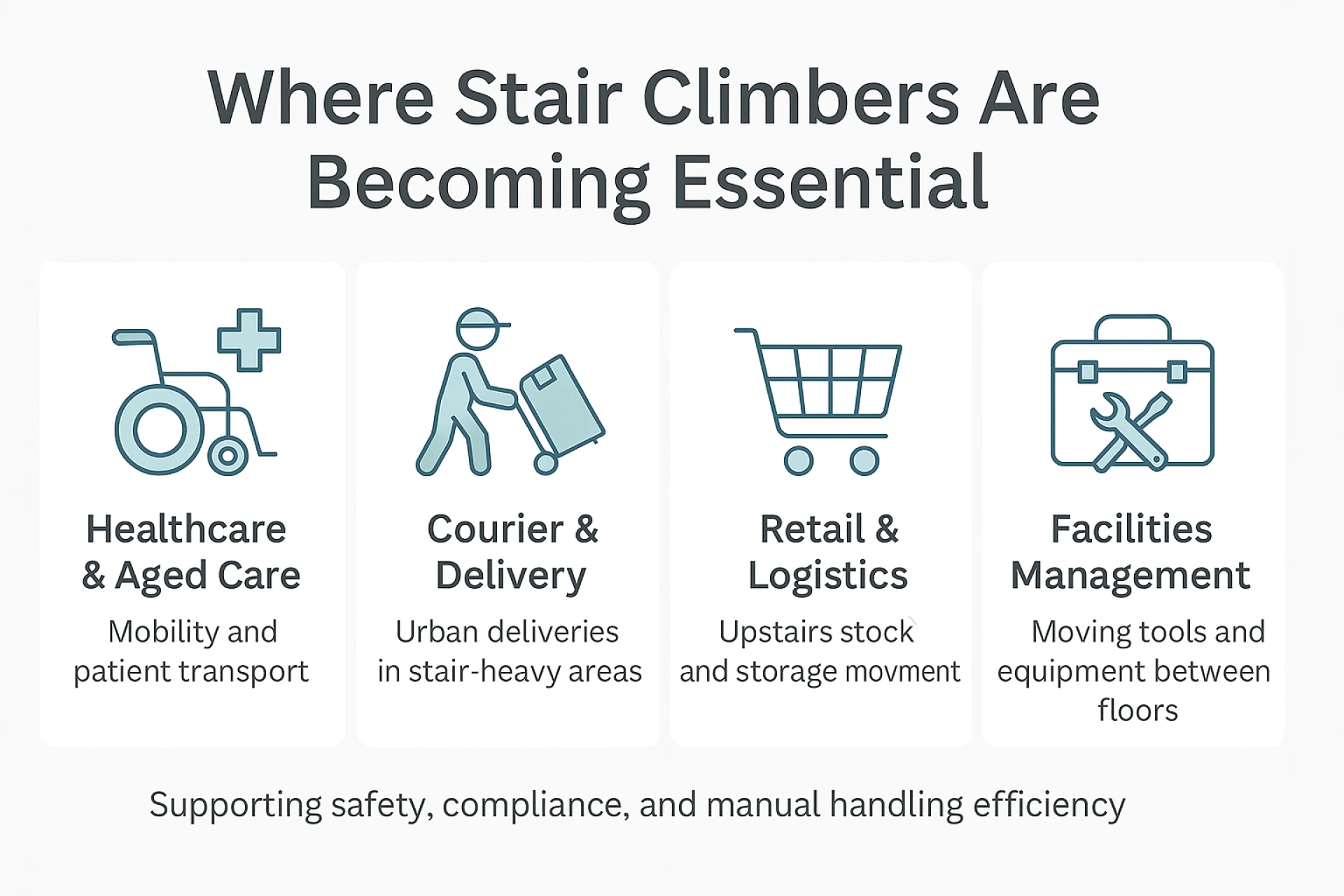
Industries adopting stair climbers include:
- Healthcare & aged care – For mobility and patient assistance
- Courier and parcel delivery – For urban deliveries in stair-heavy zones
- Retail logistics – For upstairs storage or shopfront deliveries
- Facilities management – For carrying equipment between levels
In these roles, stair climbers are no longer “nice to have” — they’re becoming essential for compliance, productivity, and long-term workforce safety.
Final thoughts: a smarter way to move
Stair climbing machines aren’t flashy. They don’t look like a high-tech solution — but that’s part of their strength. They’re simple, effective tools that solve real problems: injury risk, physical fatigue, and inefficient labour.
They serve frontline workers, carers, and even solo operators who just want to move things without hurting themselves. And that’s the real takeaway — these machines aren’t about convenience. They’re about capability. They turn risky, labor-intensive tasks into smooth, sustainable ones.
If your environment includes stair access, lifting demands, or vulnerable people, investing in a stair climber isn’t just smart — it’s responsible.



























Sign in to leave a comment.