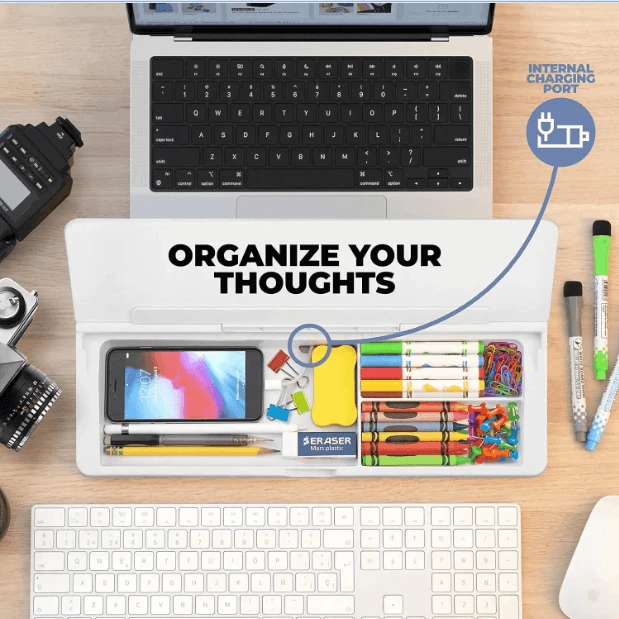

In recent years, the modern workspace has undergone a transformation—not just in terms of layout and lighting, but in the very tools used for collaboration and productivity. Among these innovations, the desktop whiteboard has emerged as a sleek, reusable, and space-efficient alternative to paper-based notepads or sticky notes. And within this product category, the tempered glass desktop whiteboard has claimed a premium position, marketed as elegant, long-lasting, and most of all—safe.
But is it truly safer?
Safety, in this context, is a nuanced term. It encompasses physical durability, user interaction, resistance to breakage, chemical safety, and even environmental performance. When we ask whether a tempered glass desktop whiteboard is “safer,” we’re not just comparing it to traditional whiteboards—we’re evaluating it as an object that must coexist with our bodies, our workspaces, and our daily routines. The answer cannot be reduced to a simple yes or no. Instead, it lies in a careful examination of how tempered glass performs under real-world conditions, what risks it mitigates or introduces, and how users interact with it—consciously and subconsciously.
This article explores that question in depth, following the tempered glass whiteboard from its material origins through its engineering, day-to-day use, long-term implications, and overall impact on user safety.
The Origin of the Material: What Makes Glass Tempered?
To understand the safety of tempered glass whiteboards, we must first understand what tempered glass is—and why it’s used.
Tempered glass is manufactured through a process of extreme heating followed by rapid cooling, a method known as quenching. This treatment changes the internal structure of the glass, compressing its outer surface while placing its interior in tension. The result is a pane of glass that is four to five times stronger than standard, annealed glass of the same thickness.
Why is this relevant to desktop whiteboards? Because unlike mounted boards, desktop versions are handled more directly, moved frequently, and occasionally subjected to accidental knocks, falls, or pressure. Tempered glass provides the structural integrity needed to withstand this treatment without cracking or shattering easily.
More importantly, in the rare event that it does break, tempered glass shatters into small, blunt granules rather than sharp shards. This is one of its defining safety features and a major reason it's used in automobile windows, shower doors, and smartphone screens. For a product that might sit mere inches from a user’s hands and face, this distinction is critical.
Thus, at a fundamental level, the tempered glass used in desktop whiteboards is inherently safer than non-tempered alternatives—and dramatically safer than plastic panels that may crack unpredictably or scratch under stress.
Stress, Pressure, and the Everyday Environment
While the safety credentials of tempered glass are impressive in theory, the true test lies in everyday use. How does a tempered glass whiteboard hold up under the demands of a real workspace?
Picture a typical office or home office desk. It holds a laptop, perhaps a keyboard and mouse, coffee mugs, pens, notebooks, maybe a tablet or phone. Now introduce a tempered glass desktop whiteboard into this landscape. It's designed to sit flush with the desk or on an angled stand, often spanning between 10 to 20 inches in width. Some models include a slot to hold markers, others feature magnetic surfaces.
Throughout the day, users will write on it, rest their arms against it, lean across it, and occasionally place objects atop it. These interactions create constant micro-pressures that the board must absorb. In some cases, a careless knock from a heavy mug or a dropped stapler may occur. The safety of the board in these moments depends not only on the strength of the glass itself but on the design of the product as a whole.
Edge polishing becomes critical here. If the edges are sharp, beveled improperly, or left unfinished, they pose a genuine risk—especially to wrists and fingers. High-end models go to great lengths to round or smooth the edges, reducing the chance of cuts or discomfort. Likewise, the backing material—usually a non-slip rubber or foam—plays a role in safety, preventing the board from sliding or tipping when in use.
Interestingly, some users have reported feeling more secure using a tempered glass board compared to acrylic or plastic models, which can flex, bend, or discolor over time. The psychological perception of sturdiness plays into the broader safety profile: if a user trusts that the board won’t shift or collapse unexpectedly, they are less likely to handle it in ways that invite risk.
Writing Surfaces and Chemical Exposure
Another axis of safety is the interaction between markers, cleaning agents, and the board surface.
Tempered glass, by its nature, is non-porous and chemically inert. That means it does not absorb inks or react with typical marker solvents. This is a key advantage over melamine or painted metal whiteboards, which can degrade over time or ghost permanently. Ghosting not only impairs readability but often encourages users to scrub harder—introducing the potential for slippage or even damage.
From a health perspective, the chemical inertness of tempered glass translates to fewer risks. There is no off-gassing, no degradation that releases volatile organic compounds (VOCs), and no microscopic flaking that might occur with older plastic boards. Moreover, cleaning is simpler and safer: a mild glass cleaner or even a damp cloth will suffice. There is no need for specialized detergents or abrasive sponges, reducing chemical exposure in the workplace.
What this means in practical terms is that users—especially those with allergies, chemical sensitivities, or concerns about air quality—are likely to find tempered glass whiteboards a more comfortable and safer long-term solution.
Optical Clarity and Eye Safety
At first glance, visual clarity may not seem like a safety issue. But consider the amount of time a user may spend gazing at a whiteboard surface, trying to decipher notes, diagrams, or sketches—especially under fluorescent lighting.
Plastic surfaces often suffer from distortion, yellowing, or cloudiness over time. These imperfections force the eyes to work harder, especially in environments with poor lighting or glare. Tempered glass, by contrast, maintains optical clarity almost indefinitely. High-quality boards are also treated with anti-glare coatings that minimize light scatter and eye fatigue.
This clarity becomes a safety asset for users who rely on the board for extended periods. Whether it's a student using the board for complex equations or a designer mapping out creative flows, reduced eye strain translates into greater comfort, fewer headaches, and less visual fatigue—all critical for long-term productivity and well-being.
Weight, Portability, and the Ergonomics of Movement
Safety is also about how an object moves—or doesn’t.
Tempered glass whiteboards are heavier than their plastic or acrylic counterparts. This weight is both a feature and a liability. On one hand, it keeps the board firmly in place, preventing unintended slips or shifts. On the other, it introduces a handling challenge—particularly when the board is being repositioned or cleaned.
In poorly designed models, the absence of hand grips or a raised edge can make lifting or moving the board difficult. Users may be tempted to grab it by the corners, increasing the risk of it slipping or falling. In such cases, the very strength of tempered glass becomes a threat—because while it is resistant to fracture, if it does fall, it can break with considerable force.
Manufacturers have responded in various ways. Some add silicone bumpers on the underside, creating a cushion that allows easy lifting. Others incorporate side handles or notches that facilitate safer repositioning.
Ultimately, the safest tempered glass whiteboard is not the lightest, but the most ergonomically considerate. One that anticipates how humans will interact with it, not how machines might.
Heat and Fire Resistance: An Unspoken Safety Advantage
In environments where heat-generating equipment is present—such as laptops, lamps, or even coffee warmers—the question of thermal resistance becomes surprisingly relevant.
Tempered glass, unlike plastic, will not melt, warp, or release toxic fumes when exposed to heat. While it is not fireproof, it is fire-resistant to a degree far exceeding other whiteboard materials. This adds a layer of passive safety to the desk environment—especially important in shared office settings or educational labs.
Furthermore, tempered glass is less likely to stain from heat-induced ink bonding, which is a common issue with melamine boards. That resilience ensures not just cleanliness, but also integrity in high-temperature environments.
Psychological Safety and Professional Image
There’s one more kind of safety—one that is harder to measure, but just as impactful. Psychological safety is often defined in corporate culture as a feeling of security and clarity in the workspace. Surprisingly, even objects like whiteboards contribute to this environment.
Users consistently report that tempered glass whiteboards feel “cleaner,” “more premium,” and “more stable” than alternatives. These perceptions affect how people approach their work. When tools feel trustworthy and permanent, users feel more confident. When erasing is smooth and ink glides on effortlessly, there's less frustration.
This comfort contributes to mental safety—freeing the mind from distractions and allowing users to focus on ideas rather than physical limitations. In this way, a tempered glass whiteboard doesn’t just support safety in the physical sense—it becomes part of a broader architecture of mental clarity and professional trust.
Conclusion: Safety as the Sum of All Interactions
The question of whether tempered glass desktop whiteboards are safer is best answered not by a single feature, but by an accumulation of thoughtful details.
From shatter resistance to chemical inertness, from ergonomic handling to visual comfort, tempered glass offers a spectrum of advantages that collectively enhance safety in both obvious and subtle ways. Its strength lies not just in what it resists, but in how it invites safer, more confident use.
Of course, no material is perfect. Poorly made glass boards, without proper polishing or protective backing, can still pose risks. But when engineered with care, tempered glass remains one of the most balanced, durable, and user-friendly materials available for whiteboards today.
Safety, after all, is not just about protection from harm—it’s about freedom from worry. And in that respect, the tempered glass desktop whiteboard delivers peace of mind as clearly and reliably as the notes written on its surface.


























Sign in to leave a comment.