The financial landscape is rapidly evolving, and one of the most innovative developments is the rise of the asset tokenization platform. By leveraging blockchain technology, asset tokenization enables physical and digital assets to be converted into secure digital tokens, making ownership more accessible, transparent, and efficient.
From real estate and precious metals to artwork and private equity, tokenization is changing how investors buy, sell, and manage assets in the digital era.
What Is an Asset Tokenization Platform?
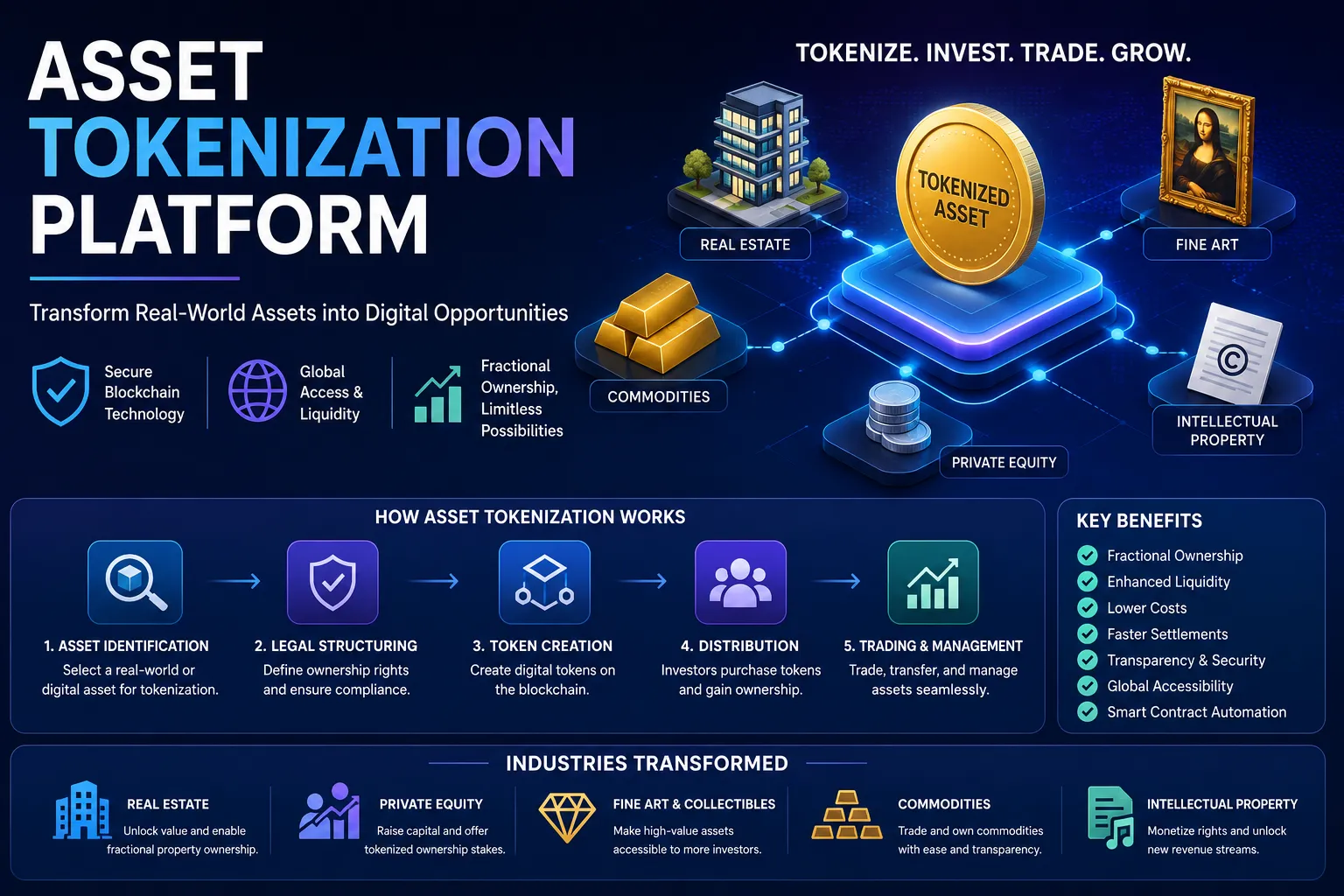
An asset tokenization platform is a blockchain-based solution that converts ownership rights of real-world or digital assets into digital tokens. These tokens represent a share, fraction, or full ownership of an underlying asset and can be securely traded or transferred on supported networks.
Tokenization bridges traditional assets with modern blockchain infrastructure, creating new opportunities for issuers, investors, and financial institutions.
How Asset Tokenization Works
The tokenization process typically involves the following steps:
1. Asset Identification
A physical or digital asset is selected for tokenization, such as real estate, commodities, intellectual property, or securities.
2. Legal Structuring
Ownership rights and compliance requirements are defined to ensure regulatory adherence.
3. Token Creation
Digital tokens are generated on a blockchain network, representing ownership or economic rights associated with the asset.
4. Distribution and Investment
Investors can purchase tokens through a secure platform, gaining exposure to the underlying asset.
5. Trading and Management
Token holders can trade, transfer, or manage their investments through supported marketplaces and digital wallets.
Key Features of an Asset Tokenization Platform
Fractional Ownership
Tokenization allows assets to be divided into smaller units, enabling investors to own a fraction of high-value assets that were previously inaccessible.
Enhanced Liquidity
Traditionally illiquid assets can become easier to buy and sell through digital marketplaces, improving market efficiency.
Blockchain Security
Transactions are recorded on a decentralized blockchain ledger, ensuring transparency, security, and tamper-resistant records.
Global Accessibility
Investors from different regions can participate in investment opportunities without geographical limitations.
Smart Contract Automation
Automated smart contracts simplify processes such as dividend distribution, compliance checks, and ownership transfers.
Benefits of Asset Tokenization
Increased Investment Opportunities
Investors gain access to a broader range of asset classes with lower entry barriers.
Reduced Transaction Costs
Blockchain technology minimizes intermediaries, reducing administrative and operational expenses.
Faster Settlements
Digital transactions can be processed more efficiently compared to traditional asset transfer methods.
Improved Transparency
Every transaction is recorded on a transparent ledger, enhancing trust among stakeholders.
Better Asset Management
Real-time tracking and reporting help issuers and investors manage assets more effectively.
Industries Using Asset Tokenization Platforms
Real Estate
Property owners can tokenize residential, commercial, and industrial assets, enabling fractional investments and improved liquidity.
Private Equity
Businesses can raise capital by offering tokenized ownership stakes to investors.
Fine Art and Collectibles
High-value artwork and collectibles can be divided into tradable digital shares.
Commodities
Gold, silver, and other commodities can be tokenized for easier trading and ownership management.
Intellectual Property
Music rights, patents, and digital content can be monetized through tokenized ownership structures.
Choosing the Right Asset Tokenization Platform
When evaluating an asset tokenization solution, organizations should consider:
- Regulatory compliance capabilities
- Multi-blockchain support
- Security and data protection features
- Smart contract functionality
- Scalability and performance
- Investor management tools
- Reporting and analytics capabilities
A robust platform should provide end-to-end token lifecycle management while ensuring compliance with relevant regulations.
The Future of Asset Tokenization
As blockchain adoption continues to grow, asset tokenization is expected to play a significant role in modern finance. Financial institutions, asset managers, and enterprises are increasingly exploring tokenized assets to improve liquidity, streamline operations, and expand investment access.
Emerging technologies such as decentralized finance (DeFi), artificial intelligence, and advanced digital identity solutions will further enhance the capabilities of asset tokenization platforms, creating a more inclusive and efficient financial ecosystem.
Conclusion
An asset tokenization platform is revolutionizing the way assets are owned, managed, and traded. By combining blockchain technology with real-world assets, businesses can unlock liquidity, improve transparency, and create new investment opportunities for a global audience. As digital transformation accelerates, asset tokenization is set to become a cornerstone of the future financial infrastructure.



























Sign in to leave a comment.