
Introduction
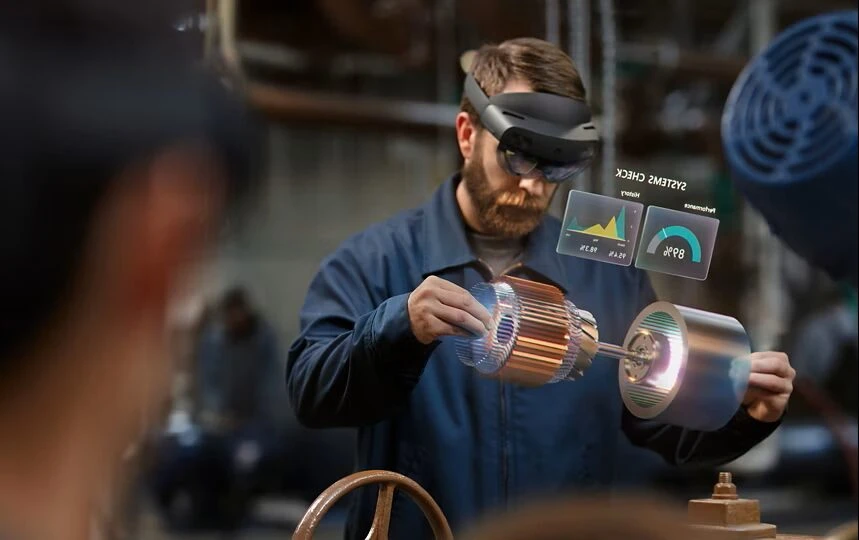
In recent years, Augmented Reality (AR) and Assisted Reality (Assisted Reality/AR) have moved from tech buzzwords to tangible tools transforming industries. From manufacturing floors and logistics hubs to remote field operations and healthcare, AR technologies are reshaping the way employees work, collaborate, and train. While traditional methods rely on manuals, in-person supervision, or static instructions, AR brings real-time, interactive guidance directly to workers’ field of vision. Assisted Reality, a close cousin of AR, focuses on providing critical information overlay without fully immersing the user, making it ideal for industrial environments where situational awareness is crucial.
Companies across the Asia Pacific, Europe, and North America are increasingly integrating AR into their operations. With innovations like smart AR glasses, wearable devices, and IoT integration, businesses are enabling employees to work more efficiently, safely, and collaboratively. In this blog, we explore how AR and Assisted Reality are being used today, their benefits, challenges, and what the future holds for these cutting-edge technologies.
1. Understanding AR and Assisted Reality
Augmented Reality (AR) overlays digital content onto the real world, enhancing the user’s perception of their environment. Unlike Virtual Reality (VR), which immerses users in a completely digital space, AR keeps the user in the real environment while adding useful, interactive information. Examples include:
- AR glasses showing step-by-step instructions on a machinery panel.
- AR apps highlighting warehouse inventory locations.
- AR training simulations for healthcare professionals.
Assisted Reality, on the other hand, provides critical information without blocking the real world. Users see data, alerts, or notifications in a non-intrusive way while maintaining full situational awareness. This is particularly valuable in high-risk environments like oil rigs, mining, or construction sites, where workers cannot afford to be distracted by fully immersive AR experiences.
Both AR and Assisted Reality can be hands-free, which is a major advantage in industrial operations. Wearable devices allow technicians and engineers to:
- Access manuals or diagrams without using their hands.
- Connect remotely with experts for real-time guidance.
- Improve safety by reducing human error.
2. Industrial Applications of AR and Assisted Reality
AR and Assisted Reality have found their strongest foothold in industrial sectors. Here’s how:
a) Manufacturing
AR is transforming assembly lines and maintenance tasks. Smart glasses provide workers with visual instructions, highlighting parts, guiding tools, and showing error alerts in real time. Companies like Boeing and Siemens have reported reduced error rates and faster assembly times using AR-assisted workflows.
b) Oil & Gas and Mining
In remote or hazardous environments, Assisted Reality devices like Realwear Navigator 520, allow workers to receive critical operational data, environmental warnings, and remote expert guidance without looking away from their surroundings. This minimizes accidents and increases productivity.
c) Logistics and Warehousing
AR-powered warehouse navigation can overlay optimal routes, item locations, and picking instructions, making order fulfillment faster and more accurate. Amazon and DHL are experimenting with AR-assisted systems for warehouse staff.
d) Healthcare
In hospitals, AR and Assisted Reality can provide hands-free visual guidance during surgeries, helping surgeons access patient data, scans, or step-by-step procedure overlays. Training programs also benefit from AR-based simulations for students and residents.
e) Remote Field Operations
Companies can now perform remote inspections, troubleshooting, and quality checks using AR glasses. Field workers stream live visuals to experts, who provide instructions in real time. This reduces travel costs, downtime, and response times significantly.
3. Benefits of AR and Assisted Reality
Implementing AR technologies in businesses offers numerous advantages:
- Hands-Free Efficiency — Workers can follow instructions while using both hands, reducing mistakes and speeding up operations.
- Remote Collaboration — Experts can guide on-site employees remotely, lowering travel expenses and downtime.
- Enhanced Training — AR-based training programs allow safe practice of complex or dangerous tasks.
- Safety and Compliance — Real-time data overlays alert workers to hazards, ensuring adherence to safety protocols.
- Cost Savings — Faster processes, reduced errors, and minimized travel costs directly impact the bottom line.
- Scalability — AR solutions can be rolled out across multiple sites and adapted for different industries.
- Data-Driven Insights — AR systems often integrate with IoT and analytics platforms, providing actionable data for continuous improvement.
These benefits demonstrate why industrial leaders and early adopters are investing heavily in AR technologies.
4. Challenges in Implementing AR
While AR and Assisted Reality are promising, they come with challenges:
- High Initial Costs — Hardware like smart AR glasses and sensors can be expensive.
- Connectivity Issues — Remote sites with poor internet connectivity may struggle to leverage AR fully.
- User Adoption — Workers need training and confidence to adopt wearable AR technology.
- Integration with Existing Systems — AR tools must sync with ERP, IoT devices, and other enterprise platforms.
- Data Security — Sharing live visuals and operational data remotely raises cybersecurity concerns.
Overcoming these challenges requires careful planning, pilot programs, and ongoing support, but the long-term benefits often outweigh initial hurdles.
5. Future Trends in AR and Assisted Reality
The future of AR and Assisted Reality in industries is bright, with several emerging trends:
a) 5G Connectivity
The rollout of 5G networks enhances real-time data transmission, enabling seamless AR-assisted operations even in remote areas.
b) AI and Machine Learning Integration
AI can analyze real-time data from AR devices to predict equipment failures, optimize workflows, and enhance safety alerts.
c) IoT and Sensor Fusion
Combining AR with IoT devices allows for context-aware overlays, such as showing machine health, temperature readings, or safety warnings directly in the user’s field of view.
d) Wearable Ergonomics
New AR devices are lighter, more comfortable, and durable, making long-duration industrial use feasible.
e) Cloud-Based AR Solutions
Cloud platforms allow centralized control and updates of AR applications, making deployment across multiple sites faster and cost-effective.
f) Sustainability and Energy Efficiency
AR-assisted maintenance reduces unnecessary travel and inspections, cutting carbon footprints and improving energy efficiency across operations.
6. Case Studies
Case Study 1: Boeing
Boeing integrated AR glasses into its wiring assembly processes. Workers could follow visual overlays and step-by-step instructions, reducing wiring errors by 40% and speeding up assembly times.
Case Study 2: Realtime AR in Mining
In the Asia Pacific, Realtime AR deployed rugged AR glasses for mining operations. Field technicians could receive remote expert guidance, improving safety and operational efficiency in high-risk environments.
Case Study 3: DHL Logistics
DHL trialed AR-assisted warehouse picking, where employees used smart glasses showing optimal picking routes. Result: 25% faster order fulfillment and reduced errors.
7. Best Practices for Implementing AR in Industries
- Start Small — Begin with a pilot project in a single department or process.
- Train Employees — Provide hands-on training and support to ease adoption.
- Select the Right Hardware — Choose devices that are rugged, lightweight, and compatible with your environment.
- Integrate with Systems — Ensure AR solutions sync with ERP, IoT, and analytics platforms.
- Monitor and Measure — Track KPIs such as efficiency gains, error reduction, and safety improvements.
Conclusion
Augmented and Assisted Reality are no longer futuristic concepts — they are practical tools transforming industrial operations today. From manufacturing and mining to logistics and healthcare, AR devices improve efficiency, safety, and collaboration. With innovations in AI, IoT, and 5G connectivity, the scope for AR-assisted operations will only expand.
Businesses that invest in AR early are likely to see significant productivity gains, cost savings, and competitive advantages. As hardware becomes more affordable and adoption barriers decrease, AR and Assisted Reality will become core tools for industries across the globe.
Whether it’s hands-free operation, remote collaboration, or safer training environments, the potential of AR is limitless. The future is here — and it’s augmented.



























Sign in to leave a comment.