
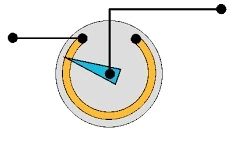
Variable Resistors, whose resistance can be adjusted, are used to adjust circuit current and resistance. It can also change the characteristics of the signal generator, dim the light, start the motor or control motor speed. Depending on the use, the variable resistor material can be a metal wire, metal sheet, carbon film, or conductive liquid. For currents of general magnitude, metal variable resistors are commonly used. When the current is small, we choose the carbon film type. The electrolytic variable resistor is most suitable for large current, whose electrodes are immersed in conductive l
The widespread use of semiconductors has changed our way of life. With the proliferation of electronic equipment, companies manufacturing semiconductors are booming. Intel, Samsung, TSMC...
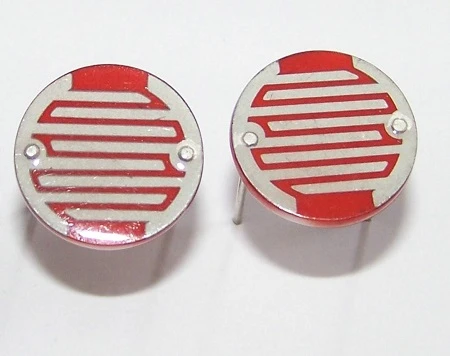
There are three types of photoresistor: ultraviolet photoresistors, infrared photoresistors, visible light photoresistors. Commonly used materials are cadmium sulfide, selenium, aluminum sulfide, lead sulfide, and bismuth sulfide. The working principle of the photoresistor is based on the internal photoelectric effect. Photosensitive resistors are formed by mounting electrode leads at both ends of the semiconductor photosensitive material and encapsulating them in a tube case with a transparent window. Dimming circuit and light switch are the two applications of the photoresistor.