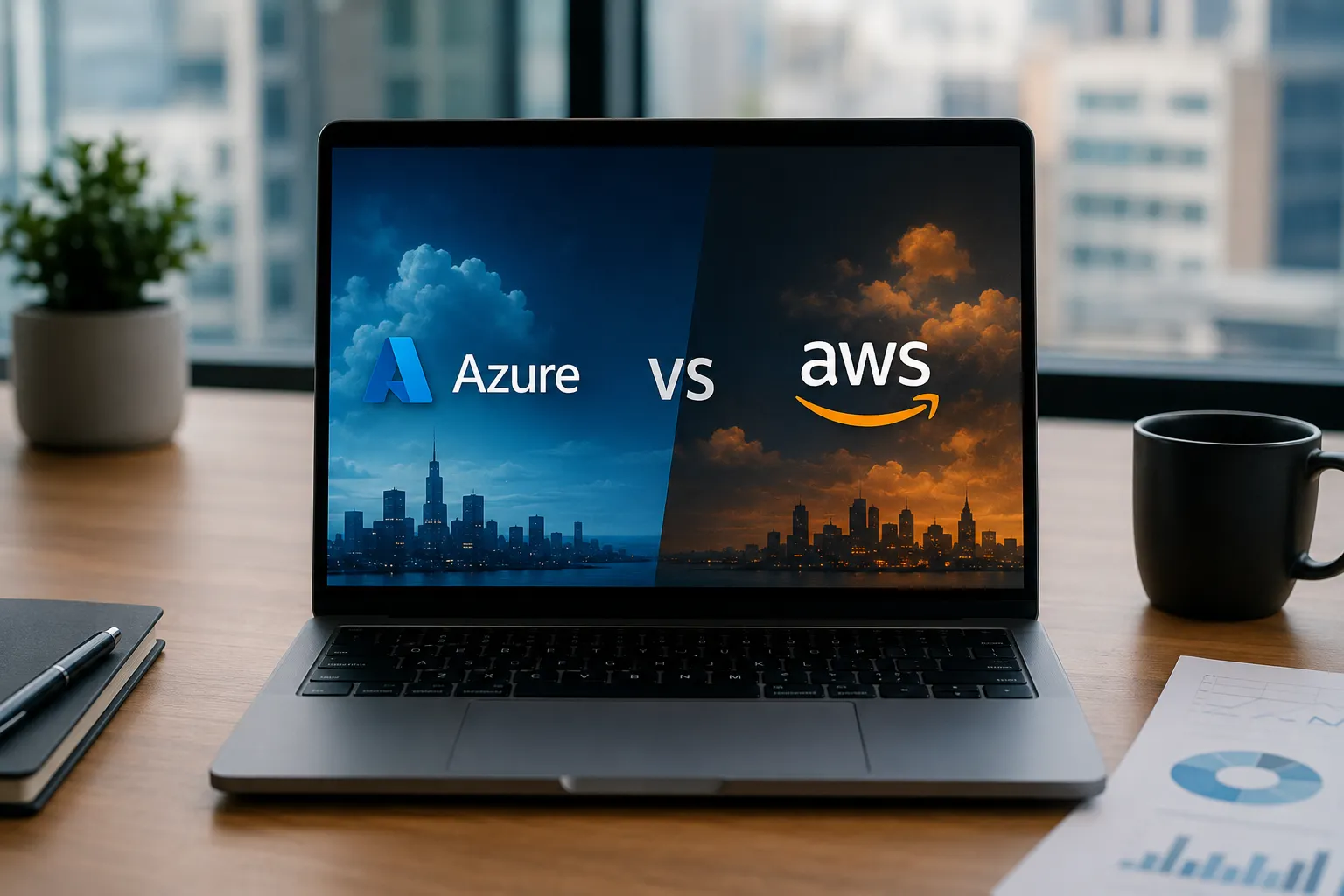

Something unexpected is happening in enterprise cloud adoption right now.
Organizations that locked into a single cloud platform three years ago are quietly re-evaluating their decisions. Not because the platforms failed them, but because the demands of modern data analytics have fundamentally changed what a cloud platform needs to deliver.
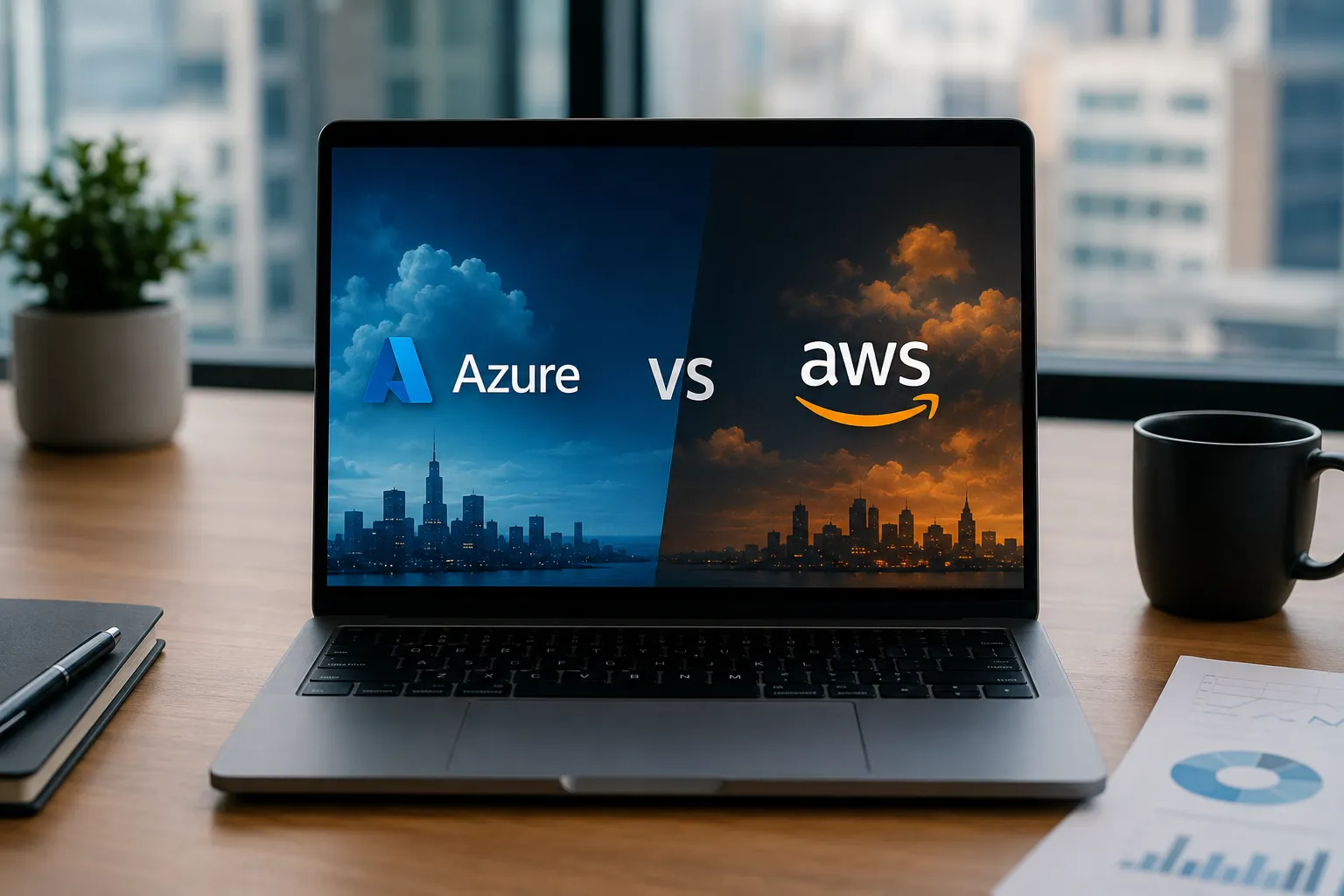
In 2026 the question is no longer which platform is bigger or faster. It is which platform helps businesses turn data into decisions faster than their competitors.
That shift is making the AWS vs Azure comparison more strategically important than it has ever been.
Why This Comparison Matters More in 2026
The scale of enterprise data has crossed a threshold that changes everything.
According to IDC, global data generation is expected to reach 180 zettabytes in 2026, driven by AI workloads, IoT devices, and real-time customer interactions. Gartner research shows that data-driven organizations innovate twice as fast as those relying on traditional decision-making models.
This explosion in data volume is forcing businesses to evaluate cloud platforms not just on storage and compute, but on how effectively they can manage, process, and analyze data at scale.
AWS and Azure together control approximately 55% of the global cloud market. AWS holds around 29 to 31% market share while Azure holds 24 to 27% according to Synergy Research Group data from early 2026. But market share alone does not tell the full story.
The real competition is happening at the analytics layer, where businesses are deciding which platform best supports their cloud data management solutions and long-term data strategy.
Understanding the Basics: What Are AWS and Azure?
Before diving into the comparison it helps to understand what each platform actually does at its core.
What is AWS?
Amazon Web Services launched in 2006 and remains one of the most widely adopted cloud platforms globally. AWS is known for its modular architecture, extensive service catalog, and developer-first approach. It gives organizations the freedom to build complex, scalable data systems using best-of-breed services across compute, storage, analytics, AI, and machine learning.
What is Azure?
Microsoft Azure launched in 2010 with a clear enterprise focus. It was built to integrate seamlessly with the Microsoft technologies organizations already use, from Office 365 and Dynamics 365 to Active Directory, Power BI, and more recently Microsoft Fabric. Azure is particularly strong for organizations looking for a unified, integrated data environment rather than a collection of modular services.
AWS for Data Analytics: Strengths and Limitations
AWS built its reputation on flexibility, scalability, and developer-first architecture. Its analytics stack remains one of the most comprehensive in the industry.
Key AWS analytics services include:
- Amazon Redshift for data warehousing
- AWS Glue for data integration and ETL
- Amazon Athena for serverless querying
- Amazon Kinesis for real-time streaming data
- Amazon SageMaker for machine learning
What makes AWS genuinely strong in 2026:
Organizations running global-scale digital operations benefit significantly from AWS infrastructure. Its modular architecture allows data engineering teams to build highly customized pipelines without being locked into a single workflow. AWS also leads in open-source tool support, particularly for Apache Spark, Kafka, and Flink workloads.
According to Flexera's 2026 State of the Cloud Report, AWS remains the preferred platform for cloud-native application development and large-scale streaming analytics workloads.
Where AWS creates friction:
The same flexibility that makes AWS powerful also creates complexity. Architecting and optimizing AWS environments requires significant technical expertise. Without strong governance, costs can escalate quickly. Flexera's report also found that 82% of enterprises cite cloud cost optimization as their top challenge, and AWS environments are frequently cited as harder to govern without dedicated FinOps practices.
For organizations without in-house cloud expertise, partnering with experienced AWS data analytics solutions providers becomes critical to getting real value from the platform.
Azure for Enterprise Data Analytics: Strengths and Limitations
Azure launched in 2010 with a clear enterprise focus. Microsoft built Azure to work seamlessly with the tools organizations already use, Office 365, Dynamics 365, Active Directory, Power BI, and more recently Microsoft Fabric.
Key Azure analytics services include:
- Azure Synapse Analytics for unified data warehousing and big data
- Azure Data Factory for data integration and pipelines
- Power BI for business intelligence and visualization
- Azure Stream Analytics for real-time data processing
- Microsoft Fabric for unified data and AI workloads
What makes Azure genuinely strong in 2026:
Azure's integrated ecosystem is its biggest differentiator. Organizations running Microsoft environments can move data from operational systems into analytics workflows without the complexity of managing multiple connectors and transformation layers. Power BI integration alone eliminates an entire category of pipeline work that AWS users typically handle separately.
Microsoft's investment in Fabric, its unified data platform combining data engineering, data science, and business intelligence, has accelerated Azure's position in enterprise analytics significantly. Forrester Research noted in Q1 2026 that Microsoft Fabric adoption among enterprise data teams grew by 67% year over year.
Azure also leads in hybrid cloud capability. Organizations managing on-premises and cloud environments simultaneously benefit from Azure Arc, which provides consistent governance and management across both environments.
Where Azure creates friction:
Azure's strength in integration becomes a limitation for organizations outside the Microsoft ecosystem. Cloud-native teams and startups often find AWS more natural to work with. Azure's flexibility for custom architectures is also more constrained compared to AWS, a challenge for data engineering teams building highly specialized pipelines.
Organizations looking to maximize value from Azure typically benefit from working with dedicated Azure consulting services to navigate the platform's complexity and unlock its full analytics potential.
AWS vs Azure Comparison: Five Critical Factors
1. Data Storage and Warehousing
AWS offers Amazon S3 for object storage and Amazon Redshift for data warehousing, both battle-tested at massive scale. Azure offers Azure Blob Storage and Azure Synapse Analytics, which combines data warehousing and big data analytics in a single service.
| Factor | AWS | Azure |
| Object Storage | Amazon S3 | Azure Blob Storage |
| Data Warehousing | Amazon Redshift | Azure Synapse Analytics |
| NoSQL Database | Amazon DynamoDB | Azure Cosmos DB |
| Best For | Maximum flexibility and scale | Integrated warehousing and analytics |
For organizations requiring maximum storage flexibility and scale AWS has a slight edge. For organizations wanting integrated warehousing and analytics in one environment Azure Synapse is difficult to match.
2. Real-Time Analytics
Both platforms handle streaming data well. Amazon Kinesis and Azure Stream Analytics are comparable in capability. However Azure's integration with Power BI for real-time dashboard updates gives it a practical advantage for business intelligence teams who need immediate visualization of streaming data.
AWS counters with Amazon Managed Streaming for Apache Kafka, a strong option for organizations already invested in open-source streaming infrastructure.
3. AI and Machine Learning Integration
AWS offers Amazon SageMaker as its primary ML platform, widely regarded as one of the most mature managed ML services available. Azure counters with Azure Machine Learning and increasingly tight integration with OpenAI models through Azure OpenAI Service.
For organizations building custom ML pipelines SageMaker offers more flexibility. For organizations wanting to leverage GPT-4 and other OpenAI models in production Azure has a clear advantage through its exclusive partnership with OpenAI.
This is one of the most significant differentiators in the AWS vs Azure comparison for AI-forward organizations in 2026.
4. Pricing and Cost Management
Neither platform is inherently cheaper. Both use consumption-based pricing models that reward architectural efficiency.
| Factor | AWS | Azure |
| Pricing Model | Flexible consumption based | Predictable for Microsoft environments |
| Startup Support | Credits and startup programs | Credits plus AI resources |
| Cost Optimization | Requires FinOps discipline | Azure Hybrid Benefit for Microsoft users |
| Best For | Organizations needing pricing flexibility | Microsoft-centric environments |
The real cost driver in both platforms is architecture quality, not the platform itself. Organizations with well-governed environments spend significantly less regardless of which platform they choose.
5. Security and Compliance
Both platforms meet enterprise-grade security requirements and hold comparable compliance certifications including SOC 2, ISO 27001, HIPAA, and GDPR alignment.
Azure integrates natively with Microsoft Defender and Entra ID, a significant advantage for organizations already invested in Microsoft security tooling. AWS provides more customizable security configurations which suits organizations with specialized compliance requirements.
Industry Use Cases: Where Each Platform Wins
Real-world adoption patterns reveal clear preferences by industry:
E-commerce and Digital Platforms → AWS AWS is better suited for e-commerce and digital platforms owing to its high elasticity, global scalability, and ability to deliver real-time personalized experiences at scale.
Banking and Financial Services → Azure Due to its superior compliance features and enterprise security standards, Azure has become the preferred choice for financial institutions managing transaction data, security reporting, and regulatory compliance.
Healthcare → Hybrid Approach Most healthcare organizations leverage both AWS and Azure. Azure provides more secure patient-related systems and compliance-sensitive workloads while AWS powers AI research and large-scale genomic data processing.
Manufacturing and Industrial Operations → Azure Manufacturing units and industrial operations are best handled using Azure owing to its IoT integration capabilities and alignment with operational technology environments.
Media, Entertainment, and Gaming → AWS AWS excels in these industries owing to its content delivery network strength and ability to handle massive concurrent user spikes during peak demand periods.
The Real Question in 2026
The AWS vs Azure comparison has moved beyond feature lists and pricing tables.
BrightEdge research published in early 2026 found that organizations achieving the highest ROI from cloud analytics investments shared one common characteristic, they chose their platform based on strategic alignment with business objectives rather than technical specifications alone.
Organizations already operating in Microsoft environments consistently achieve faster time to value on Azure. Organizations building cloud-native products from scratch consistently achieve greater flexibility on AWS.
The most sophisticated enterprises are not choosing between AWS and Azure, they are using both strategically. Multi-cloud adoption reached 87% among large enterprises in 2026 according to Flexera, with most organizations using AWS for specific workloads and Azure for enterprise integration.
Quick Decision Guide: Which Platform Is Right for You
| Your Situation | Recommended Platform |
| Already using Microsoft 365 or Dynamics | Azure |
| Building cloud-native applications | AWS |
| Need hybrid cloud with on-premises systems | Azure |
| Running large-scale streaming analytics | AWS |
| Want unified analytics and Power BI | Azure |
| Need maximum customization and flexibility | AWS |
| Operating in regulated industries | Azure |
| Multi-cloud enterprise environment | Both |
Frequently Asked Questions
Which platform is better for data analytics, AWS or Azure? There is no universal answer. AWS is better for organizations needing flexible, customizable analytics pipelines. Azure is better for organizations wanting integrated analytics with Power BI and Microsoft ecosystem tools.
Is Azure cheaper than AWS in 2026? Neither is inherently cheaper. Azure offers cost advantages for Microsoft-centric organizations through the Azure Hybrid Benefit program. AWS offers more pricing flexibility and startup credits. Architecture quality determines cost more than platform choice.
Can businesses use both AWS and Azure together? Yes. Multi-cloud adoption reached 87% among large enterprises in 2026. Most organizations use AWS for cloud-native workloads and Azure for enterprise integration and Microsoft ecosystem alignment.
How does Microsoft Fabric change the AWS vs Azure comparison? Microsoft Fabric has significantly strengthened Azure's position in enterprise analytics by unifying data engineering, data science, and business intelligence in a single platform. Forrester noted 67% year-over-year growth in Fabric adoption among enterprise data teams in Q1 2026.
Which platform is better for AI and machine learning? AWS SageMaker leads for custom ML pipeline development. Azure leads for organizations wanting to integrate OpenAI models like GPT-4 through Azure OpenAI Service.
Final Thoughts
Neither AWS nor Azure is universally better in 2026.
AWS wins on flexibility, customization, and cloud-native scalability. Azure wins on enterprise integration, Microsoft ecosystem alignment, and unified analytics capabilities.
The organizations gaining the most competitive advantage from cloud analytics are not the ones who chose the right platform. They are the ones who built the right strategy, aligning platform capabilities with business goals, investing in proper governance, and treating data as a strategic asset rather than an operational byproduct.
For businesses conducting an AWS vs Azure comparison for the first time, the decision should start with business objectives not technical specifications. For organizations already on one platform, the question is whether your current cloud data management solutions are delivering the analytics outcomes your business needs in 2026.
The platform decision matters. But the strategy and expertise behind it matters more.
Ready to Build the Right Cloud Data Strategy for Your Business?
Choosing between AWS and Azure is only the first step. The real competitive advantage comes from implementing the right architecture, governance, and analytics framework around whichever platform you choose.
At Dream IT Consulting Services we specialize in Azure consulting services, AWS data analytics solutions, and end-to-end cloud data management for enterprises at every stage of their cloud journey.





























Sign in to leave a comment.