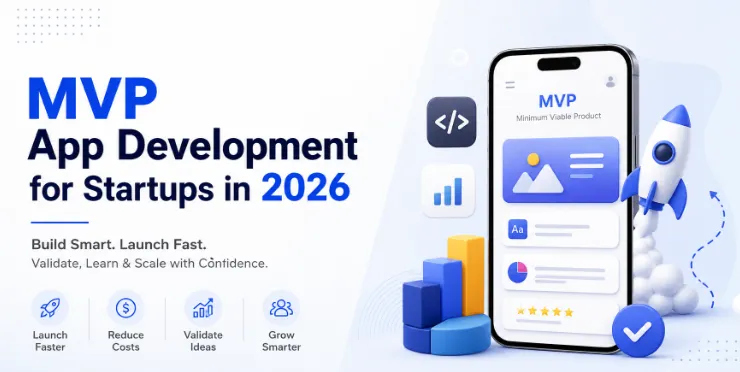

The startup ecosystem in 2026 is becoming increasingly competitive, with founders under pressure to validate ideas quickly, manage limited budgets, and deliver products that solve real customer problems. Building a complete application from the beginning can require significant time, resources, and financial investment. This is where MVP App Development has become an essential approach for startups looking to test concepts, gather user feedback, and improve products based on real market needs.
A Minimum Viable Product (MVP) allows startups to launch a simplified version of an application with core features that address the primary user problem. Instead of investing heavily in a fully developed product without knowing how customers will respond, businesses can create an MVP, measure demand, and make informed decisions for future development.
In 2026, advancements in artificial intelligence, low-code platforms, cloud infrastructure, and user-focused design are changing how startups approach MVP development. Understanding current trends, effective strategies, and cost considerations can help entrepreneurs build smarter products while reducing unnecessary risks.
What Is MVP App Development?
MVP App Development is the process of creating an application with only the essential features required to solve a specific user problem and validate a business idea. The goal is not to build a complete product immediately but to create a functional version that allows startups to learn from real users.
An MVP typically includes:
- Core functionality that addresses the main customer need
- A simple and user-friendly interface
- Essential technical features
- Analytics tools to measure user behavior
- Feedback mechanisms for continuous improvement
For example, a startup planning a food delivery application may not initially develop advanced recommendation systems, loyalty programs, or multiple payment options. Instead, the MVP may focus on restaurant listings, ordering, basic payments, and delivery tracking.
The insights collected from early users help founders determine which features are valuable and which improvements should be prioritized.
Why MVP App Development Matters for Startups in 2026
The startup environment continues to change rapidly. Customer expectations, technology trends, and market competition make traditional product development approaches more challenging.
1. Faster Market Validation
One of the biggest advantages of an MVP is the ability to test a business idea before making large investments. Startups can understand whether customers actually need the solution and identify potential improvements early.
Launching an MVP mobile app provides real-world data that cannot always be obtained through surveys or assumptions. User behavior, engagement rates, and feedback reveal whether the product has market potential.
2. Reduced Development Risks
Developing a full-scale application without validation can result in wasted resources if the product does not meet user expectations. MVP development reduces this risk by allowing startups to experiment with smaller investments.
Instead of building dozens of features, businesses can focus on solving one important problem effectively.
3. Better Product Decisions
An MVP creates a learning cycle:
- Build a basic product
- Release it to target users
- Collect feedback
- Analyze results
- Improve the application
This approach helps startups make decisions based on customer data rather than assumptions.
4. Easier Investor Communication
Investors often want evidence that a startup idea has potential. A working MVP can demonstrate customer interest, product functionality, and early traction.
While an MVP does not guarantee investment success, it can provide valuable proof that supports a startup’s growth strategy.
Key MVP App Development Trends in 2026
Technology continues to influence how startups design and develop MVP products. Several trends are shaping the future of MVP development.
1. AI-Powered MVP Development
Artificial intelligence is becoming an important part of modern application development. Startups are increasingly using AI tools for tasks such as:
- Automated testing
- User behavior analysis
- Personalized recommendations
- AI-powered chat support
- Content generation
- Predictive analytics
AI can help startups create smarter MVPs while reducing development complexity. However, businesses must carefully evaluate whether AI features directly improve the user experience rather than adding unnecessary complexity.
2. Low-Code and No-Code Development
Low-code and no-code platforms are gaining popularity because they allow startups to create prototypes and basic applications faster.
These platforms can help founders:
- Test ideas quickly
- Build internal tools
- Create early prototypes
- Reduce initial development expenses
However, complex applications with advanced customization, security requirements, or scalability needs may still require professional development expertise.
3. Cloud-Based MVP Solutions
Cloud technology enables startups to build scalable applications without investing heavily in physical infrastructure.
Cloud platforms provide:
- Flexible storage solutions
- Faster deployment
- Improved reliability
- Easier scalability
- Cost-efficient resource management
A cloud-based MVP can grow alongside the startup as user demand increases.
4. Focus on User Experience (UX)
In 2026, users expect simple, fast, and intuitive digital experiences. Startups are prioritizing UX research even during the MVP stage.
A successful MVP is not only about having fewer features. It is about delivering the right features in a way that users can easily understand and use.
5. Cross-Platform Application Development
Many startups are choosing cross-platform development approaches to reach Android and iOS users with fewer resources.
Instead of developing separate applications for different operating systems, startups can create applications that work across multiple platforms. This can reduce development time and help businesses reach a wider audience during the validation stage.
Effective Strategies for MVP App Development
Creating an MVP requires careful planning. A successful MVP is not simply a smaller version of a complete application; it is a strategic tool for learning and improvement.
1. Define the Core Problem
Before development begins, startups should clearly identify the problem they want to solve.
Questions to consider include:
- Who is the target audience?
- What challenge does the application solve?
- Why would users choose this solution?
- What is the minimum functionality required?
A clear problem statement helps prevent unnecessary features from entering the initial product.
2. Prioritize Essential Features
Feature selection is one of the most important parts of MVP development.
Startups should categorize features into:
- Must-have features
- Useful but optional features
- Future enhancements
The MVP should focus only on features necessary to test the core idea.
Adding too many features early can increase development costs, delay launch, and make it harder to understand which elements create value.
3. Conduct Market Research
Before investing in development, startups should analyze:
- Competitor products
- Customer expectations
- Market demand
- Industry trends
Research helps founders identify opportunities and avoid building products that lack differentiation.
4. Choose the Right Technology Approach
The technology stack should support the startup’s current needs while allowing future growth.
Important considerations include:
- Application performance
- Security requirements
- Scalability
- Development speed
- Maintenance needs
Working with an experienced App development company can help startups evaluate technical options and choose suitable solutions based on their goals.
5. Collect and Analyze User Feedback
An MVP should always include a method for collecting user insights.
Feedback can come from:
- User reviews
- Surveys
- Analytics data
- Customer interviews
- Usage patterns
This information helps startups decide which improvements should be implemented in future versions.
Cost Insights for MVP App Development in 2026
The cost of building an MVP varies depending on several factors, including application complexity, features, technology requirements, and development approach.
There is no fixed price for MVP development because every startup has different requirements. However, understanding the factors that influence costs can help businesses plan their budgets.
Factors Affecting MVP Development Cost
1. Application Complexity
A simple application with basic functionality requires fewer resources compared to a platform involving advanced features such as AI, real-time communication, payment systems, or location tracking.
Examples:
- Basic information-based applications usually require less development effort.
- Marketplace, healthcare, fintech, or social networking applications often require more planning and testing.
2. Number of Features
The number of features directly impacts development time and cost.
Common MVP features include:
- User registration
- Profile management
- Search functionality
- Notifications
- Payment integration
- Basic analytics
Startups should avoid unnecessary features during the initial phase and focus on validating the main concept.
3. Design Requirements
A well-designed interface improves user adoption. However, highly customized designs require additional research, testing, and development effort.
MVP design should focus on:
- Clear navigation
- Simple workflows
- Accessibility
- Consistent user experience
4. Development Team Structure
The cost may vary depending on whether a startup works with:
- In-house developers
- Freelancers
- A software development partner
- An offshore or distributed team
Each approach has different advantages depending on the startup’s resources and technical requirements.
5. Testing and Maintenance
Testing is an important part of MVP development. Quality assurance helps identify issues before users encounter them.
After launch, startups should also consider ongoing expenses such as:
- Bug fixes
- Security updates
- Performance improvements
- Feature enhancements
How Startups Can Build an Affordable MVP App
Many founders search for affordable MVP app development options because early-stage businesses often operate with limited budgets. Reducing costs does not mean creating a low-quality product; it means making smarter decisions about priorities.
Some ways to manage MVP costs include:
Start With a Clear Scope
A detailed project scope prevents unnecessary changes during development. Startups should define the main objective and avoid expanding requirements too early.
Use Existing Tools and Services
Instead of building every component from scratch, startups can use reliable third-party solutions for:
- Authentication
- Payments
- Cloud storage
- Analytics
- Communication features
This approach can speed up development and reduce expenses.
Test Early
Launching early helps startups identify problems before investing heavily in additional features.
A smaller MVP with real user feedback is often more valuable than a large application built without market validation.
Plan for Future Growth
While the MVP should remain simple, the technical foundation should allow future improvements. Choosing scalable technologies can reduce the need for complete redevelopment later.
Common Mistakes Startups Should Avoid During MVP Development
Building Too Many Features
One of the most common mistakes is trying to create a complete product immediately. An MVP should focus on learning, not perfection.
Ignoring User Feedback
A startup should treat the MVP as a continuous improvement process. Ignoring customer feedback can result in developing features users do not need.
Choosing Technology Without Planning
Selecting technology only based on popularity can create future challenges. Startups should consider their product goals, scalability requirements, and available resources.
Neglecting Security
Even early-stage applications should consider basic security practices, especially when handling user information, payments, or personal data.
Future of MVP App Development for Startups
The future of MVP App Development will continue to focus on speed, flexibility, and customer-driven innovation. Emerging technologies will make it easier for startups to experiment with ideas, but successful MVPs will still depend on understanding user problems.
In 2026 and beyond, startups are likely to focus on:
- AI-enhanced applications
- Faster prototype development
- Data-driven decision-making
- Personalized user experiences
- Scalable cloud solutions
- Continuous product improvement
The role of an App development company is also evolving as businesses look for technical guidance, strategic planning, and efficient development approaches rather than simply coding services.
Conclusion
MVP App Development remains one of the most effective approaches for startups looking to transform ideas into practical digital products. By focusing on essential features, testing market demand, and learning from users, startups can reduce risks and make better product decisions.
In 2026, successful MVP strategies will combine modern technology trends with a strong understanding of customer needs. Whether a startup is building a mobile application, SaaS platform, marketplace, or digital service, an MVP provides a structured path from concept validation to long-term growth.
The key is not building the biggest application first. It is building the right solution, learning from real users, and continuously improving based on evidence.



























Sign in to leave a comment.