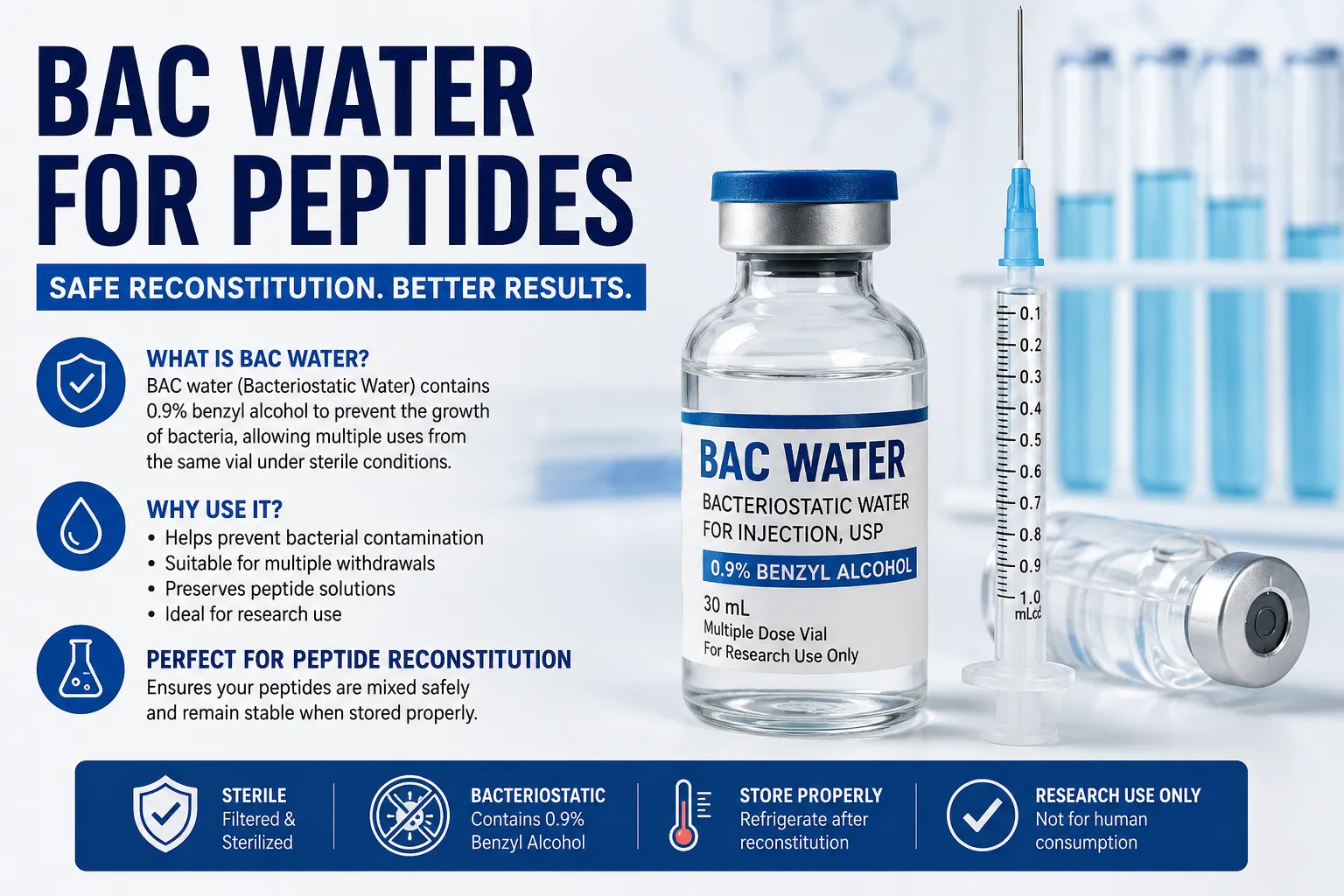

When working with research peptides, choosing the right solution for reconstitution is essential. BAC water for peptides is widely used because it helps maintain sterility and allows multiple withdrawals from the same vial when handled properly.
Whether you're involved in laboratory research or handling peptide preparations for scientific purposes, understanding how bacteriostatic water works can help ensure accurate preparation and reduce the risk of contamination.
What Is BAC Water?
BAC water, short for bacteriostatic water, is sterile water containing 0.9% benzyl alcohol as a preservative. The benzyl alcohol inhibits bacterial growth, making the solution suitable for multiple uses from a single vial under proper sterile conditions.
Unlike sterile water for injection, bacteriostatic water is designed for repeated access after opening, provided it is stored and handled correctly.
Why Use BAC Water for Peptides?
Researchers frequently choose BAC water for peptides because it offers several important benefits:
- Helps reduce bacterial contamination
- Suitable for multiple withdrawals from the same vial
- Preserves peptide solutions when handled correctly
- Easy to use for peptide reconstitution
- Available in convenient vial sizes
Using high-quality bacteriostatic water contributes to more consistent laboratory procedures and reliable peptide preparation.
How to Reconstitute Peptides Using BAC Water
Proper peptide reconstitution requires careful handling and sterile technique.
Step 1: Gather Supplies
You'll need:
- BAC water
- Lyophilized peptide vial
- Sterile syringe
- Alcohol swabs
- Clean working surface
Step 2: Clean the Vials
Disinfect both vial stoppers using alcohol swabs before inserting the needle.
Step 3: Draw the BAC Water
Using a sterile syringe, withdraw the desired amount of bacteriostatic water.
Step 4: Inject Slowly
Allow the water to flow gently down the inside wall of the peptide vial instead of spraying directly onto the powder.
Step 5: Mix Carefully
Avoid shaking. Instead, gently swirl the vial until the peptide has completely dissolved.
Storage Tips for Reconstituted Peptides
After mixing peptides with BAC water:
- Store in a refrigerator according to the peptide manufacturer's recommendations.
- Keep the vial sealed when not in use.
- Protect from excessive heat and direct sunlight.
- Always use sterile syringes for every withdrawal.
- Discard the solution if discoloration or contamination is observed.
Following proper storage practices helps maintain solution quality throughout its intended use period.
BAC Water vs. Sterile Water
| Feature | BAC Water | Sterile Water |
|---|---|---|
| Contains preservative | Yes | No |
| Multiple withdrawals | Yes | Generally No |
| Benzyl alcohol | Yes | No |
| Common use | Peptide reconstitution | Single-use preparations |
Understanding the difference helps researchers choose the appropriate solution for their specific protocols.
Choosing High-Quality BAC Water
When purchasing BAC water for peptides, consider the following:
- Sterile manufacturing standards
- Secure packaging
- Clearly labeled expiration date
- Tamper-evident seal
- Trusted supplier reputation
Quality products help support safer and more reliable laboratory workflows.
Safety Considerations
Always follow laboratory best practices when handling bacteriostatic water and peptides.
Important reminders include:
- Maintain sterile technique.
- Never reuse needles or syringes.
- Store products according to manufacturer recommendations.
- Inspect each vial before use.
- Follow all applicable research and safety guidelines.
BAC water is intended to help maintain sterility during peptide preparation but does not replace proper aseptic procedures.
Frequently Asked Questions
Can BAC water be used for all peptides?
Many research peptides are commonly reconstituted with bacteriostatic water, but always follow the recommendations provided for the specific peptide.
How long does BAC water last after opening?
Shelf life after opening depends on the manufacturer's instructions and proper storage practices. Always refer to the product labeling.
Why does BAC water contain benzyl alcohol?
The benzyl alcohol acts as a preservative that inhibits bacterial growth, allowing multiple withdrawals under sterile conditions.
Should peptides be shaken after reconstitution?
No. Gentle swirling is generally recommended to minimize potential damage to sensitive peptide structures.
Final Thoughts
Using BAC water for peptides is a standard practice in many research environments because it supports sterile peptide reconstitution and convenient multiple withdrawals when proper handling techniques are followed. By selecting high-quality bacteriostatic water, practicing sterile procedures, and storing reconstituted peptides correctly, researchers can help maintain consistency and reliability in their work.
Whether you're preparing peptides for laboratory research or expanding your knowledge of peptide handling, understanding the role of BAC water is an important step toward proper peptide preparation and storage.




























Sign in to leave a comment.