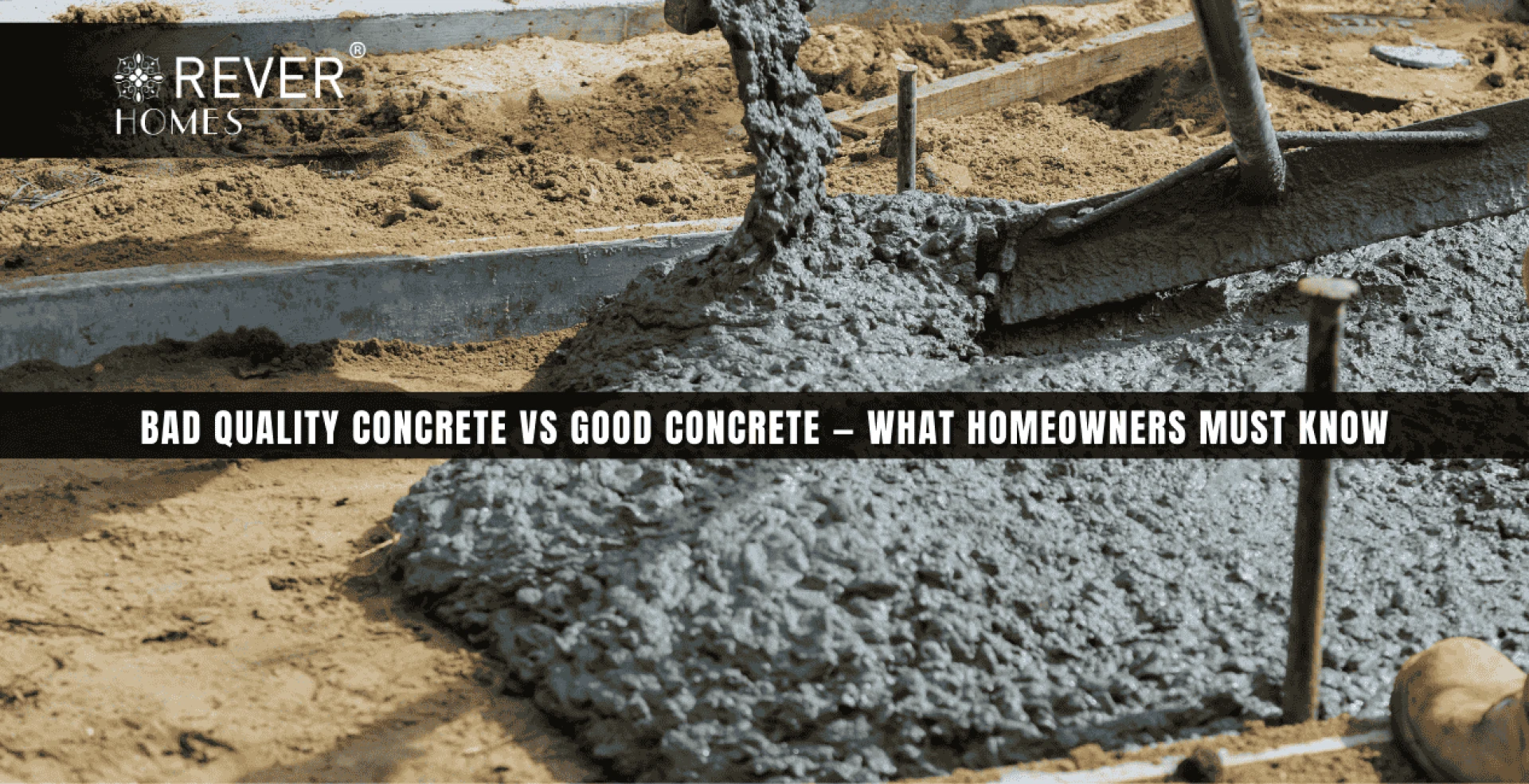

When building a home, concrete is the backbone of your structure. From foundations and columns to slabs and beams, the strength and durability of your home depend largely on the quality of concrete used. Unfortunately, many homeowners don’t realize how dangerous poor-quality concrete can be until cracks, dampness, or structural failures appear years later.
In this article, we’ll help you understand the difference between good concrete and bad concrete, why quality control matters, and how the right mix ensures long-term safety for your home.
What is “Good Quality Concrete”?
Good quality concrete is strong, well-designed, properly mixed, and correctly cured. It follows engineering standards and maintains consistency throughout the structure.
Key Features of Good Concrete
- Correct Grade of Concrete Used (M20, M25, M30 based on structural design)
- Proper Batching — measured ratio of cement, sand, aggregates, and water
- Right Water–Cement Ratio
- Use of Approved Materials
- Vibration and Compaction Done Correctly
- Proper Curing for Required Days
- Supervision by Skilled Engineers
Good concrete ensures:
- Strong structural strength
- Long life of the building
- No cracks or settlement issues
- Better resistance to weather and load
What is “Bad Quality Concrete”?
Bad concrete is weak, inconsistent, and carelessly prepared. It is often done to save cost, time, or due to lack of engineering supervision.
Signs of Bad Concrete
- Incorrect grade of concrete used
- Hand mixing without proper ratio
- Too much water added “to make it flow easily”
- Low cement content
- Poor compaction (air gaps left inside)
- No curing or improper curing
- Use of inferior quality sand or aggregates
This leads to:
- Early cracks in walls and slabs
- Weak columns and beams
- Water seepage and dampness
- Faster deterioration of structure
- Risk to safety of occupants
Grade of Concrete — Why It Matters
Every structure requires a specific grade of concrete depending on load and design.
Common residential grades:
- M20 — General Residential Use
- M25 / M30 — For stronger structural components, high-load zones
Using a lower grade than recommended is extremely risky. It reduces strength and life of the structure significantly.
Batching — The Science Behind Strong Concrete
Good concrete requires accurate measurement of:
- Cement
- Sand
- Aggregate
- Water
Machine Batching = Accurate & Strong
Manual Batching = Guesswork + Weak Concret
Many local contractors do hand mixing, which leads to:
- Unbalanced ratios
- Weak strength
- Poor consistency
Always insist on ready-mix concrete or machine batched concrete.
Curing — The Most Ignored Step
Even the best concrete fails if not cured properly.
Concrete must be kept moist for 7–14 days, depending on weather. Without curing:
- Concrete loses strength
- Cracks develop
- Surface becomes dusty and weak
Good builders never compromise on curing.
Cheap Concrete Costs More in the Long Run
Many people think saving money on concrete means reducing cost. Reality: Cheap concrete = Expensive repairs + Risk to safety
Poor quality concrete results in:
- Structural repairs
- Waterproofing expenses
- Re-construction in worst cases
A strong home is built once — compromising concrete is never worth it.
Final Advice for Homeowners
If you’re planning to build a home:
- Always choose the right grade of concrete
- Ensure proper batching
- Supervise work or hire professionals
- Never skip curing
- Work with a trusted construction company
Build Strong. Build Safe. Build for Life.
At Rever Homes, we ensure strict concrete quality control, engineering-approved grades, professional supervision, and zero-compromise construction standards — so your home stands strong for generations.


















Sign in to leave a comment.