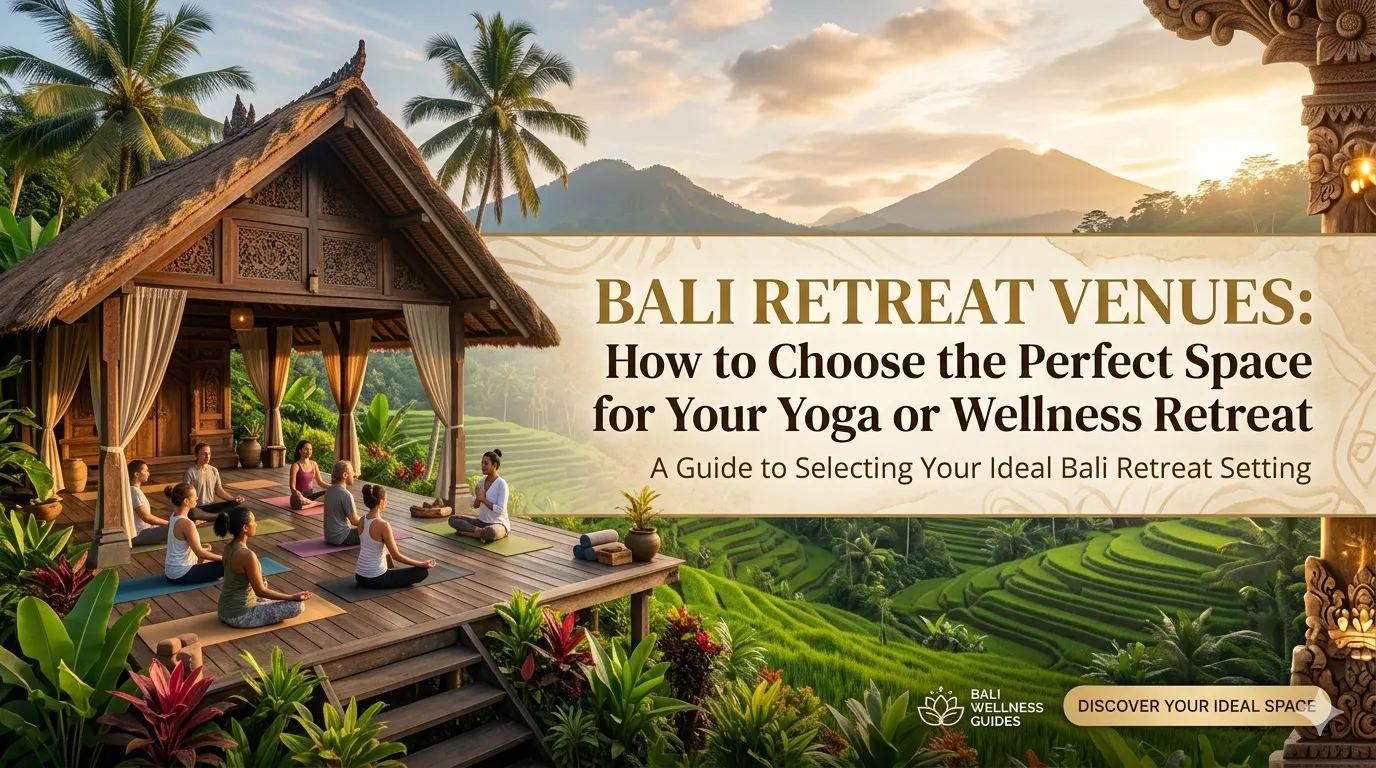

If you have ever tried to search for the perfect retreat venue in Bali, you already know how overwhelming the options can be. There are hundreds of properties listed across the island, each promising a transformational setting for your next yoga or wellness event. But not every venue that looks beautiful in photographs will actually function well as a retreat space. Choosing the right Bali retreat venues requires a combination of practical thinking, energetic sensitivity, and logistical wisdom. This article breaks down exactly what to look for so you can make the best possible choice for your group.
Understanding the Different Types of Bali Retreat Venues
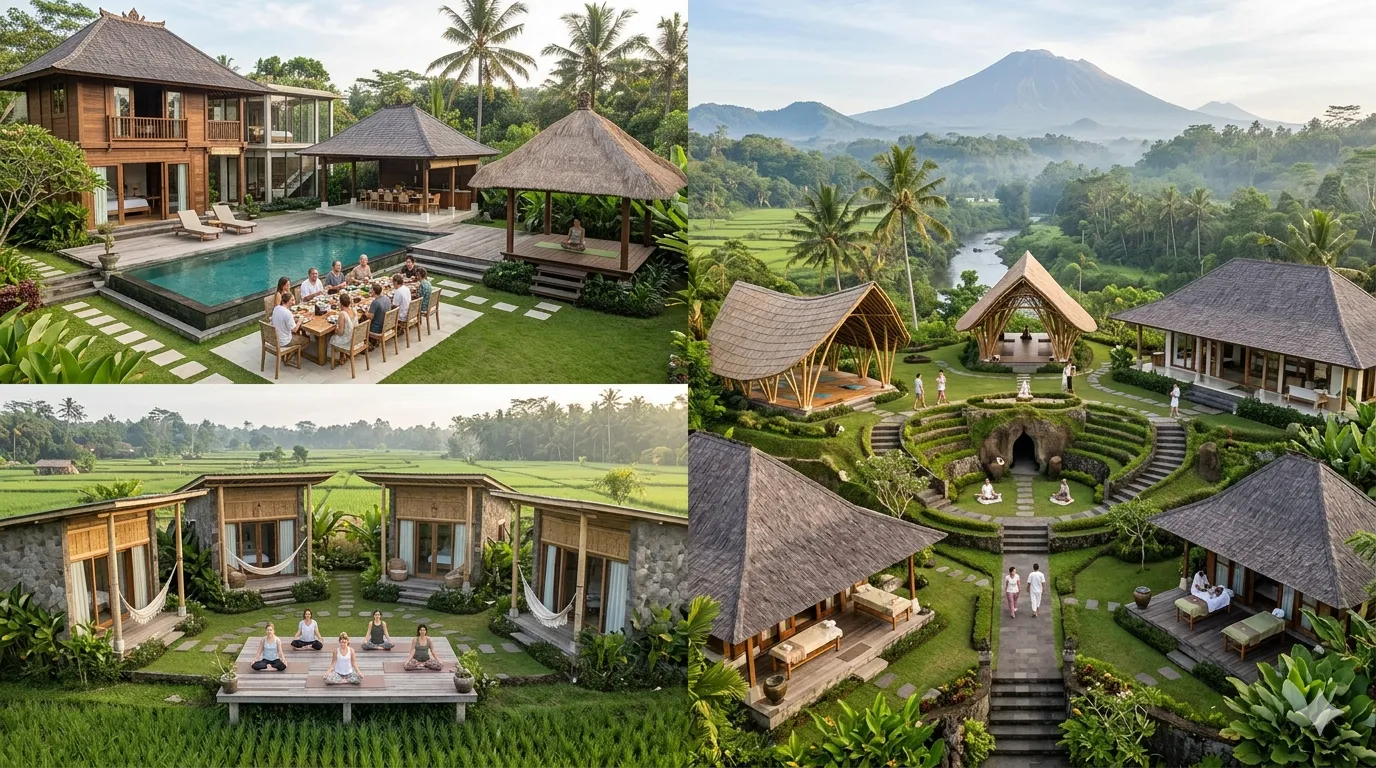
Bali retreat venues broadly fall into a few distinct categories. Private villa complexes are the most popular choice for smaller groups of 8 to 20 guests. These properties offer an intimate, home-away-from-home atmosphere where your group has exclusive use of the entire space. They typically come with a dedicated staff, kitchen team, and pool, and can be transformed into a complete retreat campus with yoga shalas, dining pavilions, and garden ceremony spaces.
At the other end of the spectrum, dedicated wellness retreats and eco-retreat centers are designed from the ground up for retreat hosting. These properties often have multiple yoga studios, professional treatment rooms, meditation caves, and on-site healing practitioners. They are ideal for larger groups or for retreat leaders who want infrastructure that is already in place without needing to set anything up.
There is also a growing category of boutique yoga accommodation in Bali — small properties of 4 to 8 rooms that work beautifully for micro-retreats and intimate immersions. These tend to have a more personal energy and are particularly popular for women's retreats and retreat accommodation in Bali for solo travelers.
Top Qualities to Look for in a Yoga Retreat Venue in Bali
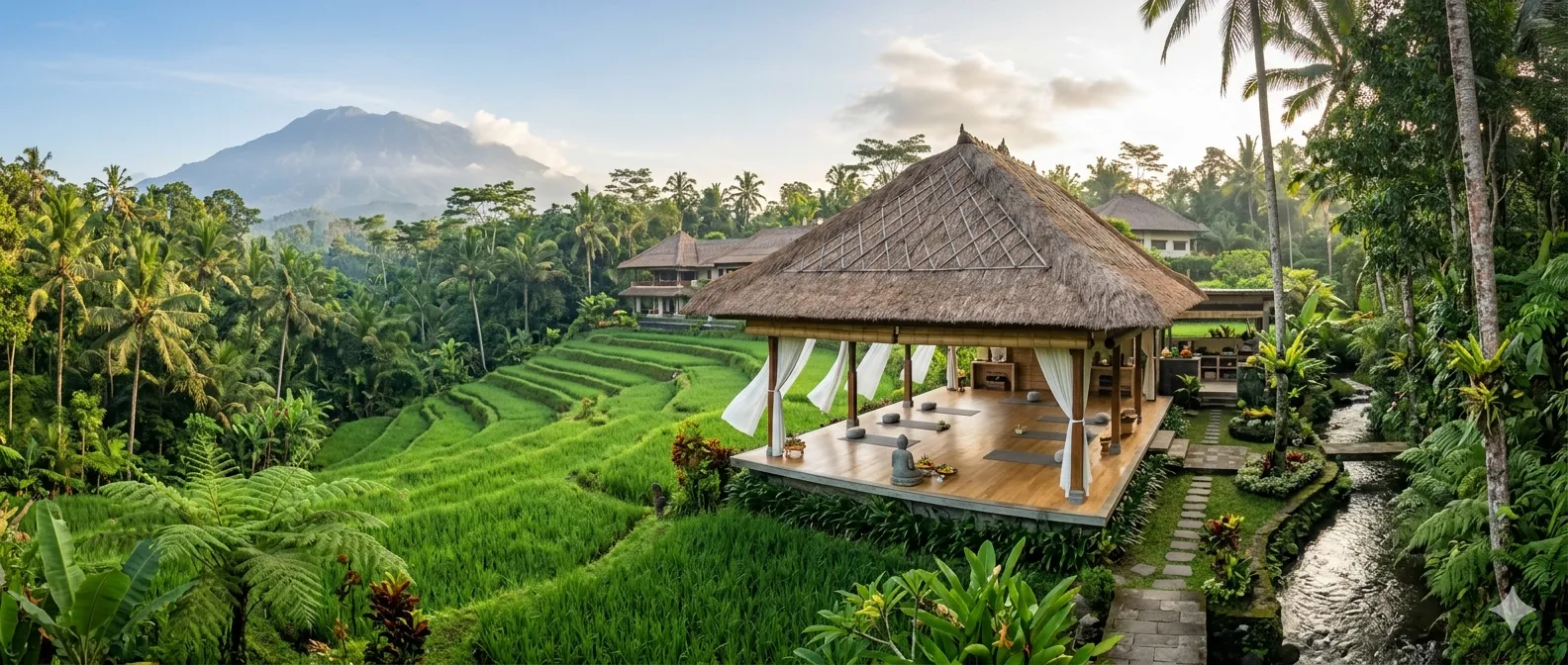
When evaluating any yoga retreat venue, start with the yoga shala itself. The practice space is the heart of your retreat, and it needs to be large enough for your group to move freely, have good natural light and ventilation, and feel energetically clean and inspiring. Many Bali venues feature open-air shalas overlooking rice fields or gardens, which creates an extraordinary backdrop for morning practice.
Natural surroundings matter enormously. Retreat guests are paying for an immersive experience that takes them out of their everyday environment. A venue nestled in the jungle with birdsong, flowing water, and green canopy above will naturally support the kind of inner stillness that retreats aim to cultivate. This is one of the primary reasons that Ubud remains the most sought-after location for retreat venues in Bali.
Practical considerations are equally important. Check the distance from the nearest hospital or medical facility in case of emergencies. Assess the quality of the internet connection if guests will need to stay connected. Understand the kitchen's capacity to accommodate different dietary requirements. Find out what happens if it rains heavily — open-air spaces can be beautiful in good weather but problematic without adequate shelter.
The Best Areas in Bali for Retreat Venues
Ubud and its surrounding villages — Tegallalang, Payangan, Kedewatan, Keliki — remain the gold standard for retreat venues in Bali. The combination of spiritual depth, natural beauty, and wellness infrastructure here is unmatched anywhere else on the island. If you are running a yoga, meditation, or healing retreat, Ubud should be your default starting point.
Canggu has emerged as a vibrant alternative, particularly for fitness retreats, surf-and-yoga combinations, and creative wellness activities bali. The energy here is younger and more kinetic than Ubud, and the proximity to the beach adds a dimension that many retreat leaders and guests love. Retreat accommodation in Bali's Canggu area tends to be more contemporary in style, with strong coffee shops, vegan restaurants, and wellness studios nearby.
For those seeking total seclusion, areas like Sidemen, Munduk, and the Jatiluwih rice terraces offer stunning settings that feel genuinely remote. These locations are perfect for deep nature immersions and silent retreats but require more logistical planning in terms of transport and catering.
How to Evaluate a Venue Before Booking
Never book a venue without either visiting it in person or working with a trusted Bali retreat organizer who knows the property well. Online photographs can be expertly curated to hide less appealing aspects of a venue. When conducting your site inspection, pay attention to the condition of the rooms, the quality of the mattresses and linens, the energy of the staff, the noise levels at different times of day, and the overall maintenance of the property.
Ask for a detailed breakdown of what is included in the rental price. Some venues include a dedicated chef, daily cleaning, yoga props, sound systems, and a retreat coordinator. Others are essentially bare bones and require you to source everything separately. Understanding exactly what you are getting ensures you can accurately estimate your total retreat costs.
How Soul Bliss Journeys Sources the Best Venues for Your Retreat
Soul Bliss Journeys has spent years cultivating relationships with the finest retreat venues in Bali across every style and price point. As specialists in Bali retreat venue sourcing and management, their team personally vets every property they recommend and has first-hand knowledge of how each space performs during an actual retreat. Whether you are looking for a luxurious jungle villa in Ubud, a beachside retreat accommodation in Bali, or an eco-conscious wellness center in the mountains, their team will match you with the ideal space for your vision.
Frequently Asked Questions
Q: What is the average rental cost of a retreat venue in Bali for a week?
A: Venue rental costs in Bali vary widely. A private villa suitable for 10 to 15 guests might cost between USD 3,000 and USD 10,000 per week depending on location and amenities. Dedicated retreat centers with full facilities typically charge more. Getting accurate quotes through a local retreat planning service ensures you get fair pricing.
Q: Are Bali retreat venues available year-round?
A: Yes, most venues in Bali operate year-round. However, the peak dry season from June to September is the most popular time for retreats, and popular venues book up very quickly during this period. January to March, during the wet season, can offer excellent value and a more intimate atmosphere with fewer tourists.
Q: Can retreat venues in Bali accommodate dietary restrictions like vegan or gluten-free?
A: The vast majority of Bali retreat venues are well-experienced with diverse dietary requirements. Vegan, vegetarian, raw food, and gluten-free menus are widely available, and many venues take pride in their plant-based Balinese cuisine. Always communicate dietary needs clearly during the booking process.
Q: What is the minimum group size for booking a retreat venue in Bali?
A: Most private villa venues in Bali have a minimum occupancy requirement that effectively means you need at least 6 to 10 guests to make the booking viable. Smaller groups can sometimes book individual rooms within a shared resort-style property. Your retreat planner can advise on the best fit for your numbers.
Q: How do I know if a venue in Bali is legitimate and safe?
A: Working with an established retreat management company in Bali is the safest way to ensure venue legitimacy. Companies like Soul Bliss Journeys have vetted their venue partners, have direct relationships with property owners, and can provide references and direct introductions, protecting you from the risks of booking through unverified online listings.



























Sign in to leave a comment.