

Your bathroom flooring does more than provide a surface to walk on. It influences the entire appearance of the room, affects everyday comfort and plays an important role in managing moisture and preventing slips. Whether you are renovating a compact ensuite, designing a luxurious master bathroom or refreshing a family bathroom, the right flooring can make a remarkable difference.
From elegant marble-effect porcelain to warm wood-look tiles and contemporary geometric patterns, there are numerous ways to transform your bathroom without compromising practicality.
However, choosing bathroom flooring requires more than selecting a colour or pattern. Water resistance, slip resistance, durability, maintenance and the size of your space should all influence your decision. This guide explores 15 bathroom flooring ideas to help you find a style that balances aesthetics with everyday functionality.

1. Marble-Effect Porcelain Tiles for Timeless Elegance
Marble-effect porcelain tiles are an excellent choice for homeowners who want a sophisticated bathroom without the maintenance requirements associated with natural marble.
Their delicate veining, soft white backgrounds and grey or beige patterns create an elegant appearance that complements modern and traditional interiors. Large-format marble-effect tiles can also reduce the number of visible grout lines, creating a more continuous finish.
Porcelain is particularly suitable for moisture-prone spaces. According to the Tile Council of North America, porcelain tiles are defined by a water absorption rate of 0.5% or less under the relevant test method. This low absorption makes them a practical option for bathroom floors.
Choose a matte or appropriately textured finish where wet-floor safety is a priority.
2. Large-Format Tiles for a Spacious Appearance
Large-format flooring can make a small bathroom appear more open and less visually cluttered. Tiles measuring 600 × 600 mm or larger are popular options for contemporary bathroom designs.
Because larger tiles generally create fewer grout joints across the same floor area, they can produce a cleaner, more seamless appearance. Light grey, cream, beige and soft white finishes work particularly well in bathrooms with limited natural light.
However, large tiles require a properly prepared, level substrate and careful installation. In small shower areas, smaller tiles may be more suitable because they can accommodate the slopes needed for effective drainage.
3. Wood-Look Porcelain Tiles for Natural Warmth
If you love the appearance of timber but need flooring that performs well in a humid environment, wood-look porcelain tiles offer an attractive alternative.
These tiles replicate the grain, knots and colours of natural wood while providing the low water absorption associated with porcelain. They work beautifully with white sanitaryware, brushed brass taps, neutral walls and wooden vanity units.
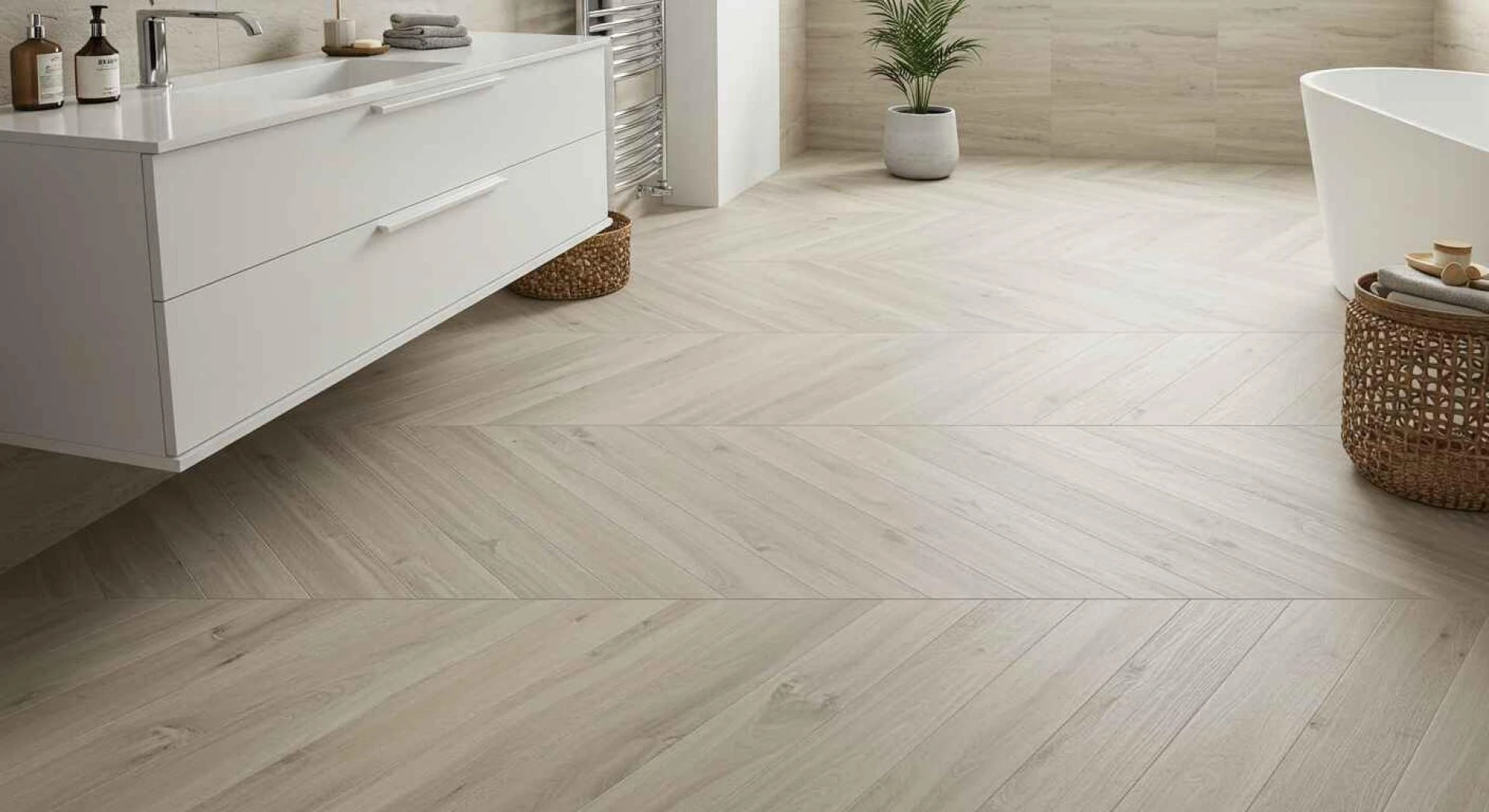
For a cohesive design, lay rectangular wood-effect tiles in a plank pattern. Lighter oak shades can brighten a small bathroom, while darker walnut finishes create a richer, more luxurious atmosphere.
Choose a floor-rated product with suitable slip-resistance characteristics rather than selecting tiles solely for their wood appearance.
4. Natural Stone Tiles for an Organic Finish
Natural stone flooring brings texture, depth and individuality to a bathroom. Travertine, limestone, slate and marble each offer distinctive patterns that can make a space feel more connected to nature.
Travertine and limestone complement warm, neutral interiors, while slate provides a darker, more dramatic appearance. Marble is ideal for sophisticated spaces featuring elegant fixtures and understated accessories.
Natural stone does require additional consideration. Depending on the stone, sealing may be necessary to reduce staining and moisture penetration. Cleaning products must also be compatible with the material.
Before purchasing, confirm the stone's suitability for wet areas, its maintenance requirements and its slip performance when wet.
5. Geometric Tiles for a Contemporary Statement
Geometric bathroom flooring is perfect for adding personality without covering every wall in decorative patterns.
Hexagons, diamonds, chevrons and other angular designs can turn the floor into a focal point. Black-and-white geometric tiles create a classic monochrome look, while muted greens, terracotta and cream offer a softer contemporary style.
In smaller bathrooms, consider using a restrained colour palette to prevent the pattern from overwhelming the space. Keep walls and fixtures relatively simple so the flooring remains the main design feature.
For the best result, plan the tile layout before installation to ensure the pattern aligns neatly around doorways, vanities and other fixtures.
6. Checkerboard Flooring for Classic Character
Checkerboard flooring has remained popular because it combines visual impact with timeless appeal. Although black and white is the traditional combination, beige and cream, grey and white, or terracotta and ivory can create a more subtle effect.
Large checkerboard tiles suit spacious bathrooms, while smaller squares can introduce character into compact powder rooms.
To modernise the look, pair the flooring with simple wall tiles, streamlined brassware and understated lighting. A traditional pattern can feel contemporary when combined with clean lines and uncluttered styling.
7. Concrete-Look Tiles for Industrial Minimalism
Concrete-look porcelain tiles are ideal for bathrooms inspired by industrial, minimalist or contemporary architecture.
Their understated grey tones and subtle surface variations create a calm backdrop for black fixtures, frameless shower screens and floating vanities. They are also versatile enough to complement warmer materials such as oak cabinetry and brass fittings.
A matte finish can help soften the appearance of the floor while adding visual texture. When selecting a product, check its wet slip-resistance rating and confirm that it is designed for floor installation.
For a cohesive result, combine concrete-look flooring with neutral walls and a limited selection of materials.
8. Terrazzo Flooring for Colour and Texture
Terrazzo-inspired flooring introduces a distinctive mixture of stone-like chips against a neutral background. The pattern can include subtle flecks or bold combinations of contrasting colours.
This makes terrazzo a useful option for homeowners who want something more decorative than plain flooring without committing to an intricate geometric design.
Porcelain terrazzo-look tiles can provide the appearance of traditional terrazzo with the practical benefits of a manufactured tile surface. They pair particularly well with white walls, colourful vanity units and simple contemporary fixtures.
For smaller bathrooms, choose a design with a restrained background and moderate pattern variation to maintain visual balance.
9. Slate-Look Tiles for a Dramatic Finish
Dark slate-look flooring creates depth and contrast, particularly in bathrooms featuring white basins, pale walls and glass shower enclosures.
Charcoal and deep grey shades can make a large bathroom feel sophisticated, while textured surfaces introduce a natural, understated character. Porcelain alternatives can reproduce the appearance of slate without requiring the same maintenance as some natural stone products.
Dark flooring may show dust, soap residue or water marks differently depending on its finish, so consider the cleaning requirements before making a final choice.
Use adequate lighting and contrasting wall colours to prevent the space from feeling too dark.
10. Beige and Sand-Coloured Tiles for a Spa-Inspired Bathroom
Beige, sand and warm cream flooring can create a relaxing atmosphere reminiscent of a spa. These shades work particularly well with natural textures, soft lighting, wooden vanities and brushed gold or brass fittings.
Unlike stark white flooring, warmer neutrals can make the bathroom feel more inviting while remaining versatile enough to suit different interior styles.
For added depth, combine a plain beige floor with subtly textured wall tiles or a contrasting shower feature. Using similar undertones across the room helps create a coordinated appearance without making every surface identical.
Matte porcelain in a warm neutral shade is a practical starting point for this style.
11. Hexagonal Floor Tiles for Visual Interest
Hexagonal tiles offer a distinctive alternative to conventional square and rectangular flooring. Their six-sided shape introduces movement and can complement both vintage-inspired and contemporary bathrooms.
Small hexagons can create detailed patterns, while larger formats offer a more modern appearance. White hexagons with dark grout produce a striking contrast, whereas pale grey or beige designs create a softer effect.
Smaller tiles also provide more grout joints, which can be useful in certain sloped shower-floor layouts when the complete system is correctly designed and installed.
Remember that grout colour influences the finished appearance: matching grout creates a more unified surface, while contrasting grout emphasises the pattern.
12. Mosaic Flooring for Shower Areas
Mosaic tiles are particularly useful for shower floors because their smaller dimensions allow installers to create the slopes required for drainage.
Available in porcelain, ceramic, glass and natural stone, mosaics can introduce subtle texture or decorative detail. Pebble-style mosaics are popular for organic bathrooms, while small square mosaics suit minimalist and traditional designs.
Not every mosaic is appropriate for every wet area. The material, surface finish, grout joints and installation system all influence performance.
Choose a product specifically recommended for the intended floor application and verify its wet slip resistance. Correct waterproofing beneath the tiles is equally important because grout alone does not provide a waterproof shower system.
13. Terracotta-Look Tiles for Rustic Charm
Terracotta-look flooring brings warmth and an earthy character to bathrooms inspired by Mediterranean, farmhouse or rustic interiors.
Its reddish-brown, clay and muted orange tones complement cream walls, timber cabinetry, natural stone and textured accessories. Porcelain tiles with a terracotta appearance offer an alternative to traditional clay products for homeowners seeking a lower-absorption floor finish.
To prevent the room from appearing overly busy, combine the flooring with simple fixtures and a limited colour palette.
This style is particularly effective when the aim is to create a welcoming bathroom that feels less clinical and more connected to natural materials.
14. Patterned Encaustic-Look Tiles for Decorative Flooring
Patterned tiles can transform an otherwise simple bathroom into a distinctive space. Encaustic-look designs often feature repeating floral, ornamental or vintage-inspired motifs in colours such as blue, green, black, white and terracotta.
They are ideal for introducing character into guest bathrooms, powder rooms and compact ensuite spaces.
For a balanced design, allow the floor to provide most of the decorative interest and keep surrounding surfaces relatively understated. You can also use patterned tiles to define a specific area, such as the floor beneath a freestanding bath or the entrance to a shower zone.
Manufactured porcelain versions can reproduce intricate patterns while offering the practical advantages of a dense tile body.
15. Mixed-Texture Flooring for a Layered Design
Combining complementary tile finishes can create a more personalised bathroom. For example, a smooth marble-look floor in the main area can transition to a smaller-format textured tile in the shower, provided both products are suitable for their respective applications.
Alternatively, you can combine subtle stone textures with a wood-look vanity or use contrasting tile formats to distinguish different functional zones.
The key is to maintain a consistent colour palette and avoid combining too many competing patterns. Consider the transitions between surfaces, floor levels, drainage and waterproofing before installation.
A well-planned combination can make the bathroom feel thoughtfully designed rather than visually crowded.
How to Choose the Best Bathroom Flooring
With so many attractive options available, the best flooring choice depends on the conditions in your bathroom and how you use the space.
Prioritise Water Resistance
Bathrooms experience regular splashes, humidity and cleaning. Porcelain is a strong option because its defined water absorption rate is no more than 0.5%. However, the tile itself is only one part of the overall floor system.
Waterproofing membranes, suitable adhesives, grout, sealed junctions and properly installed drainage are essential in areas exposed to regular water.
Check Slip Resistance Before Buying
A beautiful floor should also provide appropriate traction when wet. The American National Standard for ceramic tile, ANSI A137.1, specifies a wet dynamic coefficient of friction (DCOF) of 0.42 or greater for applicable tiles recommended for level interior spaces expected to be walked on when wet. This benchmark is not a guarantee against slipping in every condition.
Ask the supplier for the product's technical documentation and suitability for your particular bathroom or shower. Soap, cleaning products, surface wear and water accumulation can all affect real-world slip risk.
Consider Maintenance and Grout Colour
Light-coloured floors can brighten the room, while darker finishes create contrast. However, neither is automatically easier to maintain. The surface texture, pattern, water quality and cleaning routine all influence how visible dirt and marks become.
Grout colour also matters. A complementary shade creates a subtle finish, while contrasting grout highlights individual tiles. Use grout and cleaning products recommended for the specific tile material.
Match the Tile Size to the Space
Large-format tiles can reduce visual interruptions in the main bathroom, but smaller tiles may be more suitable for sloped shower floors. The installer should assess the layout, drainage and substrate before deciding on the format.
Balance Style With Your Budget
Your total flooring cost includes more than the tiles themselves. Allow for preparation, waterproofing, adhesive, grout, cutting, labour and any removal of existing flooring. Natural stone may also require additional sealing and ongoing care.
Comparing the complete installation cost will help you choose a floor that meets your design goals without unexpected expenses.
Conclusion
The right bathroom flooring can transform the entire room, from creating a luxurious marble-inspired retreat to introducing warmth through wood-look porcelain or personality through geometric patterns.
When comparing these 15 ideas, consider how the flooring will perform as well as how it looks. Water absorption, wet slip resistance, maintenance, installation quality and compatibility with your bathroom layout should guide the final decision.
For many bathrooms, porcelain offers an appealing combination of design versatility, durability and low water absorption. Natural stone, mosaics and decorative patterns can also be excellent choices when their specific maintenance and installation requirements are understood.
By combining practical specifications with a carefully chosen style, you can create a bathroom floor that looks beautiful, functions reliably and complements your home for years to come.




















Sign in to leave a comment.