
Key Takeaways:-
- Paint color establishes emotional tone and spatial perception throughout the home.
- Balanced undertones create harmony with flooring, cabinetry, and lighting.
- Neutral foundations offer flexibility while rich hues add character.
- Coordinated trim and ceiling colors strengthen architectural definition.
- Proper finish selection ensures durability and lasting visual impact.
- FAQs
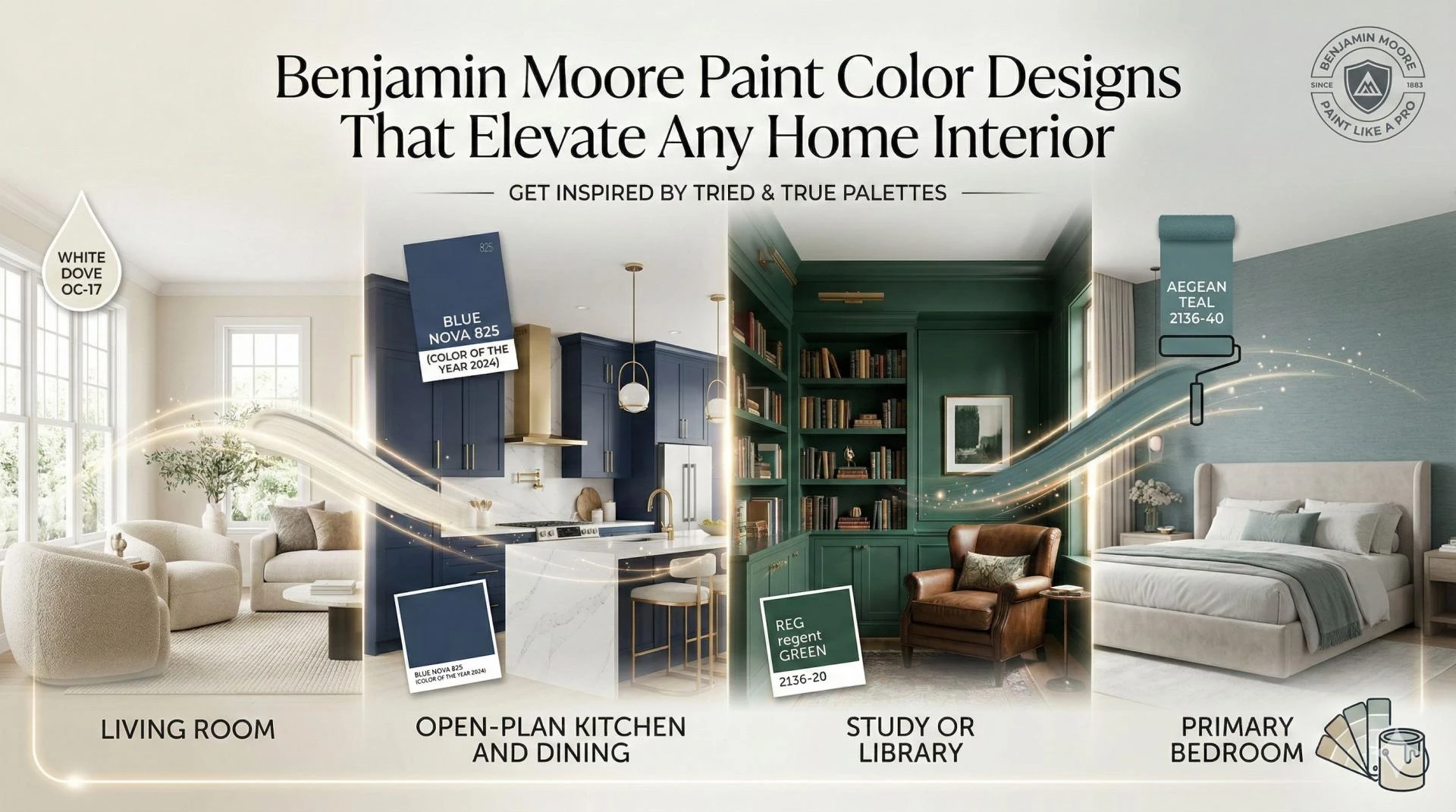
Choosing the right paint color can completely transform the mood, depth, and personality of your living space. The walls of a home are more than simple surfaces. They frame your furniture, reflect your lighting, and quietly influence how every room feels throughout the day. Thoughtful color selection adds warmth, sophistication, and balance in ways that décor alone cannot achieve. Many homeowners gravitate toward Benjamin Moore Paint color designs because of their refined undertones, reliable coverage, and expansive range of hues suited for both classic and contemporary interiors.
Why Paint Color Shapes the Entire Interior Experience
Furniture can be replaced. Accessories can be updated. Wall color, however, sets the emotional tone for everything else in the room. A carefully selected shade can make ceilings appear taller, natural light feel brighter, and compact spaces seem more open. On the other hand, a poorly chosen hue can disrupt harmony and make even beautiful furnishings feel disconnected. When evaluating paint color palettes, it becomes clear that cohesive color planning is the true foundation of elevated interior design.
Timeless Neutrals That Never Feel Ordinary
Neutral shades continue to dominate interior spaces because of their versatility and longevity. Warm whites, soft creams, and balanced greiges provide a calming backdrop that complements wood tones, stone finishes, and metallic accents. What distinguishes Benjamin Moore Paint is the subtle complexity within each neutral. Undertones are carefully balanced so colors feel layered rather than flat. This depth allows minimalist interiors to remain visually interesting without overwhelming the senses.
Introducing Soft Color for Subtle Character
While neutrals provide flexibility, soft color adds personality without sacrificing elegance. Muted sage, dusty blue, gentle lavender, and warm blush tones can transform bedrooms and sitting rooms into inviting retreats. These hues create an atmosphere while maintaining a refined presence. Coordinating these shades into intentional paint color palettes for the home ensures a smooth transition from one room to another. The result is a unified interior that feels curated rather than pieced together.
Making a Statement with Rich and Moody Hues
Deep, saturated colors bring drama and intimacy into interior spaces. Navy dining rooms, charcoal studies, or forest green libraries evoke sophistication and depth. When applied thoughtfully, darker hues feel luxurious instead of heavy. The pigment quality within Benjamin Moore Paint allows rich colors to maintain clarity and vibrancy even in lower lighting conditions. Balanced with crisp trim or warm metallic accents, these shades can redefine an entire room’s personality.
Importance of Undertones in Every Room
Undertones determine whether a color leans warm, cool, or neutral, and they significantly influence how shades interact with flooring and cabinetry. A gray with blue undertones may clash subtly with warm oak floors, while a greige with beige undertones may harmonize beautifully. Designing cohesive paint color palettes requires evaluating these undertones carefully under both natural and artificial light. Small adjustments in shade selection can dramatically improve overall harmony.
Designing Around Natural and Artificial Light
Light shifts throughout the day, and paint responds accordingly. A creamy neutral may appear golden in afternoon sunlight yet cooler at dusk. North-facing rooms often intensify cooler tones, while south-facing spaces amplify warmth. Testing paint samples on multiple walls allows you to observe these subtle variations. Many homeowners appreciate Benjamin Moore Paint because their pigments retain balance and depth across varied lighting conditions, creating consistency from morning to evening.
Coordinating Trim, Ceilings, and Architectural Details
Interior color planning extends beyond primary walls. Trim, baseboards, ceilings, and built-ins all contribute to the finished aesthetic. Crisp white trim can provide contrast and definition, while tonal layering creates a softer, more blended look. Thoughtful coordination across paint color palettes for the home ensures that architectural details enhance rather than interrupt the overall design. A unified approach strengthens craftsmanship and adds visual continuity throughout the home.
Blending Modern Simplicity with Classic Warmth
Today’s interiors often combine clean contemporary lines with timeless materials. Soft gray-beiges paired with natural wood textures offer balance between minimalism and warmth. This approach works particularly well in open concept layouts where color flow is essential. The versatility within Benjamin Moore Paint color designs makes them ideal for bridging traditional and modern influences. As décor trends evolve, well-chosen wall colors continue to support the overall aesthetic without requiring frequent repainting.
Elevating Small Spaces with Intentional Depth
Small rooms benefit from thoughtful color just as much as expansive living areas. While lighter shades can enhance brightness, deeper tones sometimes create a cozy and purposeful atmosphere. Powder rooms, entryways, and compact offices often become more impactful when wrapped in rich color. Balanced finishes and strategic lighting prevent darker hues from feeling confined. The key lies in proportion and coordination rather than strict adherence to size-based color rules.
Selecting the Right Finish for Long-Term Impact
Paint finish influences durability and visual texture. Matte finishes soften imperfections and absorb light, while eggshell and satin provide subtle reflectivity. In high-traffic areas, durability becomes especially important. Choosing the right finish to complement your chosen paint color palettes for the home ensures that beauty lasts beyond the initial transformation. When hue and finish align, the final result feels polished and complete.
FAQs
How do I choose the right interior paint color for my home?
Start by evaluating your fixed elements, such as flooring, cabinetry, and countertops. Observe natural light patterns and test samples on multiple walls. Consider how each room connects visually to the next to maintain flow and cohesion.
Are neutral colors better than bold shades?
Neither option is inherently better. Neutrals provide versatility and longevity, while bold shades create depth and personality. The best choice depends on your space, lighting conditions, and overall design goals.
Should every room in my home use the same color?
Not necessarily, but rooms should feel connected. Using complementary tones or variations within a cohesive palette maintains harmony while still allowing individual spaces to have distinct character.
How important is paint finish in interior design?
Finish plays a significant role in durability and light reflection. Selecting the appropriate sheen ensures the color looks balanced and performs well in high-traffic or moisture-prone areas.
Elevating a home interior is not about following fleeting trends. It is about selecting colors that align with architecture, lifestyle, and personal expression. Hire Color in Space today for personalized color strategies, curated palettes, and expert virtual consultations tailored to your home. Contact us now via email or call (206)-781-0296.





























Sign in to leave a comment.