

Best DOT Lookup Number Tools for Carrier Verification
Carrier verification is one of the most important steps in freight transportation. Whether you're a freight broker, shipper, 3PL, or logistics professional, choosing the right carrier requires more than simply accepting the information provided by a trucking company.
A carrier's operating status, authority, safety history, insurance information, and business details can all affect your decision. This is why DOT Number Lookup tools have become an essential part of the carrier-verification process.
A DOT lookup allows transportation professionals to research a carrier using its USDOT number and find information connected to federal transportation records. When combined with an MC Number Lookup, safety information, and a practical CSA Score Guide, these tools can provide a broader view of a carrier before freight is booked.
In this guide, we'll explore the best DOT lookup number tools for carrier verification, explain what information to check, and discuss how brokers and shippers can use carrier data more effectively.

What Is a DOT Number Lookup?
A DOT Number Lookup is a search performed using a carrier's USDOT number. The USDOT number is a unique identifier assigned to certain motor carriers and transportation entities regulated by the Federal Motor Carrier Safety Administration (FMCSA).
A DOT lookup can help you verify important information, including:
- Carrier legal name
- USDOT number
- Operating status
- Carrier classification
- Business address
- Number of vehicles
- Driver information
- Inspection records
- Crash information
- Safety-related information
- Operating authority
- Insurance-related records
The information available depends on the carrier and the specific database being used.
For freight professionals, the purpose isn't simply to find a company record. The goal is to compare available information with what the carrier has provided and identify anything that may require additional verification.
Why Carrier Verification Matters
Every shipment involves some level of risk. Brokers and shippers may entrust carriers with high-value cargo, strict delivery schedules, and sensitive customer information, making proper carrier verification an important step. A thorough verification process can help identify potential issues before a load is booked. Performing a DOT number check allows transportation professionals to review a carrier’s available regulatory and safety information, helping them make more informed decisions and reduce avoidable risks.
For example, before booking a load, a broker may want to confirm:
- Is the carrier's operating status active?
- Does the company name match its DOT record?
- Does the carrier have the appropriate authority?
- Is the insurance information acceptable?
- Are there safety concerns worth reviewing?
- Does the carrier's information appear consistent?
- Has the carrier's status changed recently?
A DOT Number Lookup can provide the starting point for answering these questions.
However, no single database should automatically determine whether a carrier is good or bad. Carrier verification works best when multiple relevant pieces of information are considered together.
Best DOT Lookup Number Tools for Carrier Verification
Several resources can help transportation professionals research carriers. Some are official government systems, while others provide a more streamlined experience.
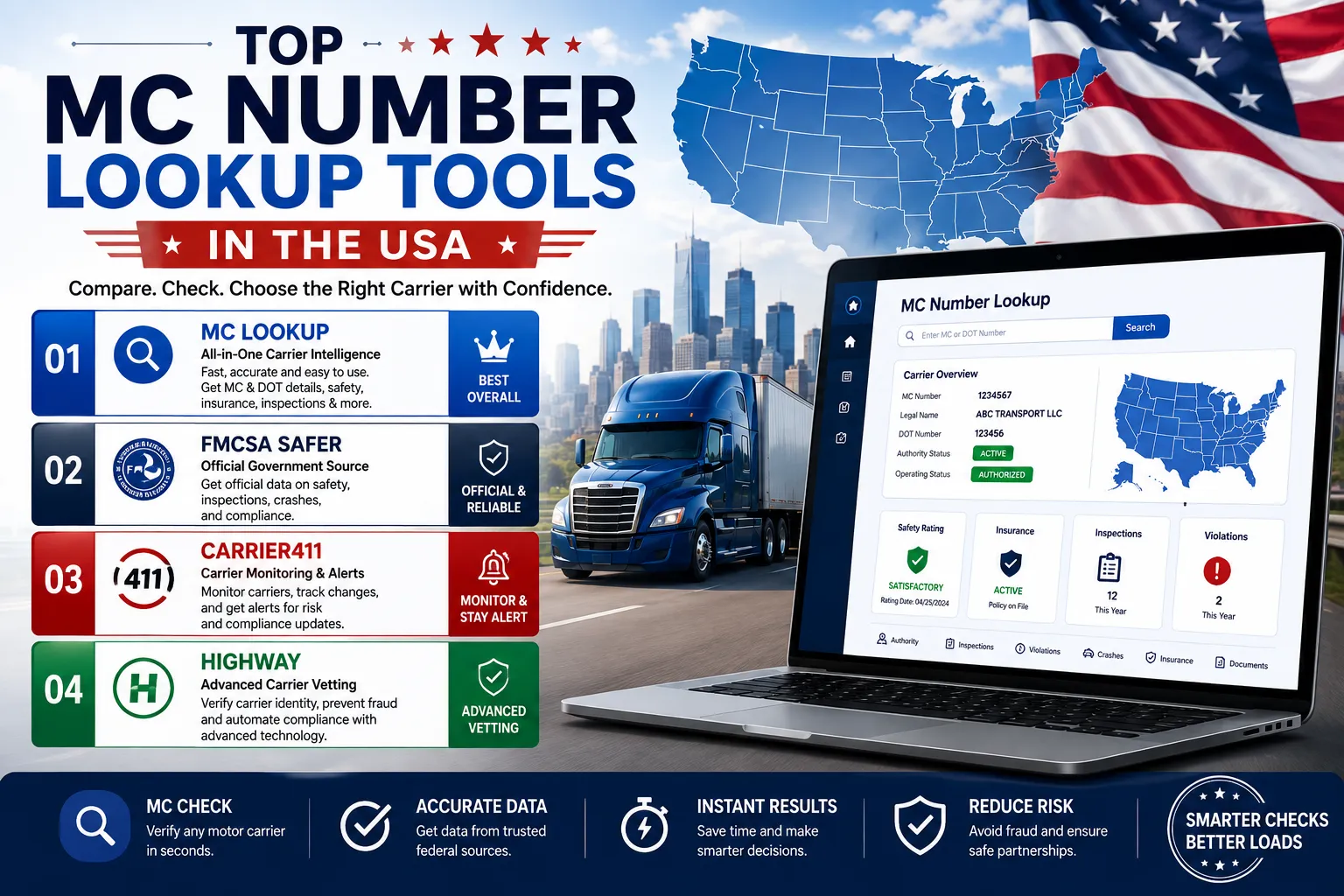
1. FMCSA SAFER
The FMCSA's Safety and Fitness Electronic Records System, known as SAFER, is one of the most important resources for carrier verification in the United States.
SAFER allows users to search for motor carrier information using identifiers such as a USDOT number.
Depending on the carrier, available records may include information related to:
- Company identification
- Operating status
- Safety ratings
- Inspections
- Crashes
- Vehicles
- Drivers
- Carrier classification
Because SAFER is part of the FMCSA's information system, it is an important source for transportation professionals who want to verify federal carrier information.
The main challenge is convenience. Users who need to research many carriers may find government systems less streamlined than dedicated lookup platforms.
2. FMCSA Company Snapshot
The FMCSA Company Snapshot is another useful resource for checking carrier information.
It provides a summary of available information about a motor carrier and can be useful when you need to confirm basic company details.
A broker can use a carrier's DOT number to find the company record and compare information such as the legal name, operating status, and other available operational details.
For occasional searches, this can be an effective starting point. For teams conducting large numbers of checks, however, a dedicated lookup solution may offer a more efficient workflow.
3. FMCSA Licensing & Insurance
Carrier verification shouldn't stop with a basic DOT search.
Operating authority and insurance are also important considerations, particularly for freight brokers and shippers.
The FMCSA Licensing & Insurance system can help users research authority and insurance-related information associated with regulated carriers.
A practical verification workflow may therefore look like this:
DOT lookup → Authority check → Insurance review → Safety review → Final verification
Combining these steps can provide more context than relying on a single carrier record.
4. MC Lookup
MC Lookup provides a streamlined way for transportation professionals to research carriers using DOT and MC identification numbers.
For brokers and logistics teams that perform frequent carrier checks, a simple search experience can make the verification process faster and easier to manage.
Instead of treating DOT information as an isolated record, users can use a dedicated lookup platform as part of a broader carrier-research workflow.
MC Lookup can be particularly useful when teams need to check multiple carriers during onboarding, load booking, or ongoing carrier management.
5. FMCSA DataQs
FMCSA DataQs is another resource that can be relevant when researching carrier information.
DataQs allows users to request reviews of certain federal and state data when they believe information may be incorrect or incomplete.
This is important because transportation records can change, and certain records may be disputed or corrected.
DataQs isn't necessarily a standard DOT lookup tool for everyday searches, but it can provide additional context when a carrier record requires deeper investigation.
DOT Number Lookup vs. MC Number Lookup
One common mistake during carrier verification is treating DOT numbers and MC numbers as the same thing.
They are not.
A USDOT number primarily identifies certain motor carriers and transportation entities subject to federal registration requirements.
An MC number is generally associated with operating authority for certain types of interstate transportation operations.
Depending on its business activities, a carrier may have a USDOT number, an MC number, or both.
This is why an MC Number Lookup can complement a DOT search.
For example, a broker may start with a DOT number to confirm the carrier's identity and operating information. The broker can then use the relevant MC information to examine operating authority and related records.
Using both identifiers can provide a stronger verification process.
What Information Should You Check?
Finding a carrier record is only the beginning. You need to understand what the information means and how it relates to your shipment.
1. Legal Company Name
Compare the carrier's legal name with the information provided during onboarding or booking.
If the names don't match, investigate the difference rather than automatically proceeding.
2. Operating Status
Check whether the carrier's operating status appears active and appropriate for the services being offered.
An unexpected status can be a reason to conduct additional research.
3. Operating Authority
Verify that the carrier has the appropriate authority for the transportation services involved.
Authority requirements can vary depending on the carrier's operations, so don't assume that every carrier needs exactly the same type of authority.
4. Insurance Information
Insurance is an important part of carrier qualification.
Review available insurance information and compare it with your company's requirements and internal policies.
5. Safety Records
Review available inspection, crash, and safety-related information.
Don't automatically reject a carrier based on a single data point. Instead, consider the broader record and whether there are patterns that deserve attention.
CSA Score Guide for Carrier Verification
The CSA Score Guide is another important part of understanding carrier safety information.
CSA, or Compliance, Safety, Accountability, is an FMCSA safety-compliance program that uses available safety data to identify carriers and drivers that may warrant further attention.
CSA information can relate to different BASICs, or Behavior Analysis and Safety Improvement Categories.
These categories cover areas such as:
- Unsafe driving
- Crash indicator
- Hours-of-service compliance
- Vehicle maintenance
- Controlled substances and alcohol
- Hazardous materials compliance
- Driver fitness
One important point is that CSA information should be interpreted carefully.
A score or percentile isn't necessarily a simple pass-or-fail measurement. A higher percentile in a BASIC can indicate a greater level of concern relative to other carriers, but transportation professionals should consider the circumstances and available information before making a final decision.
A good CSA Score Guide should therefore help users understand the context behind safety data rather than encouraging them to make decisions based on one number.
Verifying the Largest Carriers
Carrier verification isn't only important for small or unfamiliar trucking companies.
The Largest Carriers in the United States may operate hundreds or thousands of vehicles, serve numerous customers, and handle substantial freight volumes. Even with well-known carriers, checking current information remains useful.
Large carriers can have complex operations involving:
- Multiple terminals
- Large fleets
- Numerous drivers
- Different operating authorities
- Multiple business entities
- Changing insurance and compliance information
A carrier's reputation should not replace basic verification.
Whether you're working with a small regional carrier or one of the Largest Carriers in the industry, checking current DOT and authority information can help maintain consistent carrier-qualification procedures.
How to Choose the Best DOT Lookup Tool
Not every lookup tool is designed for the same purpose. Consider these factors when selecting one for your business.
Data Reliability
Look for tools that provide information from credible sources and clearly explain the nature of their data.
Search Convenience
If your team checks many carriers, a fast and straightforward search process can save considerable time.
DOT and MC Search
Ideally, your workflow should allow you to research both DOT and MC identifiers when needed.
Information Depth
Determine whether you need basic identification information or more detailed authority, insurance, safety, and compliance information.
Data Freshness
Carrier information can change. Status, authority, insurance, and other records may not remain the same indefinitely.
Ease of Use
A clean interface can make it easier for brokers, dispatchers, and compliance teams to find the information they need.
Best Practices for Carrier Verification
Using a DOT lookup tool effectively requires a consistent process.
Start by collecting the carrier's USDOT number and MC number, when applicable. Search the carrier and compare the results with the information provided by the company.
Next, review operating status, authority, insurance, and available safety information.
If something doesn't match, don't ignore it. Contact the carrier or conduct additional research.
It is also useful to document when the carrier was checked. This can create a record of your verification process and make recurring carrier reviews easier.
Most importantly, remember that verification is not a one-time activity. Carrier information can change because of regulatory updates, business changes, insurance updates, or operational developments.
For long-term carrier relationships, periodic rechecks can be a valuable part of risk management.
Final Thoughts
The best DOT lookup number tools for carrier verification are those that help transportation professionals access reliable information quickly and understand what that information means.
Official FMCSA resources such as SAFER, Company Snapshot, Licensing & Insurance, and DataQs remain valuable resources. Dedicated platforms such as MC Lookup can complement these resources by providing a more convenient way to search DOT and MC information.
A strong carrier-verification process should go beyond a basic DOT Number Lookup. Combining DOT information with an MC Number Lookup, insurance and authority checks, safety records, and a practical CSA Score Guide can give brokers and shippers a more complete picture of a carrier.
Whether you're verifying a new carrier, reviewing one of the Largest Carriers, or conducting routine compliance checks, the objective is the same: verify first, then book with confidence.
Reliable carrier research can help reduce avoidable risks, support better freight decisions, and create a more consistent process for managing transportation partners.





























Sign in to leave a comment.