
Choosing the right trucking carrier is one of the most important steps in managing freight safely and efficiently. A carrier may look legitimate on paper, but brokers and shippers still need to verify its operating authority, safety information, insurance details, and compliance status before assigning a load.
That is where DOT MC number lookup tools become valuable. These platforms make it easier to search for a trucking company using its DOT number, MC number, or company information and review important carrier records. In 2026, with growing pressure to reduce fraud, improve compliance, and make faster logistics decisions, reliable carrier verification tools are more important than ever.
This guide explores some of the best DOT and MC number lookup options available for carrier verification and explains what brokers, shippers, and logistics professionals should look for when choosing a tool.
What Is a DOT or MC Number?
A DOT number is a unique identifier assigned to certain motor carriers by the Federal Motor Carrier Safety Administration (FMCSA). It helps identify a transportation company and is associated with information such as safety records, inspections, crashes, and company details.
An MC number, commonly associated with operating authority, helps identify carriers authorized to transport regulated commodities for-hire in interstate commerce when such authority is required.
Because these numbers are tied to carrier records, they can be useful starting points when checking whether a transportation company is properly registered and operating under the appropriate authority.
However, a number alone does not guarantee that a carrier is safe or suitable for a particular shipment. A proper verification process should involve reviewing multiple pieces of information.
Why Use DOT MC Number Lookup Tools in 2026?
Carrier verification can become time-consuming when information has to be collected manually from different sources. Lookup tools can simplify this process by making carrier information easier to find and review.
A good DOT MC number lookup platform can help transportation professionals:
- Confirm carrier identity and registration information
- Check operating authority status
- Review available safety information
- Identify potential compliance concerns
- Verify company details before booking freight
- Compare information across different records
- Reduce the risk of working with questionable carriers
- Speed up the carrier onboarding process
For freight brokers handling multiple carriers every day, faster verification can make a meaningful difference. Instead of treating carrier vetting as a one-time task, it can become a repeatable part of the freight booking workflow.
Best DOT MC Number Lookup Tools for Carrier Verification
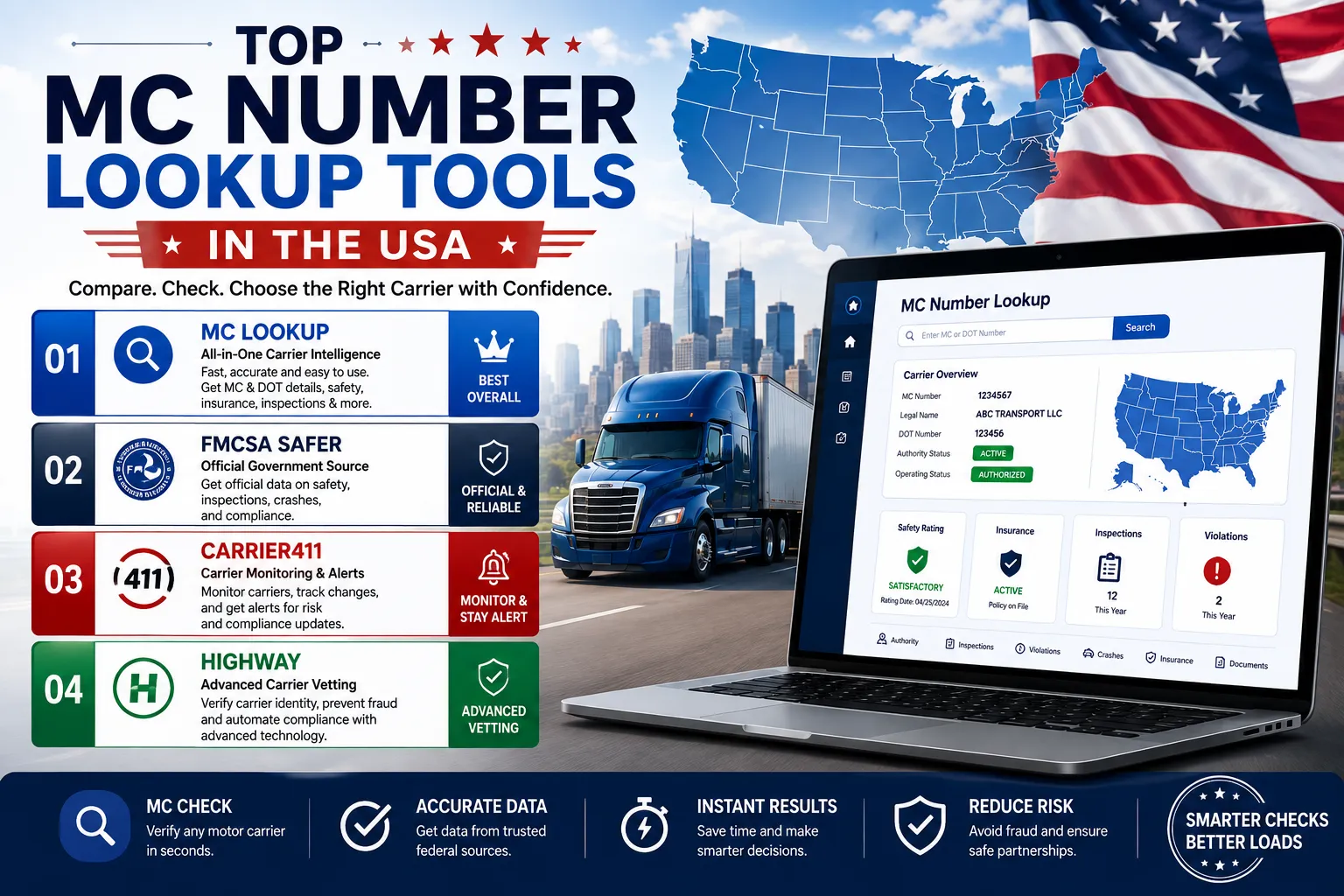
1. FMCSA SAFER
The FMCSA's Safety and Fitness Electronic Records (SAFER) system is one of the most important sources for researching U.S. motor carriers.
SAFER allows users to search for carrier information using identifiers such as a USDOT number. Depending on the carrier and available records, users may find company information, operating status, safety-related information, inspections, crashes, and other data.
Why use it: SAFER is a primary government resource and is especially useful when you want to verify information against official FMCSA records.
Best for: Brokers, shippers, compliance teams, and transportation professionals who want to review official carrier information.
2. FMCSA Licensing & Insurance
FMCSA's Licensing & Insurance resources can be useful when reviewing a carrier's authority and insurance-related information.
When evaluating a new carrier, authority status is an important consideration. A company may have a DOT number, but that does not automatically mean it has the operating authority needed for a specific transportation activity.
Why use it: It provides another official source for checking licensing, authority, and insurance-related records.
Best for: Carrier onboarding, compliance verification, and authority checks.
3. MC Lookup
MC Lookup is designed to simplify carrier research by bringing important transportation information into a straightforward lookup experience. Users can search using a DOT or MC number and review available carrier information without manually navigating multiple resources.
For freight brokers and shippers, this can make the initial trucking company verification process more convenient and efficient. Rather than relying on a single data point, users can combine lookup information with other records as part of a broader verification workflow, helping them make more informed carrier-selection decisions.
4. State and Federal Transportation Records
Although national lookup platforms are convenient, carrier verification should not always stop with one website. Depending on the situation, transportation professionals may need to review additional federal or state records.
These sources can provide useful context when a carrier's business information, operating status, or other records require additional investigation.
Why use them: Cross-checking information can help identify inconsistencies that may not be obvious from a single lookup.
Best for: Detailed due diligence and carriers requiring additional review.
5. Commercial Carrier Verification Platforms
Several commercial platforms are designed specifically for transportation companies and may offer additional carrier-monitoring or verification capabilities.
Depending on the provider, these tools may combine carrier information with workflow features, alerts, reporting, or other logistics-focused functions.
Why use them: Commercial tools can save time for companies managing large carrier networks.
Best for: Freight brokerages, 3PLs, enterprise logistics teams, and organizations that need ongoing carrier monitoring.
However, users should understand where the information comes from and whether the platform is simply presenting government data or adding its own verification and monitoring services.
What Should You Check During a Carrier Lookup?
Finding a carrier record is only the first step. The information should be evaluated carefully before a load is assigned.
Operating Authority
As part of DOT number verification, check whether the carrier has the appropriate operating authority for the transportation service being considered. Because authority status can change over time, relying on an outdated screenshot or previously saved record may lead to inaccurate information and create unnecessary risk.
Company Identity
Compare the carrier's legal name, DBA name, address, phone number, and other available details with the information provided during onboarding.
Unexpected differences should be investigated rather than ignored.
Safety Information
Review available safety-related information, including inspections, crashes, and other relevant records. A safety record does not tell the entire story by itself, but it can help identify areas that deserve additional attention.
Insurance Information
Insurance is another important part of carrier verification. Confirm that required coverage is in place and that the information matches the carrier you are planning to use.
Operating Status
A carrier's operating status is an important factor when determining whether it is appropriate to proceed. Always review current information rather than assuming that an active record from the past is still valid.
Business History
Look for inconsistencies in company information, sudden changes, or other unusual details. These signals do not automatically indicate fraud, but they can justify additional verification.
How to Use a DOT MC Number Lookup Tool
The basic process is straightforward.
Step 1: Collect the carrier's identifier.
Ask the carrier for its USDOT number, MC number, or both.
Step 2: Search the number.
Enter the identifier into a reliable lookup platform.
Step 3: Confirm the company identity.
Make sure the displayed company information matches the carrier you are communicating with.
Step 4: Review authority and status.
Check whether the carrier has the appropriate authority and whether its current operating status is acceptable.
Step 5: Review safety and compliance information.
Look at available inspections, crashes, safety information, and other relevant records.
Step 6: Verify insurance.
Confirm that insurance information is current and appropriate for the freight being handled.
Step 7: Cross-check important details.
For higher-risk or high-value shipments, compare information across multiple sources.
Step 8: Document the verification.
Keep appropriate records of your carrier-screening process so your team can refer back to what was checked and when.
Common Mistakes to Avoid
Even the best lookup tools cannot replace careful judgment. One common mistake is assuming that a DOT or MC number automatically means a carrier is trustworthy. The identifier only helps connect you with the carrier's records.
Another mistake is checking a carrier once and never reviewing it again. Carrier information can change, including authority, insurance, company details, and safety-related information.
It is also risky to rely on information supplied directly by a carrier without independently verifying it. Fraudulent actors can sometimes provide legitimate-looking company details while impersonating another business.
Finally, avoid using a single metric as your entire decision-making process. A carrier with an otherwise acceptable record may still require additional review depending on the shipment, route, equipment, insurance requirements, and business circumstances.
DOT Lookup vs. MC Lookup: What's the Difference?
DOT and MC searches are related but serve different purposes.
A DOT lookup generally helps identify a motor carrier and review information associated with its USDOT registration.
An MC lookup is particularly useful when reviewing operating authority and related carrier information.
For comprehensive carrier verification, brokers and shippers may benefit from using both identifiers when available. Searching one number can confirm basic information, while checking the other can provide additional context.
How to Choose the Best Carrier Lookup Tool
The best tool depends on your company's needs. Before choosing a platform, consider these factors:
Data reliability: Look for tools that use trustworthy and regularly updated sources.
Ease of use: A simple search interface can save time when your team checks many carriers.
Search options: The ability to search by DOT number, MC number, or company name can make research more flexible.
Information coverage: Consider whether the platform provides the carrier details your team actually needs.
Update frequency: Transportation records can change, so current information matters.
Workflow efficiency: For organizations checking dozens or hundreds of carriers, reporting, saved searches, monitoring, or other workflow features may be valuable.
Final Thoughts
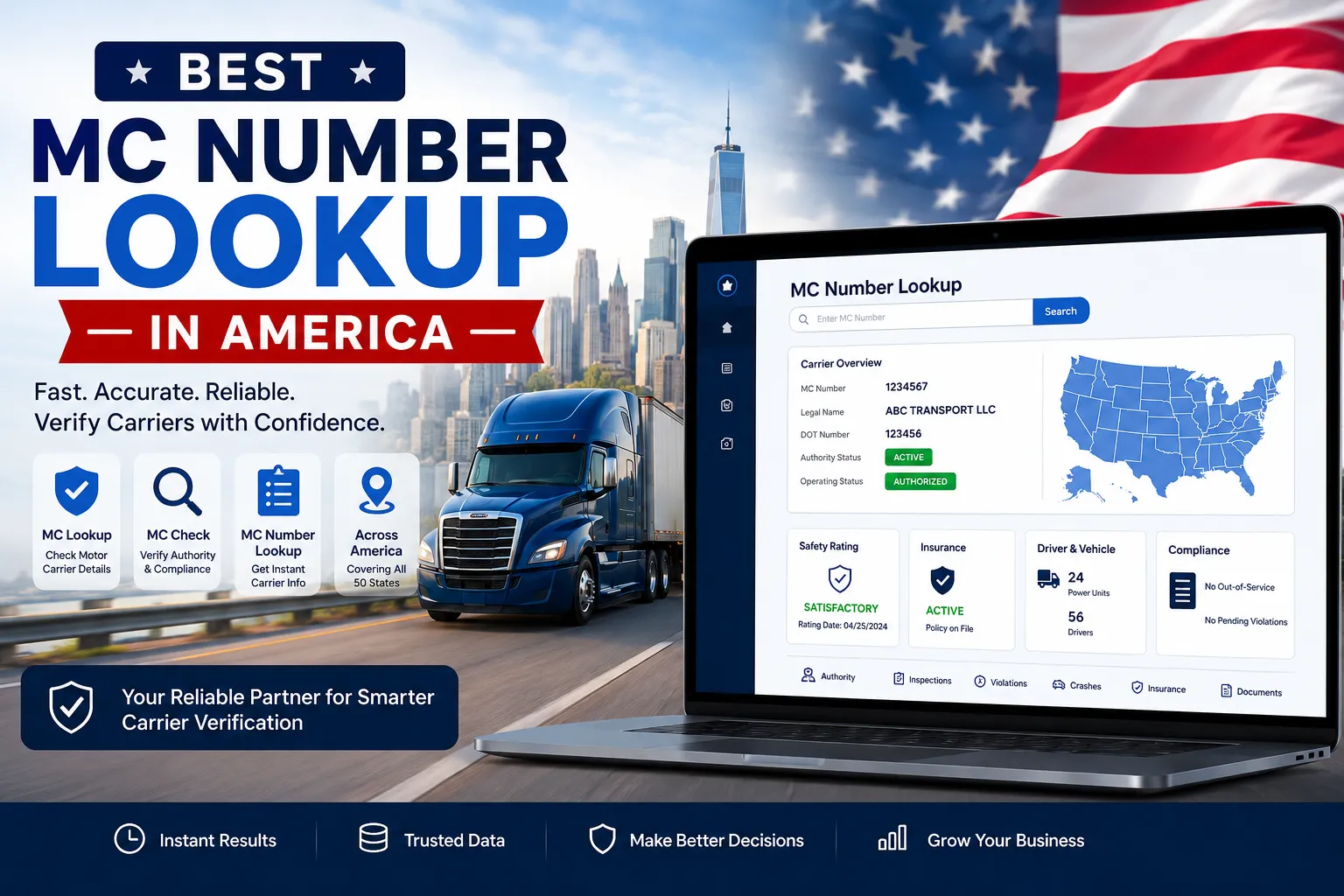
Carrier verification should be a standard part of freight management rather than an afterthought. A reliable MC number lookup process can help brokers, shippers, and logistics companies confirm carrier information, identify potential concerns, and make more informed transportation decisions.
Government resources such as FMCSA SAFER and Licensing & Insurance provide important official information, while commercial lookup platforms can make the research process faster and easier. Tools such as MC Lookup can also help transportation professionals quickly search carrier records and organize important information during the vetting process.



























Sign in to leave a comment.