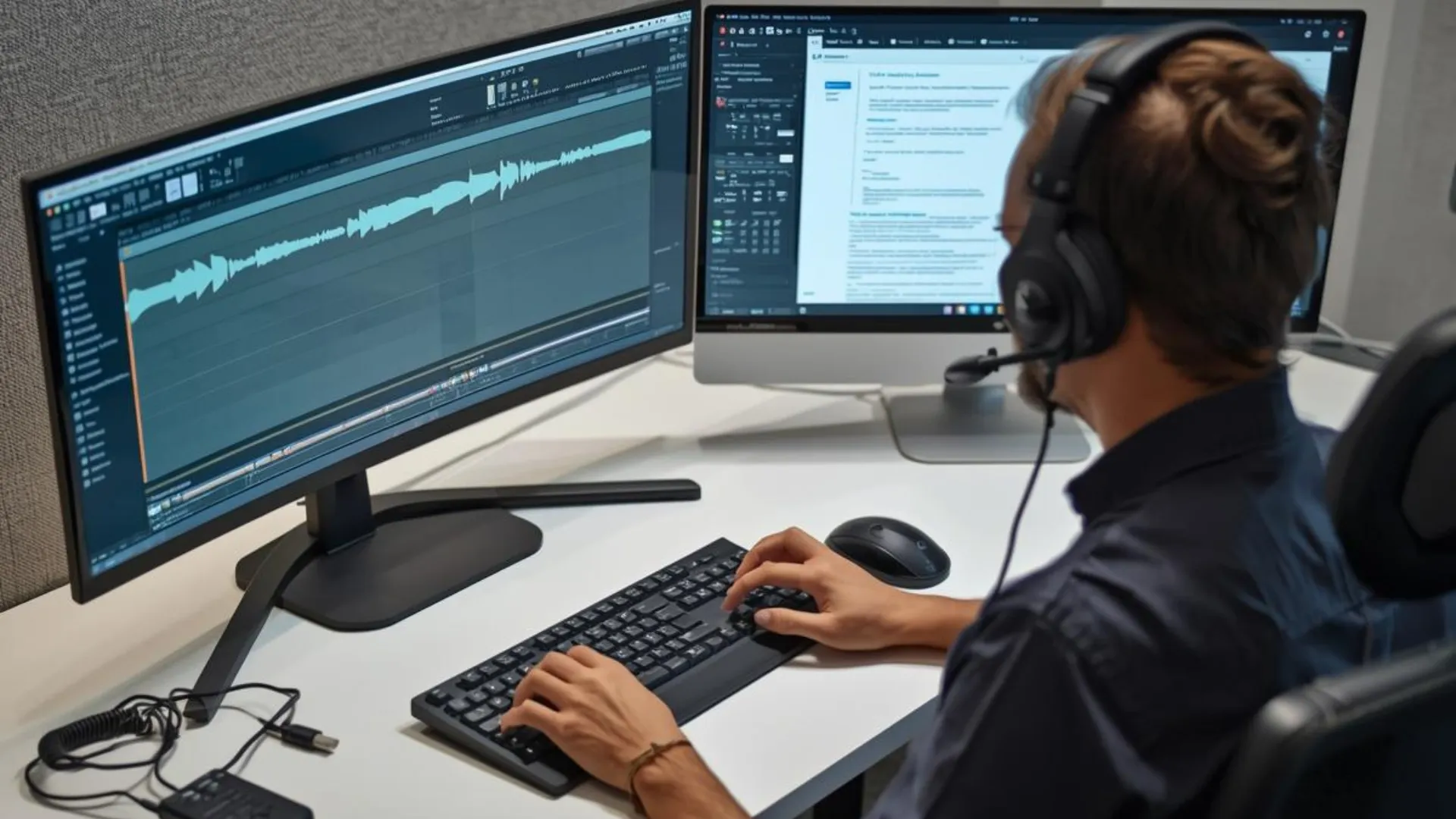

Legal work depends heavily on documentation. Whether it is a deposition, client interview, recorded statement, court proceeding, or internal case discussion, even small transcription errors can create confusion later. That is why many law firms still rely on professional legal transcription services instead of depending entirely on automated tools.
The challenge is that not all transcription providers understand legal workflows. Some focus more on speed than formatting consistency. Others struggle with multiple speakers, legal terminology, or poor-quality audio recordings. A service that works well for podcast transcription may not be the right fit for legal documentation.
To help narrow down the options, we looked at several legal transcription companies based on accuracy, turnaround time, confidentiality, industry experience, and overall usability for legal professionals.
What Makes a Good Legal Transcription Service?
Legal transcription involves more than converting speech into text. Attorneys and legal teams often need transcripts that are structured, easy to reference, and reliable enough to support ongoing casework.
Some of the most important factors include:
- Accuracy with legal terminology
- Ability to handle multiple speakers
- Confidentiality practices
- Timestamping and formatting support
- Fast turnaround for urgent matters
- Human-reviewed transcripts
- Support for depositions, interviews, and hearings
A provider that understands legal documentation requirements can save significant editing and review time later.
Quick Comparison Table
| Service | Best For | Human Transcription | Legal Experience | Turnaround Options |
| Ditto Transcripts | Court and legal transcription | Yes | Strong | Flexible |
| GMR Transcription | Human-reviewed legal recordings | Yes | Strong | Multiple options |
| eScribers | Courts and judicial systems | Yes | Extensive | Enterprise-focused |
| Allegis Transcription | Large-scale legal workflows | Yes | Strong | Custom |
| Ubiqus | Multilingual legal projects | Yes | Strong | Flexible |
| VIQ Solutions | Enterprise legal documentation | Hybrid | Extensive | Enterprise-focused |
Ditto Transcripts
Ditto Transcripts has built a strong reputation in legal and law enforcement transcription. The company works with attorneys, courts, investigators, and government agencies that require detailed and professionally formatted transcripts.
One of the reasons Ditto stands out is its specialization. The platform is designed around industries where documentation accuracy matters. Their team handles depositions, interrogations, witness interviews, bodycam recordings, and court proceedings regularly, which gives them an advantage in handling complex legal terminology and difficult audio.
The service is also known for flexible formatting options and the ability to manage multi-speaker recordings effectively.
Best for
Law firms and legal professionals looking for specialized legal transcription support.
Strengths
- Strong legal industry focus
- Handles difficult recordings well
- Human-reviewed transcripts
- Good formatting consistency
Limitations
- Pricing may be higher than generic transcription providers
- Better suited for professional workflows than casual use
GMR Transcription
GMR Transcription is widely used for legal interviews, recorded statements, meetings, and other professional audio files that require careful human review. The company focuses heavily on accuracy and human transcription rather than fully automated workflows.
One area where GMR Transcription performs particularly well is speaker clarity. Legal recordings often involve overlapping conversations, unclear audio, accents, or technical terminology. Human transcriptionists can usually interpret these situations more effectively than AI-generated transcripts.
The service also supports verbatim transcription, timestamps, and customized formatting requirements, which can be useful for attorneys managing large volumes of recorded material.
Another advantage is the company’s experience with research, business, and professional documentation workflows. That broader experience often translates well into legal environments where accuracy and consistency are important.
Best for
Law firms and professionals looking for human-reviewed legal transcription with strong accuracy.
Strengths
- Human transcription approach
- Strong speaker identification accuracy
- Flexible formatting support
- Handles complex conversations well
Limitations
- Not designed as a self-service AI transcription platform
- May not be ideal for users looking only for instant automated transcripts
eScribers
eScribers is heavily focused on courts and judicial systems. The company works with many state and federal court systems and has extensive experience managing legal records at scale.
Its strength lies in structured legal documentation workflows. Courts and legal institutions often need standardized formatting, secure handling of sensitive material, and large-scale transcript management. eScribers has built much of its business around those requirements.
For smaller law firms, the platform may feel more enterprise-oriented compared to some independent transcription providers. Still, for organizations handling large case volumes, it can be a strong option.
Best for
Courts and high-volume legal environments.
Strengths
- Extensive judicial experience
- Large-scale workflow support
- Structured legal formatting
- Security-focused processes
Limitations
- More enterprise-oriented
- Less flexible for smaller projects
Allegis Transcription
Allegis Transcription offers transcription services across legal, insurance, healthcare, and business sectors. The company is commonly used for legal interviews, statements, and investigative recordings.
One of its strengths is operational scalability. Firms handling large amounts of recorded content often need consistent turnaround times and workflow reliability. Allegis positions itself well for those needs.
The company also offers multilingual support, which can help firms working on cases involving non-English recordings or bilingual participants.
Best for
Firms managing large transcription workloads.
Strengths
- Scalable workflows
- Multilingual support
- Professional legal transcription experience
- Good turnaround flexibility
Limitations
- Enterprise-style processes may feel complex for smaller teams
Ubiqus
Ubiqus is well known for multilingual transcription and translation support. Legal cases increasingly involve international clients, multilingual evidence, and cross-border communication, making language support an important factor for many firms.
The company combines transcription, translation, and localization services, which can simplify workflows when recordings require both transcription and language conversion.
Ubiqus is especially useful for organizations handling multilingual hearings, interviews, or legal documentation projects.
Best for
Multilingual legal transcription projects.
Strengths
- Strong language support
- International project capabilities
- Human-reviewed workflows
- Translation integration
Limitations
- Better suited for complex or multilingual work than small basic projects
VIQ Solutions
focuses heavily on enterprise documentation workflows for legal, law enforcement, and government sectors. The company combines capture technology, workflow management, and transcription services into a larger ecosystem.
Organizations already managing digital evidence and recorded proceedings may find VIQ particularly useful because of its integrated approach.
Its platform-oriented structure may be more than what a small legal office needs, but larger institutions often value the scalability and process management features.
Best for
Enterprise legal documentation and evidence workflows.
Strengths
- Integrated workflow systems
- Large-scale legal support
- Strong enterprise infrastructure
- Experience with courts and law enforcement
Limitations
- More complex than traditional transcription providers
- Better suited for institutional workflows
Human Legal Transcription Still Matters
AI transcription tools have improved significantly for basic recordings. However, legal recordings often involve conditions that remain difficult for fully automated systems.
This includes:
- overlapping speakers
- background noise
- legal terminology
- accented speech
- emotional conversations
- low-quality recordings
- rapid exchanges during depositions or interviews
Even small transcription mistakes can create problems during legal review. Because of that, many firms still prefer human-reviewed transcription for important recordings.
Professional transcription services also help reduce the amount of editing attorneys or paralegals need to do internally.
Choosing the Right Legal Transcription Provider
The best service depends on the type of legal work being handled.
A court system managing thousands of proceedings may prioritize scalability and workflow integration. A boutique law firm may care more about transcript accuracy and flexible turnaround. Firms working on multilingual cases may need translation support alongside transcription.
Before choosing a provider, it helps to evaluate:
- recording quality
- case volume
- confidentiality requirements
- formatting needs
- turnaround expectations
- multilingual requirements
A reliable legal transcription partner can save time, improve documentation consistency, and reduce administrative workload across legal teams.






























Sign in to leave a comment.