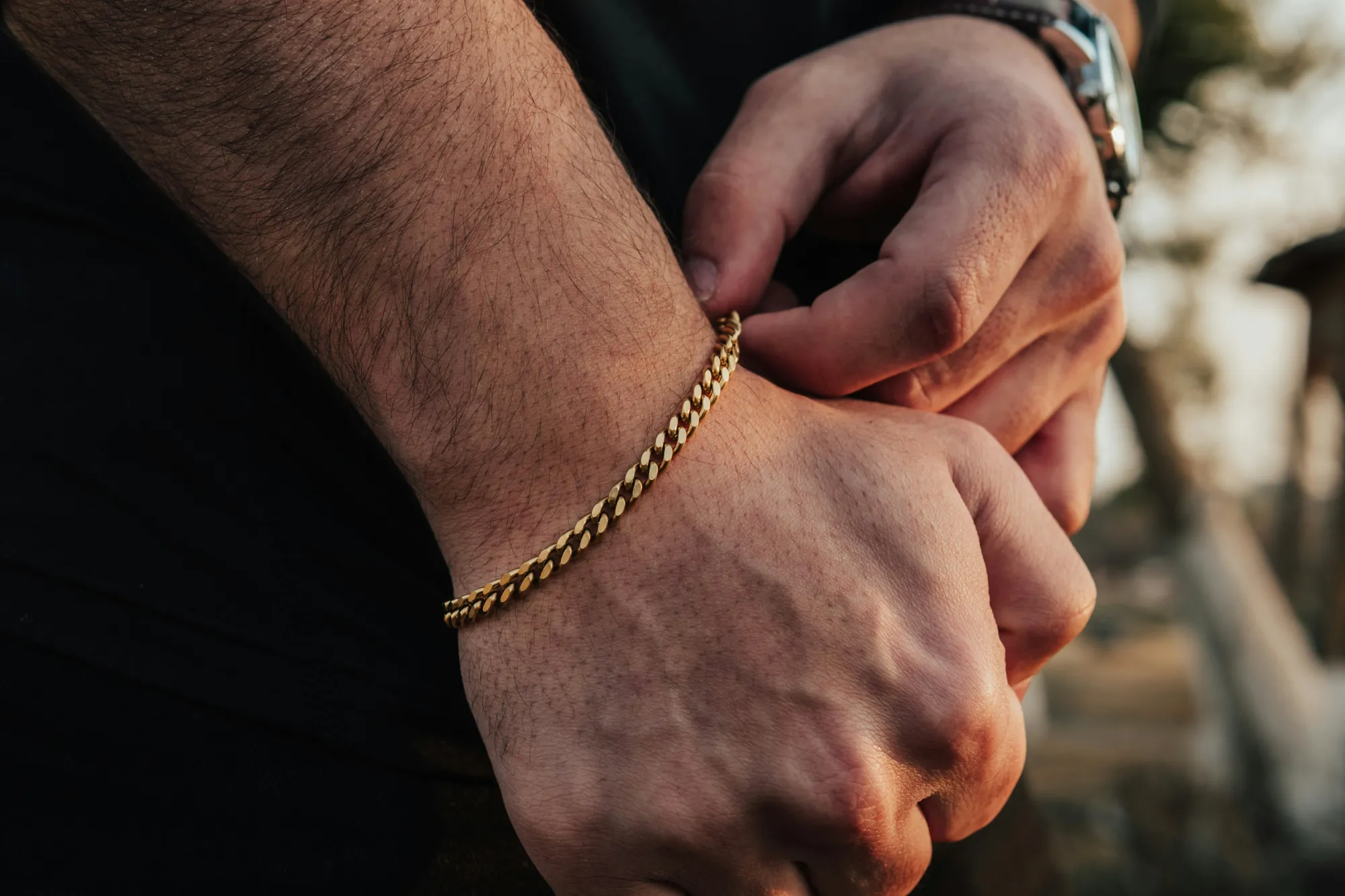

Men's gold bracelets have quietly moved from statement piece to everyday staple. A few years ago, a gold bracelet on a man's wrist read as dressed up or occasion-specific. Today it's become one of the more versatile things in a man's jewelry rotation — worn to work, to the gym, on weekends, and everywhere between. The shift is real, and so is the demand for pieces that can actually handle that kind of consistency.
The problem is that not every gold bracelet is built for daily wear. Some look the part in a display case and show their limitations within weeks of regular use. Choosing the right one means understanding what styles hold up, which gold karats make sense for wrist wear specifically, and what details separate a piece that ages well from one that doesn't.
This guide covers all of it, practically and without the fluff.
Why the Bracelet Is Having Its Moment in Men's Jewelry
The cultural shift toward men wearing more jewelry has been building for a while, but bracelets specifically have benefited from a broader change in how men approach personal style. Stacking — wearing multiple pieces together, mixing metals, textures, and materials — has normalized the wrist as a space worth thinking about. A single gold bracelet anchors a stack or works alone. It reads as intentional without being loud.
Athletes, musicians, and designers wearing gold bracelets as part of everyday outfits helped push it into the mainstream, but the sustained interest goes beyond trend-following. A well-chosen gold bracelet is genuinely one of the lowest-effort ways to elevate a basic outfit. A white t-shirt and jeans with a Cuban link bracelet looks put-together in a way that the same outfit without it doesn't. That kind of effortless utility is why the category has real staying power.
The Styles That Actually Work for Everyday Wear
Not all bracelet styles are created equal when it comes to daily use. Some are better suited to occasional wear, while others are specifically built to be worn constantly without maintenance anxiety.
Cuban Link Bracelets

The Cuban link is the dominant style in men's gold bracelets right now, and the longevity of its popularity has a straightforward explanation: it's extremely well-engineered for wear. The interlocking oval links lie flat against the wrist, distribute weight evenly, and have no protruding elements to snag on fabric or scratch surfaces. The links are thick enough to resist bending and deformation, and the flat-face design means scratches are less visible than on high-polish rounded links.
For everyday wear, a Cuban link in 18K yellow gold hits the right balance of durability and visual presence. Width is the main variable — 6mm to 8mm reads as substantial without being heavy; anything above 10mm starts to move into statement territory that not everyone wants to maintain daily. The clasp is typically a box clasp with a safety latch, which keeps the bracelet secure through activity without the anxiety of a simple spring ring.
Franco Bracelets
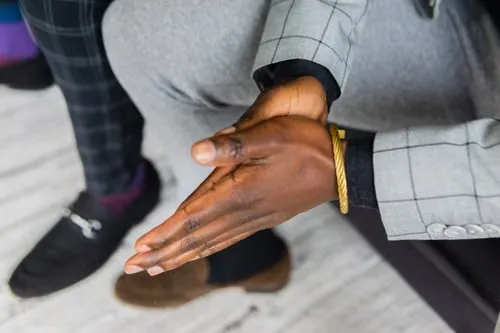
The Franco link is a close relative of the Cuban — also flat, also interlocked, but with a tighter, more intricate weave that gives it a distinctive texture. Where a Cuban link has a bolder, more open look, the Franco reads as more refined and detailed. It sits close to the wrist and moves cleanly with the hand.
For men who want something with a bit more visual complexity than a Cuban but prefer a flatter, less chunky profile, a Franco bracelet threads that needle well. In 18K gold, a 5mm to 7mm Franco sits comfortably in the everyday category — present enough to notice, structured enough to wear anywhere without it feeling like a choice you have to dress around.
Rope Bracelets
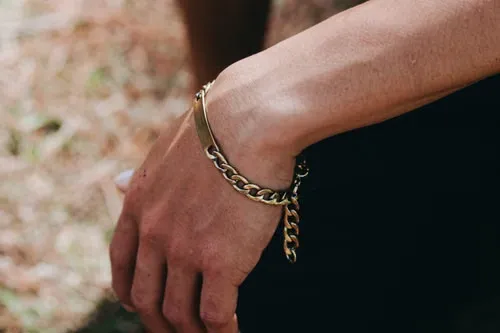
Gold rope bracelets are one of the older design traditions in men's gold jewelry, and the reason they've stayed in circulation is that they work. The twisted link structure is visually interesting from every angle, catches light in a way flat links don't, and sits comfortably on the wrist through a full day of wear. They're also generally lighter than Cuban or Franco styles at comparable widths, which some men prefer.
The trade-off is that rope bracelets show surface scratches more readily because of all the exposed wire surfaces in the twist. Over time, heavy daily wear dulls the finish faster than on flat-link styles. This doesn't make them wrong for everyday use, but it's worth knowing going in — if you're someone who wears jewelry hard and rarely thinks about maintenance, a flat-link style might age better in your hands.
Figaro Bracelets
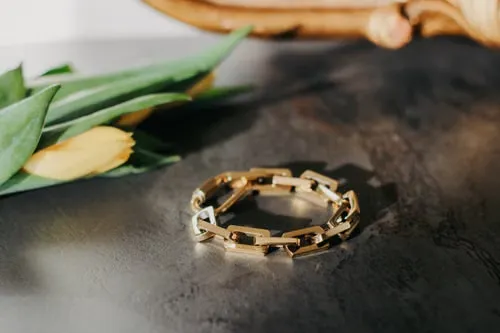
A Figaro pattern alternates between one longer oval link and two or three shorter round links. It's a classic Italian design that translates well to wrist wear because the link variation creates visual interest without the added weight of a fully patterned chain. Figaro bracelets lie flat, sit comfortably through a full day, and tend to be more affordable at comparable gold weights than Cuban or Franco styles.
They work particularly well for men who want an understated gold bracelet — present on the wrist, recognizable as quality, but not demanding attention. In 18K at around 5mm to 6mm width, a Figaro bracelet is one of the more versatile everyday options available.
Choosing the Right Gold Karat for a Men's Bracelet
Karat selection matters differently for bracelets than for other jewelry. Rings experience direct impact and surface contact constantly. Bracelets move more freely and take a different kind of wear — mostly friction from clothing, sweat exposure, and the occasional knock. Understanding that difference helps you pick the right karat.
Gold purity is measured on a 24-part scale: pure gold is 24K, 18K contains 75% gold, and 14K contains 58.3% gold — with the remaining percentage made up of alloy metals like copper, silver, and palladium that add structural strength. The FTC's consumer guide to buying gold jewelry explains karat markings clearly and is worth bookmarking if you're making your first significant jewelry purchase.
18K gold is the standard recommendation for men's everyday bracelets. At 75% purity, it's hard enough to resist the scratching and friction of daily wrist wear, rich enough in color to look genuinely gold rather than pale, and widely available across all major styles. If you're buying one gold bracelet to wear consistently, 18K is the clear choice.
14K gold is worth considering if your lifestyle is physically demanding — manual work, regular gym sessions with weights, outdoor sports. The higher alloy content makes 14K harder and more scratch-resistant than 18K. The color is slightly less warm, but the durability advantage is real for men who are hard on their jewelry. Most people, honest with themselves about how active they are, end up very happy with 14K for daily wear. Blue Nile's breakdown of gold karats covers how the color and durability trade-offs play out across the full karat range if you want to compare further.
22K gold produces a stunning, deep yellow color that 18K can't fully replicate, and it's the traditional choice in South Asian jewelry culture. But for a bracelet worn daily, 22K's higher purity means softer metal that scratches more easily and can gradually deform at thinner sections. 22K is a better choice for occasional or ceremonial pieces than a daily-wear bracelet. If you're pairing a gold bracelet with a gold chain and thinking through how karat choice affects both pieces together, this guide on men's gold chains for everyday wear is worth reading alongside this one — it covers the same karat question specifically in the context of chains, which often get stacked with a bracelet.
Getting the Fit Right
Fit is the detail that separates a bracelet that looks good from one that actually wears well. Too tight and it restricts movement, catches skin, and feels uncomfortable within an hour. Too loose and it slides around, bunches against the watch, or catches on everything.
The standard sizing approach is to measure the circumference of your wrist where you'd wear the bracelet, then add half an inch to one inch of additional length depending on how much movement you want. Most men's bracelets come in standard lengths between 7.5 inches and 9 inches, with 8 inches being the common starting point for average wrist sizes.
For Cuban and Franco styles, which are heavier and stiffer, a closer fit of half an inch over wrist circumference tends to look better and stay in place more cleanly. For rope and Figaro styles, which are lighter and more flexible, a full inch of extra length lets the bracelet move naturally without sliding uncomfortably.
If you're buying online without trying the bracelet on, a flexible tape measure gives a reliable wrist measurement. Wrap it snugly where you'd wear the piece and record the number in inches. When in doubt, err on the side of slightly larger — most bracelet clasps can be adjusted by adding or removing links, and a good jeweler can size a bracelet in minutes.
What to Look for in Construction Quality
A gold bracelet is a long-term purchase, and the construction details that don't show up in product photos are what determine whether a piece lasts years or becomes a disappointment.
Link soldering. In a Cuban or Franco bracelet, each link is soldered closed. On quality pieces, those solder points are clean, flush, and invisible. On cheaper pieces, solder bumps are visible and are often the first point of failure when a bracelet is worn regularly. Run your fingernail along the links before buying if you can examine the piece in person.
Clasp mechanism. The clasp on a men's bracelet takes more stress than the chain itself. A box clasp with a double safety is the standard for everyday wear pieces — it requires intentional manipulation to open, meaning it won't come undone accidentally. Spring clasps and simple lobster clasps are acceptable but less secure. A clasp that feels loose or wobbly in a store will feel worse after six months of daily use.
Hollow vs solid links. Hollow-link bracelets are lighter and less expensive but compress and dent more easily than solid-link pieces. For everyday wear with any physical component, solid links are worth the additional cost. The difference in weight is noticeable but most men adapt to solid-link pieces quickly.
Hallmarking. Any gold bracelet worth buying should be stamped with a hallmark confirming its karat: 750 for 18K, 585 for 14K, 916 for 22K. The GIA has a clear guide to reading gold hallmarks and purity testing that walks through how professionals verify what's actually in a piece — useful background if you're buying secondhand or want to verify a purchase independently. If the piece doesn't have a visible stamp, or if the stamp doesn't align with what you're being told about the karat, that's a reason to walk away.
Caring for a Gold Bracelet You Wear Every Day
Daily-wear jewelry accumulates grime faster than pieces worn occasionally. Skin oils, sweat, lotion residue, and soap film build up in link gaps and around clasps, dulling the finish and potentially weakening the metal over time. A simple maintenance routine keeps a bracelet looking sharp without significant effort.
Clean the bracelet every two to three weeks with warm water, a small amount of dish soap, and a soft-bristle toothbrush. Work the bristles into the link gaps and around the clasp where buildup concentrates, rinse thoroughly with clean water, and pat dry with a soft cloth before allowing to air dry completely. Jewelers Mutual recommends avoiding any soaps with unknown ingredients and sticking to basic dish soap — their gold jewelry cleaning guide is one of the more practical resources available for at-home care.
Take the bracelet off before swimming in pools or the ocean. Chlorine reacts with the alloy metals in gold jewelry — not the gold itself, but the copper, silver, and nickel that give it structural strength — and repeated exposure gradually weakens the metal from the inside out, creating micro-fractures that aren't visible until significant damage has already occurred. Salt water causes similar erosion of soldered joints over time. Removing jewelry before swimming is one of the simplest and most effective things you can do to extend its life.
Have a jeweler inspect the clasp and check for any weak link joints once a year if the piece is worn daily. This is a five-minute assessment that's typically free or very low cost, and it catches small issues before they become broken clasps or lost bracelets.
Building a Wrist Stack Around a Gold Bracelet
One of the reasons gold bracelets have become so central to men's everyday style is how well they anchor a wrist stack. A single gold bracelet on its own reads as intentional and clean. Paired with two or three complementary pieces, it becomes a style statement that's more interesting than any individual piece alone.
The general principle that works is contrast of material and texture. A gold Cuban link bracelet next to a matte leather wrap bracelet and a simple watch creates visual interest through the combination of metal weight, organic texture, and functional timepiece. The gold anchors the stack with warmth and substance; the other materials stop it from reading as costume-heavy.
Keep metals consistent or very intentionally contrasted — mixing gold and silver works when done deliberately, but random mixing tends to look unconsidered. If your watch has a steel case, white gold or a cooler-toned yellow gold bracelet can bridge the metals. If the watch is yellow gold-toned or has a warm dial, a yellow gold bracelet is the obvious pairing.
The Bottom Line
The best men's gold bracelet for everyday wear is the one that fits your lifestyle, your wrist, and your actual habits with jewelry. For most men, that points toward an 18K Cuban or Franco link in a width between 6mm and 8mm, with a solid construction and a secure box clasp. It will hold up, look good, and require minimal maintenance to stay that way.
If you want something more refined, a Franco or Figaro bracelet gives you more detail at a slightly lower visual weight. If durability is the primary concern because you genuinely wear your jewelry hard, 14K is worth considering over 18K. If you're building out a wrist stack or pairing the bracelet with a chain, think about the pieces together rather than individually — karat, finish, and weight all interact when pieces are worn side by side.
A well-chosen gold bracelet bought once and worn well is worth far more than a succession of cheaper pieces that don't hold up. That's the only rule that really matters here.




























Sign in to leave a comment.