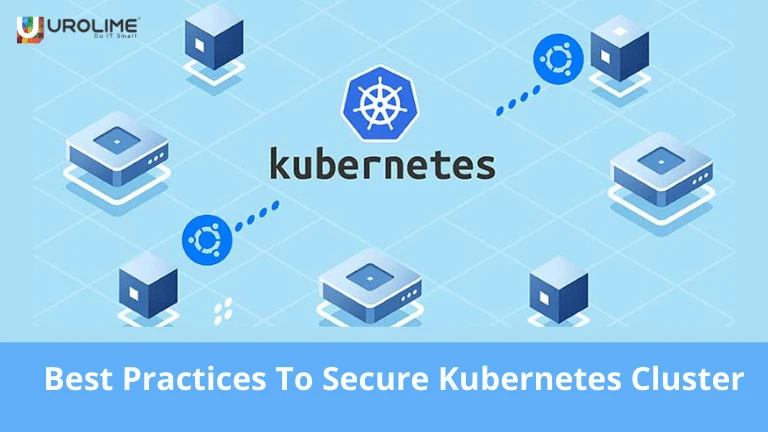

A Kubernetes cluster consists of application hosts for worker nodes/pods. It is an open-source container orchestration engine for automating deployment, scaling, and the management of containerized applications. The Kubernetes control plane manages the module cluster network.
Kubernetes consulting companies ensure that their clients leverage all possibilities from automated deployment to scaling based on real-time demand. They can step in at any stage and bring hands-on Kubernetes experience to the table.
The below four phases cover the containers and Kubernetes security best practices.
Phase 1: The Basics
TLS everywhereEnable TLS for all TLS-enabled components to prevent traffic detection and authenticate identities on both sides of the connection.
Run a service meshService mesh is a network of encrypted connections established between high-performance Envoy proxy servers at the "Site". Service Mesh adds traffic management, monitoring, and policies without changing microservices.
Use Network PoliciesBy default, the Kubernetes network allows all traffic between pods. Organizations can limit it by network policies.
Using an Open Policy Agent (OPA)With OPA, you can apply custom policies to Kubernetes objects without reconfiguring or recompiling the Kubernetes API server.
Monitoring and Logging follow-upAn organization needs this information to detect anomalies at the application and infrastructure levels. If there is an attack (high usage or potential damage), you can find it through logging and monitoring. Application performance monitoring detects other violations, such as DDoS attacks.
Consider using a bastion hostThese are special computers on a Network especially designed and configured to resist attacks. Access to the master is only possible through a hardened bastion host and can monitor who has access to Kubernetes.
Private networkingFor a secure network, ensure Kubernetes master and worker nodes should be distributed across private subnets. You should also prevent direct Internet connection and reduce the overall reach of attacks.
Enable Linux Security FeaturesThe Linux kernel has several security extensions (SELinux) configured to grant applications with as few privileges as possible. The Linux kernel has many nested security add-ons (Features, SELinux, AppArmor, seccomp-bpf) configured to grant fewer application permissions.
Cluster node imagesWhen creating a Kubernetes cluster, you use a Linux image. The CIS should evaluate and ensure the implementation of all Linux security controls. Failure to follow the OS (operating system) hardening process can leave your infrastructure with software vulnerabilities. It is also crucial to follow the software management chain according to security best practices. Binary authorization, labels, and authentication are a few examples of how to do it.
Isolate Firewall and etcd clusteretcd stores state and secret information and is a critical part of Kubernetes. It must be dealt with and protected differently from other clusters.
Rotating encryption keysA good security practice is to rotate the encryption key periodically to limit the "blast radius" of key compromise.
Phase 2: Container Security
Uses PodSecurityPolicyPolicies are an important but often overlooked part of security that also serves as a validation and change manager. Enabled by default through the API the PodSecurityPolicy is an optional acceptance checker. It allows you to apply policies without activating PSP-approved plugins.
Analyze YAML staticallyIf PodSecurityPolicies denies access to your API server, consider using static analysis in your development workflow to model your organization's risk appetite or compliance needs.
Run containers as a non-root userContainers running as root often have far more privileges than their workload requires, and these privileges can help attackers continue their attacks if compromised.
Phase 3 - Automation Security
Scan imageAll deployment must be controlled through an automated CI/CD environment. At a high-level everything is implemented in Kubernetes as a container image. When someone builds an app, it gets converted into a container image and added to the container registry. The container image scanner must be part of your CI/CD pipeline. When someone builds a container image, they should constantly scan for vulnerabilities. You can Whitelist images through the Kubernetes admission controller. If your app uses a specific image it should be checked before approval.
Secret managementIntegrate clusters through a secret management system. It ensures that your app pods automatically receive the required passwords and secrets based on the AppRoles associated with the pod.
Code analysisCode analysis and static code analysis are important parts of automation security. When working with program code in Kubernetes, you need to scan your source code for vulnerabilities or coding anomalies.
Third-party vulnerability scanningVulnerability assessment is a critical requirement for organizations. It is necessary when using potentially vulnerable upstream components. Continuously scanning for third-party vulnerabilities (Blackduck, Tenable, etc.) can give your organization an edge over the threat. This standard vulnerability scanner tool scans open source libraries for vulnerabilities published in various vulnerability databases such as the National Vulnerability Database.
DevSecOps (CI/CD)Security should be integral and built into the entire DevSecOps process. The Agile process that feeds DevSecOps must also be secure, and security user stories must be in the backlog. Embed security throughout the software lifecycle to identify vulnerabilities earlier, perform faster fixes, and reduce cost. Use continuous monitoring to ensure devices are continuously validated.
Security should be integral and integrated into the overall DevSecOps process. Additionally, the agile process by DevSecOps must be secure, and user stories are in the backlog. Identify and fix vulnerabilities, including security throughout the software lifecycle. Leverage continuous monitoring to ensure that devices, and tools, are validated at regular intervals.
Phase 4: Identity and Access Management
Enable RBAC with the least privilegeRole-Based Access Control (RBAC) provides granular policy management for user access to resources, for example, Namespace Access. Centralized authentication and authorization (single sign-on) across your organization helps onboard, and consistent user authorizations.
Uses third-party authentication for the API serverTo secure and manage access to the Kubernetes API, administrators must create granular authentication and authorization policies and implement advanced and comprehensive detection techniques.
Kubernetes consulting and development services help companies address the challenges associated with Kubernetes.
0
























Sign in to leave a comment.