
If you’ve ever felt like your business technology is more of a hurdle than a help, you aren't alone. Many leaders find themselves frustrated by high hardware costs, servers that crash during busy periods, or the headache of trying to get a remote team to collaborate effectively.
The solution usually lies in "The Cloud," but not all cloud setups are created equal. To truly fix these issues, your digital infrastructure needs to be built on what industry experts call the 5 pillars of cloud computing.
Think of these as the foundation of a house. If one is missing, the whole structure starts to lean. Let's look at what these pillars are and, more importantly, how they solve the daily tech struggles you face.
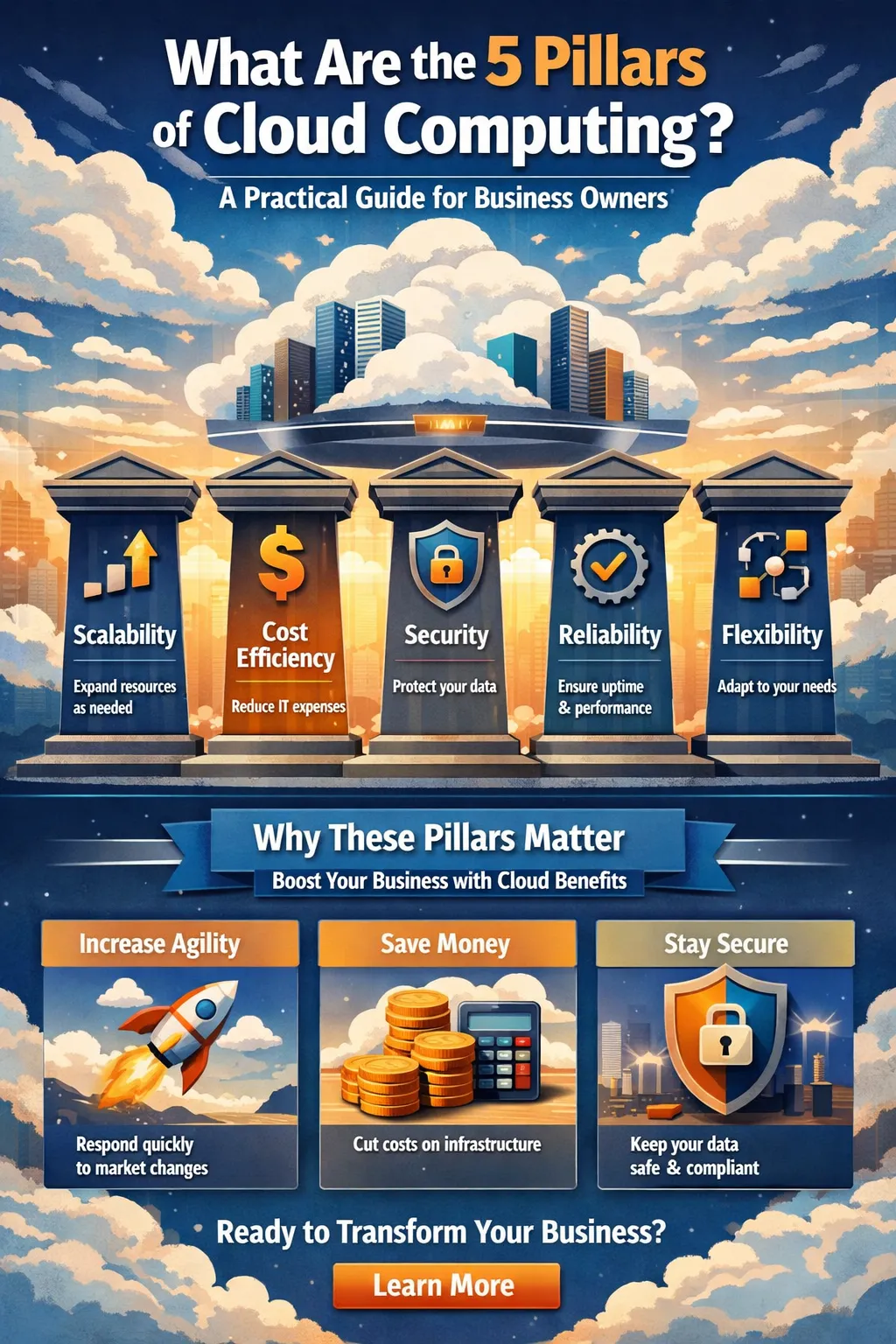
At a Glance: The 5 Essential Pillars
If you're looking for the quick answer, here are the five characteristics that define a true cloud service:
- On-demand Self-service: Get what you need, exactly when you need it.
- Broad Network Access: Work from anywhere on any device.
- Resource Pooling: Shared power that keeps your costs low.
- Rapid Elasticity: A system that grows or shrinks with your workload.
- Measured Service: You only pay for what you actually use.
1. On-demand Self-service
The Problem: "Every time we need a new tool or more storage, we have to wait days for a technician to set it up."
In a traditional setup, IT is a bottleneck. With the cloud, you have a self-service "buffet." If you need more computing power or a new software environment, you can provision it yourself through an automated portal.
- The Benefit: Your business becomes agile. You can launch new projects or test new ideas in minutes instead of weeks.
2. Broad Network Access
The Problem: "My employees can't access critical files when they're working from home or visiting clients."
This pillar ensures that your services are available over the internet and are compatible with all devices—smartphones, laptops, and tablets.
- The Benefit: It levels the playing field for hybrid work. Whether your team is in a London coffee shop or an office in Harrow, they have the same tools at their fingertips.
3. Resource Pooling
The Problem: "Buying and maintaining our own physical servers is becoming a massive financial drain."
Cloud providers use "multi-tenancy." This means they pool their massive computing resources to serve multiple customers. While your data stays completely private and secure, you share the underlying costs of the hardware and electricity with others.
- The Benefit: You get enterprise-grade power at a small-business price point.
4. Rapid Elasticity
The Problem: "Our system slows to a crawl during our busiest sales season, but we don't want to buy extra hardware that sits empty the rest of the year."
Elasticity is the "stretchiness" of the cloud. If you suddenly get 10,000 visitors to your site, the cloud automatically stretches to handle the load. When the rush is over, it shrinks back down.
- The Benefit: You never crash during peak times, and you never waste money on "spare" capacity during quiet times.
5. Measured Service
The Problem: "Our IT expenses are unpredictable, and we're tired of hidden maintenance fees."
Cloud computing works like a utility bill. Just like you only pay for the liters of water or units of electricity you use, cloud providers meter your usage.
- The Benefit: Total transparency. Your CFO will love the predictable, "pay-as-you-go" monthly billing that eliminates large, upfront capital expenses.
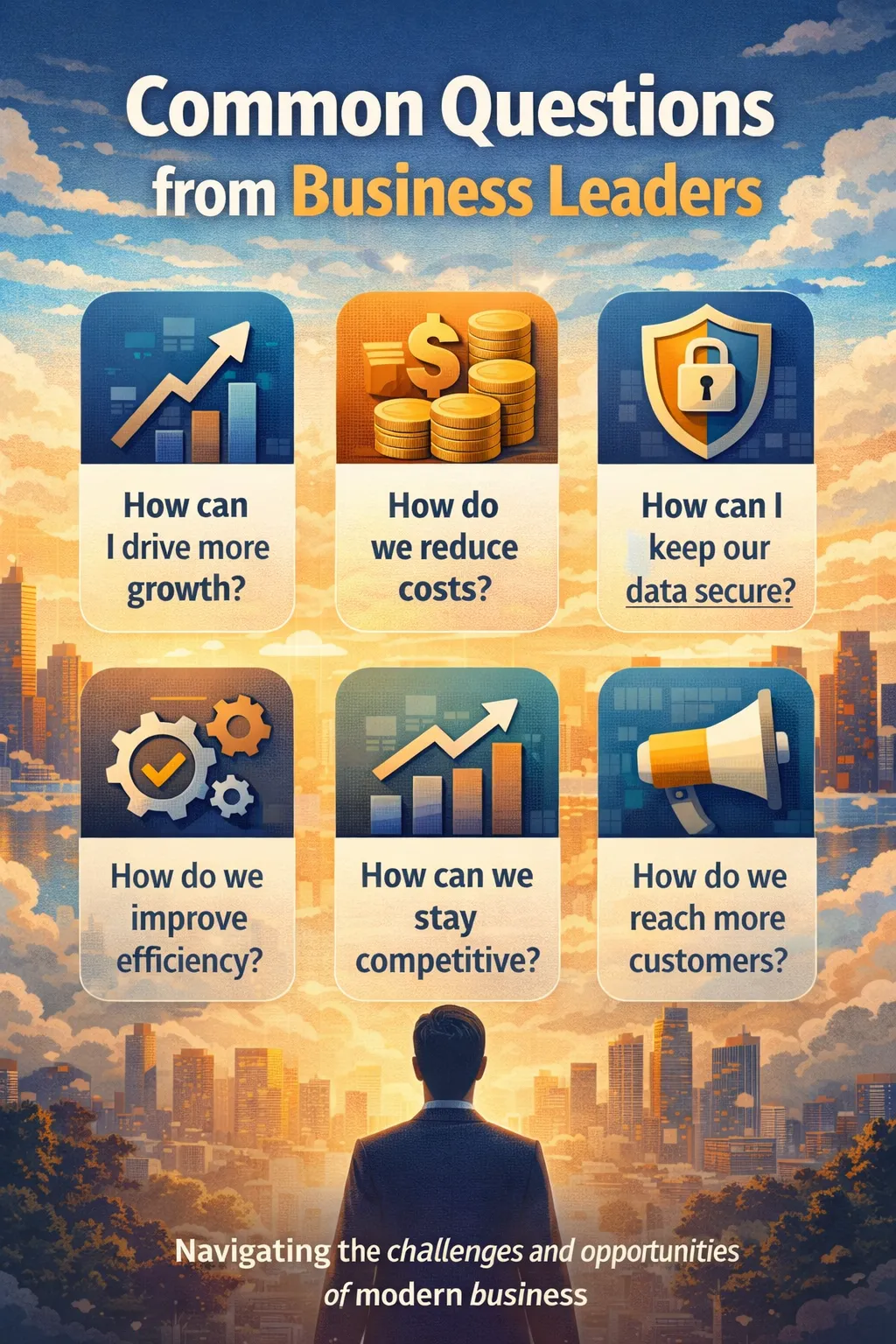
Common Questions from Business Leaders
Why should I care about these pillars? If you are paying for a service that doesn't offer all five—for example, if you still have to call a person to manually add storage—you aren't actually "in the cloud." You're likely just paying for expensive, glorified hosting that won't help you scale.
Is it safe to have my data in a 'pool' with others? Absolutely. Resource pooling is about the physical hardware. Your data is virtually isolated and encrypted. It’s like living in an apartment building: you share the foundation and the plumbing, but you have your own front door and your own private space.
How do I move my business to this model? It starts with an audit of your current systems. Most businesses find that a "hybrid" approach—moving some things to the cloud while keeping others local—is the smoothest way to transition.
Secure Your Digital Future with ESSPL
Navigating the transition to the cloud doesn't have to be a DIY project. At ESSPL, we’ve spent over 25 years helping UK businesses simplify their technology. We don't just "sell cloud"—we help you build a strategy that uses these 5 pillars to actually grow your revenue and protect your data.
Ready to stop fighting your tech and start using it? Contact the ESSPL team today for a straightforward, no-jargon chat about your IT goals.




























Sign in to leave a comment.