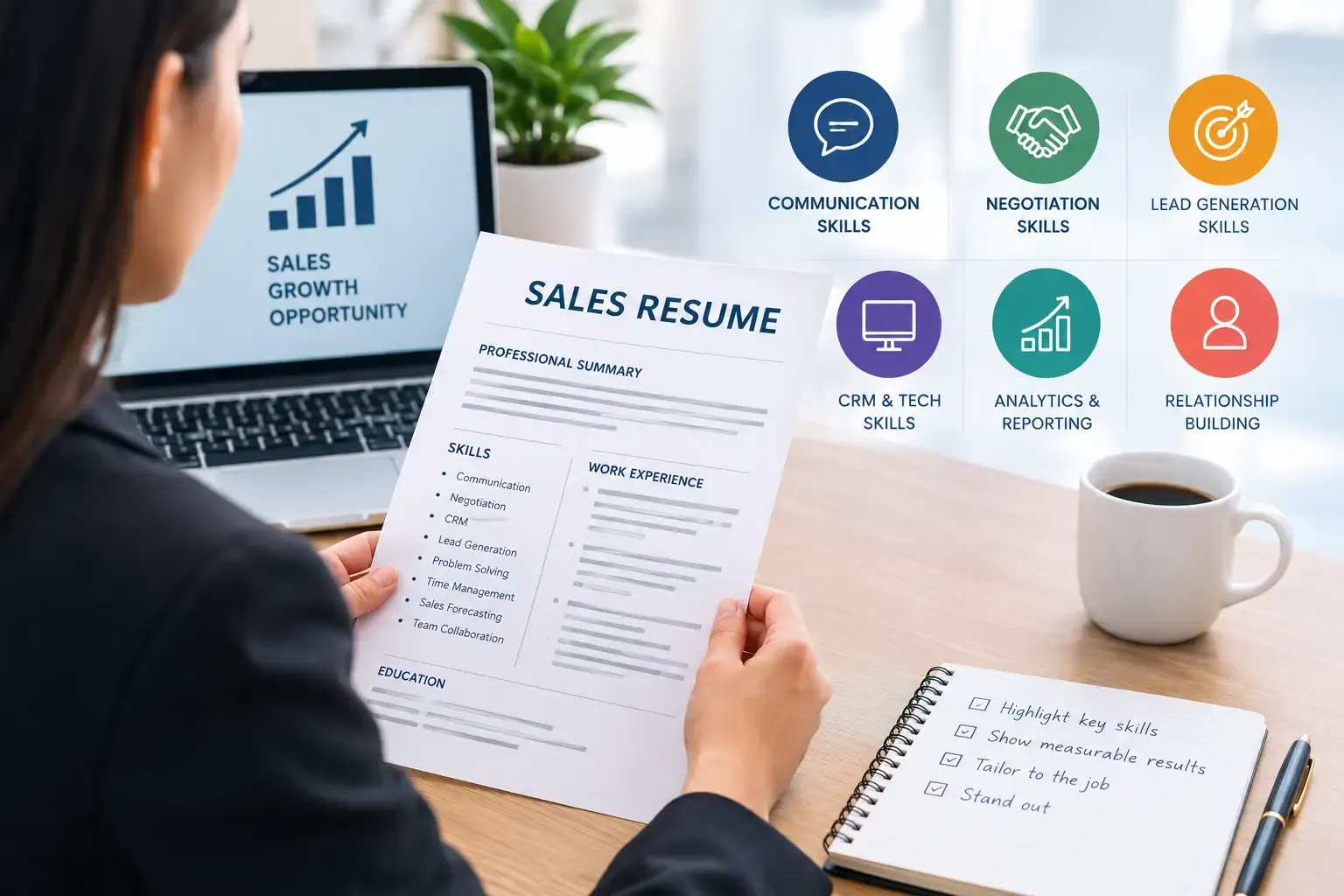

Sales is a results-driven career where employers look for candidates who can build relationships, communicate effectively, understand customer needs, and consistently contribute to revenue growth. In 2026, having the right sales resume skills can help your application communicate your value more clearly and align with what employers are looking for.
Whether you are applying for an entry-level sales position, an account executive role, a business development position, or a sales management job, your resume should highlight a combination of sales knowledge, communication abilities, technology skills, and measurable achievements.
1. Communication Skills
Strong communication remains one of the most important sales resume skills. Sales professionals regularly communicate with prospects, customers, managers, and internal teams.
Your resume can highlight skills such as:
- Verbal communication
- Written communication
- Active listening
- Presentation skills
- Negotiation
- Client communication
- Relationship building
Instead of simply listing "communication" as a skill, demonstrate how you have used it. For example, you might mention presenting solutions to clients, conducting product demonstrations, or communicating with decision-makers.
2. Customer Relationship Management
Building and maintaining customer relationships is central to successful sales. Employers often look for candidates who understand how to manage prospects throughout the sales process and maintain long-term client relationships.
Relevant skills include:
- Customer relationship management
- Account management
- Client retention
- Customer engagement
- Lead nurturing
- Relationship development
If you have experience using CRM platforms, mention the specific systems you have worked with when they are relevant to the position.
3. Lead Generation and Prospecting
Sales professionals need to identify potential customers and create opportunities. For this reason, lead generation and prospecting are valuable skills to include on a sales resume.
You can highlight experience with:
- Lead generation
- Cold calling
- Email outreach
- Prospecting
- Lead qualification
- Appointment setting
- Outbound sales
- Inbound lead management
Whenever possible, connect these skills to measurable outcomes. For example, explain how your prospecting efforts contributed to qualified leads, meetings, opportunities, or revenue.
4. Negotiation and Closing
Sales representatives need to guide prospects toward purchasing decisions while creating value for the customer. Negotiation and closing skills can therefore be particularly important for many sales positions.
Consider including skills such as:
- Sales negotiation
- Objection handling
- Closing techniques
- Contract negotiation
- Consultative selling
- Deal management
Rather than simply saying that you are a "strong closer," provide evidence through results. Metrics such as quota attainment, conversion rates, average deal size, or revenue generated can make your experience more meaningful.
5. CRM and Sales Technology Skills
Technology continues to play an important role in modern sales. Many sales teams use CRM platforms, sales automation tools, analytics software, communication platforms, and prospecting technologies.
Depending on your experience, relevant skills may include:
- CRM management
- Sales automation
- Pipeline management
- Sales analytics
- Customer data management
- Email automation
- Sales reporting
When applying for a particular role, review the job description and identify the technology or software skills specifically requested by the employer.
For additional guidance, see Career Connector Hub's resource on how to find keywords in a job description. Understanding the language used in a job posting can help you tailor your resume more effectively.
6. Sales Forecasting and Pipeline Management
For experienced sales professionals, employers may also value skills related to managing sales pipelines and forecasting revenue.
Examples include:
- Sales forecasting
- Pipeline management
- Territory management
- Revenue forecasting
- Opportunity management
- Sales reporting
- Performance tracking
These skills can be especially relevant for account executives, sales managers, business development professionals, and other roles responsible for revenue targets.
7. Data Analysis and Performance Tracking
Sales is increasingly data-driven. Employers want professionals who can understand performance metrics and use information to improve their sales approach.
Consider highlighting experience with:
- Sales analytics
- KPI tracking
- Conversion rates
- Revenue analysis
- Customer data analysis
- Performance reporting
- Market research
Where possible, use numbers to demonstrate your impact. For example, "increased qualified leads by 25%" provides more useful information than simply stating "lead generation."
8. Problem-Solving and Consultative Selling
Modern customers often expect sales professionals to understand their challenges rather than simply present a product or service. Problem-solving and consultative selling can demonstrate that you know how to identify customer needs and recommend appropriate solutions.
Useful resume skills include:
- Needs assessment
- Consultative selling
- Solution selling
- Problem-solving
- Product knowledge
- Customer needs analysis
- Strategic thinking
These skills can help position you as someone who focuses on creating value rather than simply completing transactions.
9. Time Management and Organization
Sales professionals often manage multiple prospects, accounts, meetings, follow-ups, and opportunities at the same time. Strong organization and time management can therefore be valuable skills.
You might highlight:
- Time management
- Task prioritization
- Territory planning
- Account organization
- Follow-up management
- Scheduling
- Goal setting
These skills are particularly useful when demonstrating your ability to manage a busy sales pipeline.
10. Quantifiable Sales Achievements
While skills matter, your resume should also demonstrate what you achieved with those skills. Whenever possible, include measurable results.
For example:
- Exceeded annual sales quota by 20%
- Generated $500,000 in new business
- Increased customer retention by 15%
- Developed 100+ qualified leads per month
- Improved conversion rates by 18%
Numbers give recruiters additional context and show how your skills translated into business results.
How to Choose the Right Sales Resume Skills
You do not need to include every possible sales skill on your resume. Instead, focus on skills that are relevant to the position you want.
Start by reviewing the job description and identifying repeated skills, responsibilities, technologies, and qualifications. Then compare those requirements with your actual experience.
You can also review Sales Keywords To Include on Resume for additional ideas on sales-related terms that may be relevant when optimizing your resume.
Career Connector Hub's article on why resume keywords are important can also help you understand how strategically selected keywords can improve the relevance of your resume.
Build a Sales Resume That Shows Your Value
The strongest sales resumes combine relevant skills with specific evidence of performance. Instead of creating a long list of generic abilities, select skills that match your target position and support them with accomplishments, numbers, and examples.
If you are exploring your next opportunity in sales or want practical guidance from someone with real-world career experience, explore the Sales career resources at Career Connector Hub. You can also visit Career Connector Hub to connect with professionals and gain practical career insight.
Your sales resume should do more than list what you can do. It should make it clear how your skills have helped customers, teams, and businesses achieve measurable results.

























Sign in to leave a comment.