
Introduction
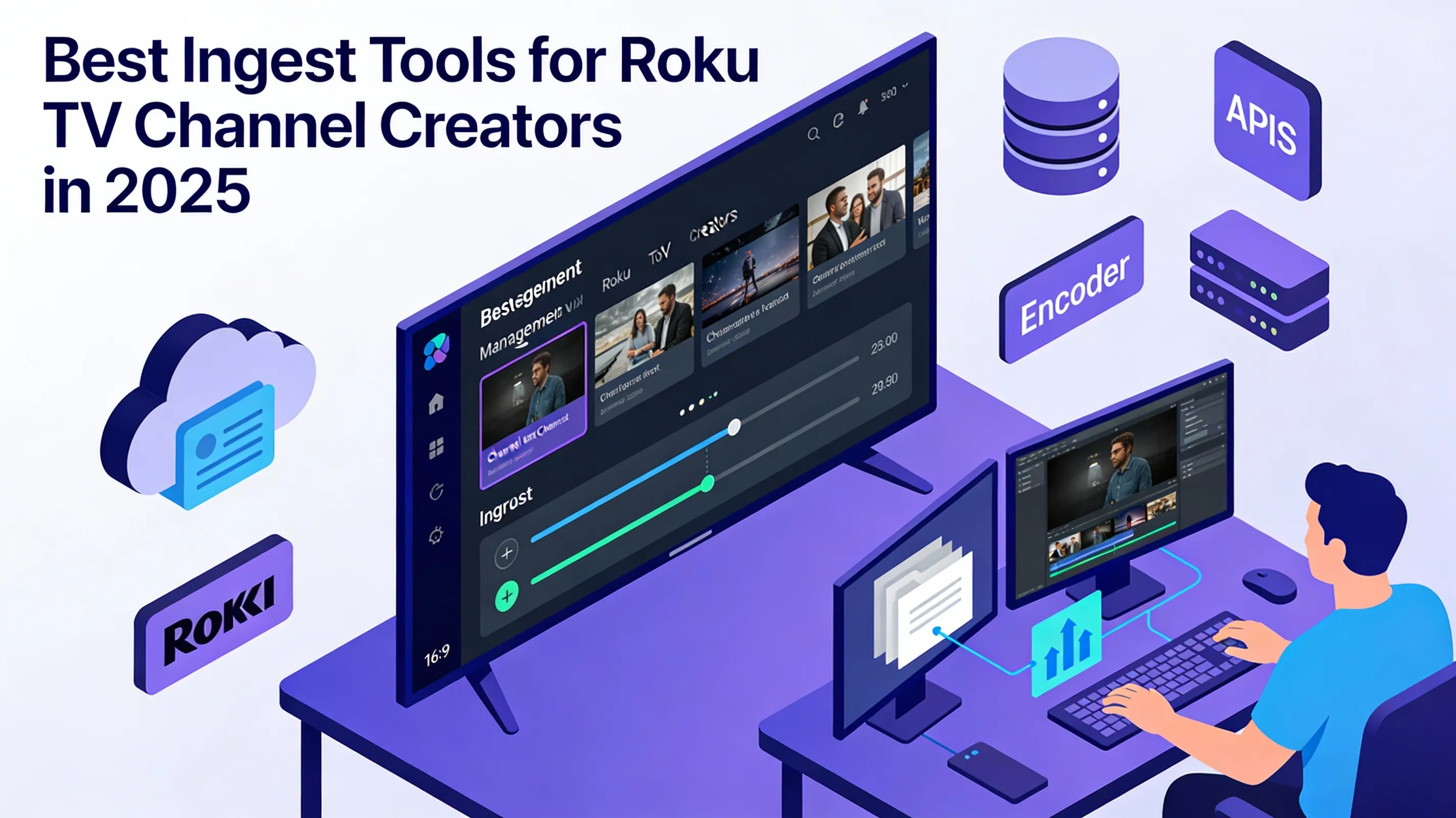
In today’s rapidly evolving OTT ecosystem, delivering high-quality video content requires more than just a well-designed application or a powerful content library. Behind every seamless streaming experience lies a complex technical pipeline, and one of the most critical stages in that pipeline is broadcast ingest.
For businesses and developers building an Android streaming app, understanding how ingest works—and selecting the right tools—is essential for ensuring consistent performance, low latency, and high-quality playback. Without a reliable ingest system, even the most advanced OTT platform can struggle with buffering issues, poor video quality, and unreliable live streaming.
As OTT consumption continues to grow in 2026, the importance of efficient ingest workflows has increased significantly. This article explores the role of broadcast ingest in Android OTT apps, the key features to look for, and the best tools and technologies that power modern streaming pipelines.
What Is Broadcast Ingest in OTT Streaming?
Broadcast ingest refers to the process of acquiring video content from various sources and preparing it for distribution across streaming platforms. These sources may include live camera feeds, satellite transmissions, recorded media files, or IP-based streams.
Once the content is captured, it goes through several stages, including encoding, transcoding, formatting, and packaging. The goal is to convert raw video into a format that can be efficiently delivered to end users عبر adaptive streaming protocols such as HLS or DASH.
In the context of an Android OTT app, ingest acts as the entry point of the entire content delivery chain. Any inefficiency at this stage can affect everything downstream, from playback quality to user experience.
Why Broadcast Ingest Matters for Android Streaming Apps
Android OTT apps are used across a wide range of devices, including smartphones, tablets, smart TVs, and set-top boxes. Each of these devices operates under different network conditions and hardware capabilities.
Broadcast ingest ensures that content is properly optimized for this diversity. By encoding video into multiple bitrates and resolutions, ingest systems enable adaptive streaming, allowing users to enjoy smooth playback regardless of their internet speed.
Another critical factor is latency. For live streaming scenarios such as sports events, news broadcasts, or interactive sessions, delays can significantly impact viewer satisfaction. A well-designed ingest pipeline minimizes latency while maintaining video quality.
In addition, ingest systems support scalability. As audience size grows, the system must handle increased traffic without compromising performance. This makes ingest a foundational component for any scalable Android streaming solution.
Key Features to Look for in Broadcast Ingest Tools
Choosing the right ingest tool requires a clear understanding of the features that matter most in an OTT environment.
One of the primary requirements is support for multiple input formats. Modern ingest tools must handle protocols such as RTMP, SRT, and MPEG-TS, ensuring compatibility with various content sources.
Real-time encoding and transcoding capabilities are equally important. These features allow content to be processed and delivered without delays, which is crucial for live streaming applications.
Low-latency processing is another essential aspect. Advanced ingest tools use optimized pipelines to reduce delays, making them suitable for real-time broadcasting scenarios.
Automation and integration capabilities also play a significant role. The ingest system should seamlessly connect with playout software, content management systems, and CDN infrastructure to streamline workflows.
Best Tools and Technologies for Broadcast Ingest
Modern OTT platforms rely on a combination of cloud-based and on-premise solutions for ingest. Cloud-based ingest tools have become increasingly popular due to their flexibility and scalability. They allow businesses to process content without investing heavily in physical infrastructure.
Encoding solutions such as FFmpeg remain widely used due to their versatility and open-source nature. They support a wide range of formats and can be customized to meet specific requirements.
Professional-grade ingest platforms offer advanced features such as automated quality control, error detection, and real-time monitoring. These tools are particularly useful for enterprise-level streaming services that require high reliability.
Another important technology is SRT (Secure Reliable Transport), which has gained popularity for its ability to deliver high-quality video over unpredictable networks. It ensures low latency and secure transmission, making it ideal for live streaming.
Integration with Android OTT Ecosystem
For an Android streaming app, the ingest system must align with the overall OTT architecture. This includes compatibility with media players like ExoPlayer, which is widely used in Android applications.
The processed content is typically delivered through CDNs, enabling fast and reliable streaming across different geographic locations. Adaptive bitrate streaming ensures that users receive the best possible quality based on their network conditions.
Integration with DRM systems is also important for protecting content الحقوق and preventing unauthorized access. The ingest pipeline must support encryption and secure delivery mechanisms to ensure compliance with industry standards.
Challenges in Broadcast Ingest
Despite its importance, broadcast ingest comes with several challenges. One of the biggest issues is handling diverse input sources with varying formats and quality levels. This requires flexible and robust processing capabilities.
Latency remains a persistent challenge, especially for live streaming. Achieving low latency without compromising video quality requires advanced optimization techniques.
Scalability is another concern. During peak events, such as live sports or major broadcasts, the ingest system must handle a surge in traffic without failures.
Additionally, ensuring consistent quality across devices and networks requires continuous monitoring and optimization.
Future Trends in Broadcast Ingest
The future of broadcast ingest is closely tied to cloud computing and artificial intelligence. Cloud-based ingest solutions are becoming the standard, offering scalability and cost efficiency.
AI-driven tools are being used to automate quality control, detect anomalies, and optimize encoding settings. This reduces manual intervention and improves overall efficiency.
Low-latency streaming technologies are also evolving, enabling near real-time delivery of live content. These advancements will play a crucial role in enhancing interactive streaming experiences.
Conclusion
Broadcast ingest is the foundation upon which successful Android OTT apps are built. It ensures that content is properly acquired, processed, and delivered to users in the highest possible quality.
By investing in the right ingest tools and technologies, businesses can overcome challenges related to latency, scalability, and content diversity. This not only improves user experience but also strengthens the overall performance of the platform.
In the competitive OTT landscape of 2026, a robust ingest pipeline is not just a technical necessity—it is a strategic advantage that enables platforms to scale, innovate, and deliver exceptional streaming experiences.
























Sign in to leave a comment.