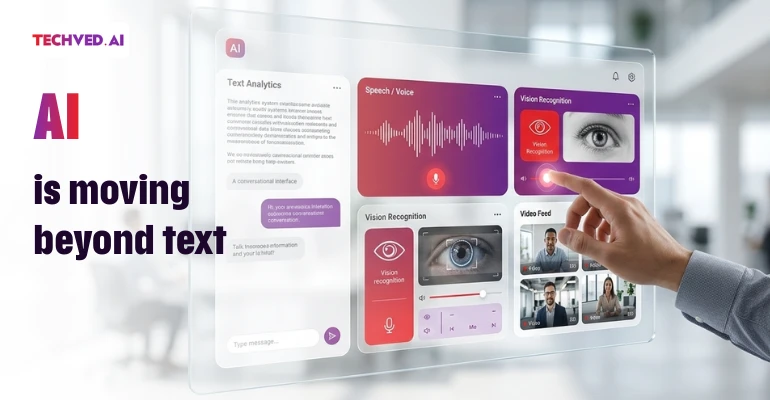

A growing share of financial data is no longer purely textual. Customer interactions now occur through voice calls, video verification sessions, messaging platforms, and multimedia documents. Yet many financial institutions still rely on AI systems designed primarily to process text.
This mismatch between how financial data is created and how AI interprets it is becoming a strategic limitation.
Banks, insurers, and fintech firms increasingly operate in environments where intelligence must be extracted from multiple data formats simultaneously — customer conversations, transaction histories, documents, identity verification videos, and behavioral signals.
This shift is accelerating the adoption of Multimodal AI for enterprises, where AI models process text, images, audio, and video together instead of independently.
The impact goes far beyond operational automation. It is reshaping how financial institutions detect risk, personalize services, and design digital experiences.
The Real Problem: Financial Intelligence Exists Across Multiple Signals
Financial decision-making rarely depends on a single type of data.
A typical insurance claim, loan application, or fraud investigation often involves multiple signals:
- Written forms and documents
- Customer voice interactions
- Identity verification images
- Video-based KYC sessions
- Transaction patterns and behavioral analytics
Traditional AI architectures struggle to connect these signals.
For example, a fraud detection system may analyze transaction patterns but miss voice stress signals from a suspicious support call. A credit risk model may evaluate financial documents but ignore behavioral indicators captured during a video verification process.
This fragmentation leads to incomplete insights.
And in financial services, incomplete insights translate directly into risk exposure.
Why Single-Modal AI Systems Fall Short
Financial institutions initially adopted AI solutions built for specific tasks: natural language processing for documents, speech recognition for call centers, and computer vision for identity verification.
While these systems perform well individually, they introduce structural limitations at scale.
1. Context Loss Across Data Types
Customer behavior spans multiple channels.
When systems analyze each signal separately, important contextual relationships disappear.
For instance, suspicious tone in a call combined with irregular transaction patterns could indicate fraud — but only if those signals are interpreted together.
2. Operational Complexity
Financial institutions often maintain multiple AI infrastructures:
- NLP pipelines for document processing
- Speech analytics systems for call centers
- Video analysis tools for KYC verification
- Separate analytics models for financial transactions
Maintaining these systems increases infrastructure cost and slows innovation.
3. Limited Customer Understanding
Customer engagement now happens across messaging platforms, voice channels, and digital experiences. AI systems that analyze only text cannot capture the full emotional or behavioral context of financial interactions.
This gap affects everything from risk assessment to customer satisfaction.
Strategic Insight: Multimodal Intelligence Is Transforming Financial AI
Multimodal AI models are designed to process and correlate multiple data formats simultaneously.
Instead of running separate pipelines, a single system can interpret:
- Written financial documents
- Customer conversations
- Images and identity verification documents
- Behavioral patterns captured through video or audio signals
This capability enables financial institutions to extract intelligence from multimodal ai text image audio video finance environments where insight emerges from the relationships between signals rather than from isolated data points.
As explored in this analysis on Multimodal AI: Text, Voice and Video in One Model, integrating multiple modalities into a single AI architecture enables organizations to build more context-aware systems.
In financial services, context is everything.
A Practical Framework for Financial Institutions
For banks and insurers exploring multimodal AI adoption, a strategic framework helps identify where the technology delivers the greatest impact.
1. Fraud Detection and Risk Intelligence
Fraud detection systems traditionally rely on transaction analysis.
Multimodal systems extend detection capabilities by combining:
- transaction patterns
- customer voice interactions
- behavioral anomalies
- identity verification images or videos
This layered approach improves fraud detection accuracy while reducing false positives.
2. Intelligent Insurance Claims Processing
Insurance operations generate rich multimodal data.
Claims often include:
- written incident descriptions
- photographs of damages
- recorded conversations with adjusters
- video inspections
Multimodal systems can analyze these signals together, significantly improving ai insurance workflows.
The result is faster claims validation, improved fraud detection, and better customer transparency.
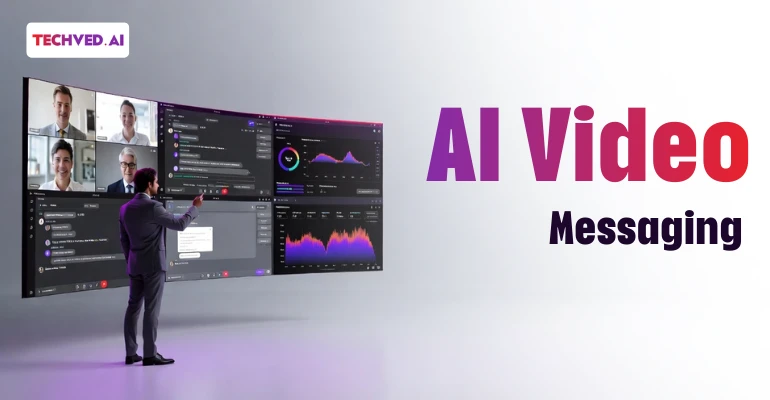
3. Video-Based Customer Engagement
Financial institutions are increasingly adopting video-driven communication models.
Applications include:
- onboarding through interactive AI video
- secure client engagement through video messaging service platforms
- financial advisory services delivered through personalized ai videos
These experiences rely on advanced video AI solutions that integrate video intelligence with conversational AI.
4. Autonomous Financial Workflows
Multimodal AI also strengthens the development of intelligent automation systems.
Emerging use cases for agentic ai include:
- automated compliance monitoring
- intelligent transaction investigation
- real-time operational decision support
As these systems evolve into autonomous ai agents for enterprises, governance frameworks become critical. Financial institutions must address issues such as agentic ai data protection to ensure compliance and transparency.
Enterprise Example: Digital KYC Transformation
Consider a digital-first bank implementing a new customer onboarding process.
The traditional approach requires separate systems for:
- document verification
- identity photo matching
- video-based KYC interviews
- voice authentication
A multimodal system can process all these signals within a unified model.
During onboarding, the system simultaneously analyzes:
- uploaded identity documents
- facial verification images
- live video interaction
- spoken responses from the applicant
The integrated analysis reduces onboarding time while strengthening fraud detection.
Financial institutions exploring enterprise AI development strategies increasingly view multimodal architectures as essential for these kinds of digital workflows.
The Role of Video Intelligence in Financial AI
Video is rapidly becoming a powerful interface in financial services.
It enables richer communication, improved verification processes, and stronger customer engagement.
Organizations investing in Video AI Development Services are building systems that combine video intelligence with conversational AI and predictive analytics.
Platforms such as the Hola AI platform demonstrate how intelligent video systems can power advanced AI-driven video content, financial advisory interactions, and secure client engagement experiences.
These capabilities are expanding the role of AI from analytics to real-time interaction.
Conclusion: The Competitive Advantage of Context-Aware AI
Financial institutions operate in an environment where decisions depend on understanding human behavior, transactional data, and contextual signals simultaneously.
AI systems designed only for text analysis cannot fully capture this complexity.
Multimodal architectures allow organizations to move beyond fragmented intelligence and build systems capable of interpreting financial data in its full context.
At TECHVED.AI, this evolution is shaping enterprise initiatives that combine AI Development Services, advanced video intelligence, and scalable digital experience ecosystems.
For financial institutions navigating digital transformation, multimodal AI represents more than technological progress. It represents a strategic shift toward context-aware enterprise intelligence.
Read more related insights from TECHVED



























Sign in to leave a comment.