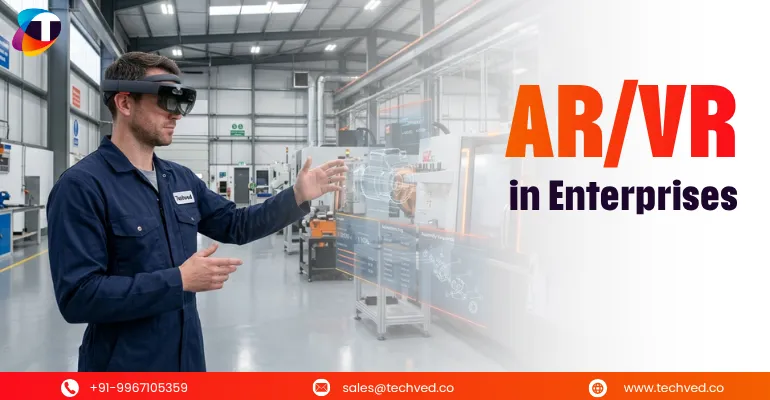

More than 65% of immersive technology initiatives in enterprises stall after pilot stages not due to lack of innovation, but because organizations struggle to translate experimentation into measurable business impact.
Immersive technologies have moved far beyond hype cycles. Yet, many enterprises remain trapped in fragmented deployments, unable to scale value across the organization. The gap isn’t technological it’s strategic.
The Real Problem
Most enterprises explore AR VR enterprise use cases as isolated innovation efforts rather than embedding them into core business functions.
This leads to:
- Pilots disconnected from enterprise systems
- Undefined success metrics
- Limited executive alignment
Instead of building capabilities, organizations end up creating short-lived experiences.
Why It Fails
1. Use Cases Without Business Anchoring
Many AR VR business applications are deployed without tying them to tangible business outcomes. Whether in training, customer engagement, or operations, the absence of clear KPIs limits long-term scalability.
2. Short-Term ROI Expectations
A fundamental misunderstanding of immersive technology ROI often leads to premature failure.
Immersive investments typically deliver value through:
- Process optimization
- Error reduction
- Faster decision cycles
These gains compound over time, yet enterprises often evaluate them through short-term financial lenses.
3. Lack of Strategic Direction
Without a cohesive augmented reality strategy, immersive initiatives remain fragmented. Organizations invest in tools without defining how these technologies integrate into broader transformation goals.
Strategic Insight
Enterprises successfully scaling immersive technologies shift their perspective from “experience innovation” to “decision enablement.”
They recognize that immersive environments:
- Reduce cognitive load in complex scenarios
- Enable real-time interaction with data
- Improve accuracy in high-stakes decisions
This positions immersive tech as a core enterprise capability, not an experimental layer.
Practical Framework: Scaling Beyond Pilots
1. Align Use Cases with Value Streams
Effective adoption begins by mapping immersive initiatives to critical business outcomes.
For instance, ar vr in banking is evolving beyond virtual engagement into:
- Risk visualization
- Compliance simulations
- Customer advisory experiences
Each tied directly to measurable performance metrics.
2. Leverage Digital Twin Ecosystems
The integration of digital twin technology is redefining enterprise adoption.
By creating virtual replicas of systems and environments, organizations can:
- Simulate operational scenarios
- Predict failures
- Optimize performance
When combined with immersive interfaces, this transforms static data into interactive intelligence.
3. Choose the Right Reality Spectrum
Understanding ar vs vr vs mr is critical for effective implementation.
- AR enhances real-world workflows
- VR enables immersive training and simulation
- MR allows contextual interaction between physical and digital environments
Strategic alignment ensures technology fits the problem not vice versa.
4. Build Scalable Ecosystems
Enterprises that succeed invest in integrated ar vr solutions rather than standalone applications.
This includes:
- Seamless integration with enterprise platforms (CRM, ERP)
- Cross-functional usability
- Long-term scalability
5. Focus on Capability Partnerships
Selecting the right ar vr development services partner is less about execution and more about strategic alignment.
Key considerations:
- Industry expertise
- Integration capability
- Experience-led design thinking
Realistic Enterprise Example
A leading global bank initiated a VR-based customer engagement pilot. While initial feedback was positive, the initiative lacked measurable business impact.
The organization restructured its approach:
- Integrated immersive experiences into core advisory journeys
- Connected platforms with real-time financial data
- Expanded use into employee training and risk assessment
Results within 12 months:
- 30% reduction in onboarding time
- Significant improvement in advisory efficiency
- Enhanced customer satisfaction metrics
The transformation wasn’t driven by technology adoption—but by strategic integration.
Smart Link Placement
A deeper perspective on how organizations are aligning immersive initiatives with measurable business outcomes can be explored here:
https://www.techved.com/blog/ar-vr-enterprise-use-cases-roi
Conclusion
The journey from experimentation to impact requires a fundamental shift in how enterprises perceive immersive technologies.
Success lies in:
- Aligning use cases with business value
- Building integrated ecosystems
- Focusing on long-term capability development
At TECHVED, immersive technologies are approached as strategic enablers designed to integrate seamlessly into enterprise ecosystems and deliver measurable outcomes.
For organizations looking to scale beyond pilots, the focus must shift from innovation to impact driven execution.

























Sign in to leave a comment.